


In the far western corner of Mongolia, where the borders of three giants, Russia, China, and Kazakhstan converge, lies one of Asia’s last truly wild frontiers — Tavan Bogd National Park. It’s a land where snow-cloaked peaks rise into the clouds, eagles circle in the wind, and the rhythm of life still follows the migration of herders and their animals. For photographers, it’s a dreamscape: crisp mountain light, dramatic skies, and a culture as timeless as the landscape itself.
You don’t have to be a professional to want incredible travel photos. Tavan Bogd Photography makes it easy to capture dramatic images and make all your friends back home jealous.
Whether you’re chasing that perfect sunrise over Khuiten Peak, capturing the reflections in Khoton and Khurgan Lakes, or documenting Kazakh eagle hunters on the steppe, Tavan Bogd rewards those who venture here with some of the most extraordinary visual storytelling opportunities in the world.
The Call of the Altai
For photographers, light is everything, and in the Mongolian Altai, the light is transcendent. Early mornings paint the peaks in rose gold. Midday storms roll through like drama-filled theater. Evenings stretch long, with warm tones softening across endless grasslands. It’s an ever-changing, high-contrast world that rewards patience, curiosity, and a willingness to chase the light across rough terrain.
It’s no wonder photographers flock to Western Mongolia. This hidden gem of Mongolia is one of the country’s best-kept secrets when it comes to dramatic landscapes. While you’ve likely heard of the eagle hunters and the mountain treks in the Altai, Tavan Bogd is a far lesser-known attraction that amateur and professional photographers alike will love.
Top Tip: One of the best opportunities you have for photography in Western Mongolia is the Eagle Hunting Festivals. Consider planning your trip around them or let us plan a private stay with Eagle Hunters on your tour to Western Mongolia.
Tavan Bogd Photography: Top Locations
These are the can’t-miss locations and viewpoints in Tavan Bogd National Park for photography lovers.
1. Khuiten Peak and the Potanin Glacier
At 4,374 meters, Khuiten Peak is Mongolia’s highest mountain and the crown jewel of Tavan Bogd. The approach to its base camp is a journey through a stark, glacial valley, every turn revealing a new vista of icy grandeur.
- Best light: sunrise, when the glacier glows pale pink, and the surrounding ridgelines emerge from the mist.
- Lens tip: bring a wide-angle for the vast ice fields and a telephoto for compressing layers of ridges and clouds.
If you trek with local guides or on a self-drive Mongolia itinerary, the drive to the park entrance via Tsagaan Gol (White River Valley) offers countless roadside compositions, including braided rivers, distant peaks, and eagle hunters on horseback.
2. Khoton and Khurgan Lakes
These twin glacial lakes near the Kazakh border are two of the most photogenic places in Western Mongolia. The reflections of snow peaks in glassy water, the occasional yurt on the shore, and the turquoise tones under a summer sky make this a dream location for landscape and drone photography.
- Best light: sunset — when clouds pick up color, and the lakes mirror every hue.
- Pro tip: Stay overnight and wake early; dawn mist on the water is pure magic.
3. Tsagaan Gol Valley
The White River Valley is where many self-drive expeditions enter Tavan Bogd National Park. The combination of green tundra, white-capped peaks, and turquoise glacial meltwater creates a striking natural palette.
- Shooting advice: Use a polarizing filter to enhance contrast between sky and snow.
- Adventure bonus: This valley is often where you’ll encounter Kazakh nomads. Perfect for cultural portraiture amid dramatic scenery. Just be sure to ask permission before snapping photos of anyone.
4. Eagle Hunters of the Altai
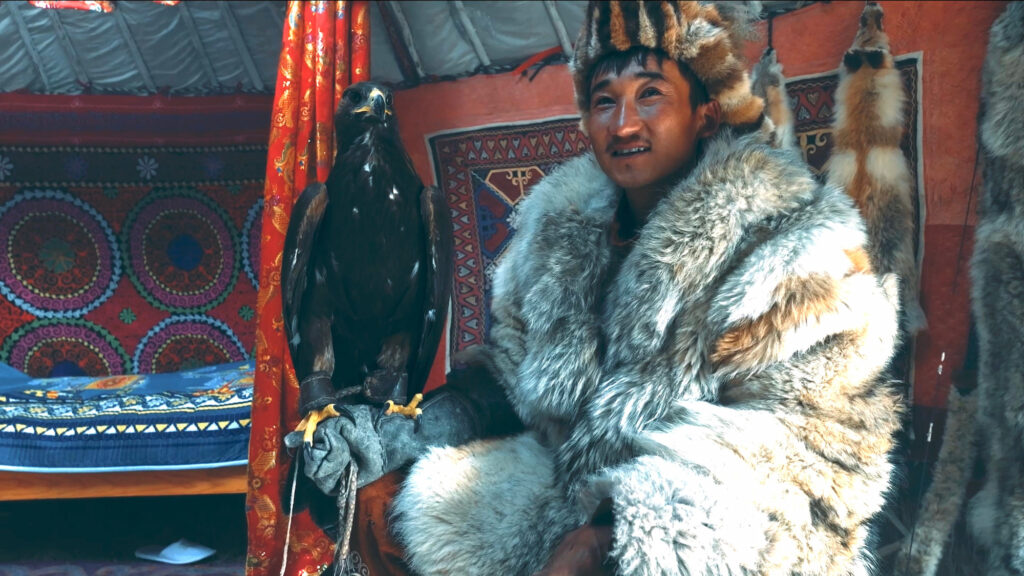
Perhaps the most iconic image of Mongolia is the Kazakh eagle hunter, dressed in fur and mounted on horseback, with a golden eagle perched regally on their arm. These men and women live throughout the Bayan-Ölgii Province, and the best encounters happen not during staged festivals, but during daily life — when they’re training their eagles, tending herds, or traveling between camps.
- Ethical photography: Again, always ask permission, offer a smile, and take the time to connect before snapping the shot. Don’t secretly snap shots or be too invasive in people’s personal lives.
- Best time: Autumn, when the light is rich and the traditional hunting season begins.
5. The Steppe and High Mountain Passes
Between Ulgii and the park, every kilometer is a frame waiting to be captured: yaks grazing in alpine meadows, storm clouds sweeping over the plains, or a single white ger (yurt) glowing in the golden light. These spontaneous scenes often become the most memorable images from a Mongolia road trip.

You might see some of Western Mongolia’s iconic wildlife in this area.
Capturing Nomadic Life and Culture With Tavan Bogd Photography
Photographing the nomadic culture of Western Mongolia is an intimate, humbling experience. Families still move seasonally, following their animals to fresh pastures. You’ll see children herding goats on horseback, women milking yaks, and men crafting traditional tools by hand.
These portraits can be the most powerful images you’ll take.
- Respect first: These are not “props” for photos; they are real people living demanding lives in remote conditions. A small gesture of gratitude, a printed photo, or a friendly conversation through your guide builds trust.
- Portrait tips: Natural light works best; the interiors of gers are dim but beautifully warm in tone. Use a fast lens (f/1.8 or f/2.8) to capture faces softly lit by the fire or daylight through the doorway.
- Storytelling mindset: Include environmental elements — the landscape, tools, or animals — to contextualize the human experience.
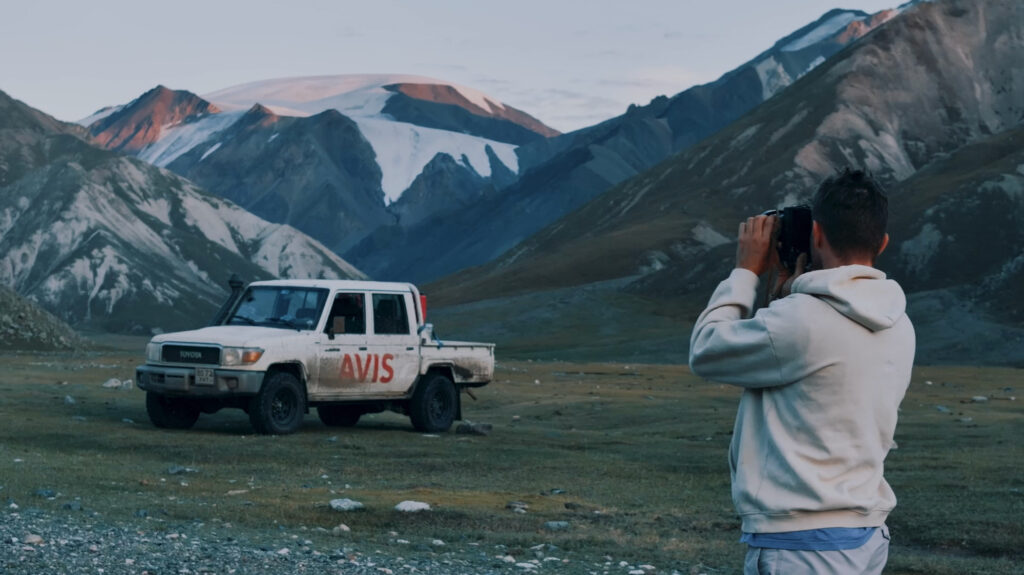
A self-drive journey with Avis Mongolia gives you the flexibility to linger in these communities without rushing. The best moments often happen off-schedule: a shared cup of tea, a spontaneous invitation, a glimpse into a lifestyle that’s vanishing from the modern world.
Photography Tips on a Self-Drive Road Trip in Mongolia
Driving yourself through Western Mongolia offers a creative freedom few destinations can match. You can stop anywhere — literally — and compose the scene without another soul in sight.
- Timing: late June through early September offers the best balance of weather and accessibility.
- Gear protection: dust and vibration are constant companions. Store your camera in padded cases, and clean sensors often.
- Power: carry multiple batteries and a car inverter for charging. Small portable solar panels are great for multi-day treks.
- Drone tips: Mongolia’s vastness is perfect for aerial photography, but stay clear of eagle nesting areas and always fly respectfully near nomadic camps.
The Western Mongolia self-drive road trip is rugged but rewarding, and being in control of your own vehicle means you can wait for the perfect cloud break, chase a lightning storm across the steppe, or stay put until the Milky Way explodes across the night sky.
Essential Gear for Remote Photography in Mongolia
- Camera body: a full-frame mirrorless system (Sony A7 series, Canon R series, Nikon Z) balances quality and weight. Or any other camera that you are comfortable with. It’s not about the model, just how well you know it and can adjust to challenging conditions.
- Lenses (this is just a suggestion):
- 16–35mm ideally for sweeping landscapes
- 24–70mm for versatility
- 70–200mm for wildlife and compression
- 50mm or 85mm prime for portraits
- 16–35mm ideally for sweeping landscapes
- Tripod: carbon fiber, lightweight but sturdy against the wind.
- Filters: polarizer, ND filters for long exposures at lakes and waterfalls.
- Backup: dual memory cards and a portable SSD (no internet in the field).
- Clothing: Bright tones to pop in the landscape if you’re planning to be in your photos, and layers for rapidly changing mountain weather.
Planning Your Self-Drive Tavan Bogd Photography Adventure
A self-drive Mongolia photography trip typically starts in Ulgii, where you can stock up on fuel, food, and supplies before heading into the backcountry. With a rental from Avis Mongolia, you’ll have a rugged 4×4 with the clearance and reliability needed to handle the park’s dirt tracks and river crossings.
Driving distances are deceptive. You’ll only average about 30–40 km/h on dirt roads, so factor in generous time for detours, scouting, and the occasional photo stop that turns into a full afternoon.
Suggested Scenic Routes for Photographers:
- Ulgii → Tolbo Lake – capture reflections and golden steppe at sunset.
- Tolbo Lake → Tsagaan Gol Valley – rolling hills, nomads, and the first sight of Tavan Bogd peaks.
- Tavan Bogd Base Camp → Khoton & Khurgan Lakes – high-altitude panoramas and glacial textures.
- Return via Khovd Steppe – vast desert-grassland scenes and wildlife spotting.
Best Time to Visit:
- June–August: lush pastures, active nomadic camps, and clear skies.
- September-mid October: the golden season — warm tones, crisp air, and eagle hunter activity before winter.
Wildlife and Landscape Opportunities
Mongolia is bursting with wildlife. Keep an eye out for ibex, argali sheep, and even snow leopards in the high passes (though spotting one is a rare privilege). Marmots, eagles, and vultures are common, often perfectly framed against mountain backdrops. Patience is your best lens. The longer you stay, the more Mongolia reveals.
Capturing The Light of the Altai Through Tavan Bogd Photography!
For those bold enough to drive themselves into the remote corners of Tavan Bogd National Park, the reward is more than a portfolio of epic shots; it’s the feeling of discovery, of solitude, and of being present in a landscape that still feels untouched by time.
Whether you choose to visit independently, self-drive one of our cars, or opt for the easy Western Mongolia self-drive tour with pre-programmed GPS, you are sure to capture some great images. Mongolia is a spectacularly beautiful place with landscapes, culture, and people worth sharing with all your friends back home.
 English
  German
  Arabic
  Spanish
  Italian
  Korean
  French
  Dutch
Dutch  Polish
  Russian
  Chinese