


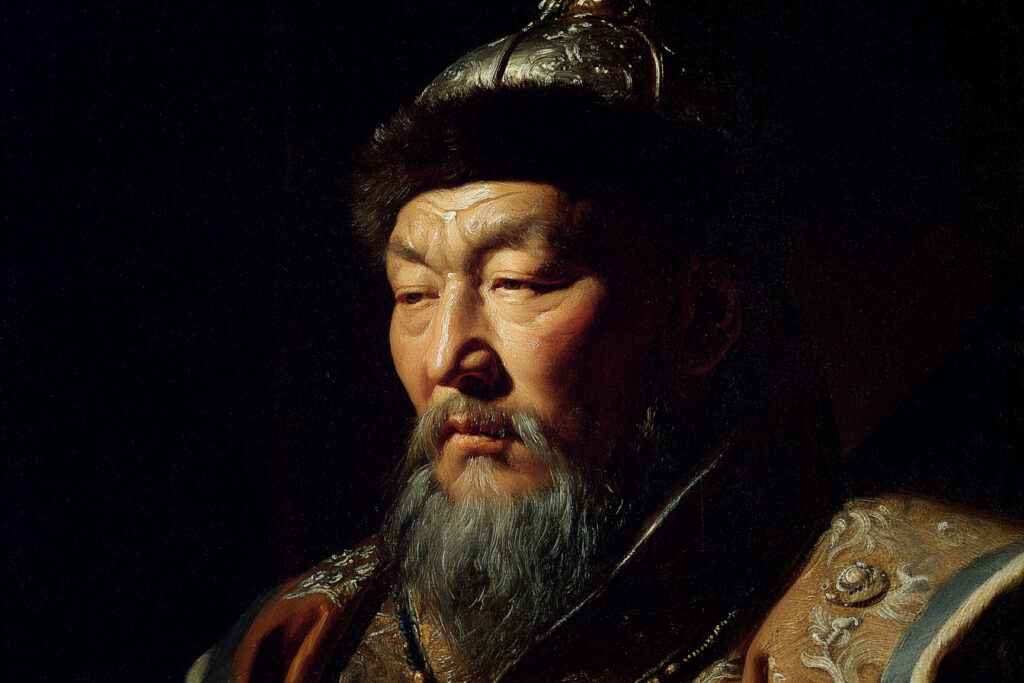
Few historical figures spark as much fascination, or misunderstanding, as Chinggis Khaan. To much of the Western world, he’s painted as a ruthless conqueror, a name whispered alongside words like “barbarian” or “tyrant.” Yet in Mongolia, Chinggis (often spelled Genghis) is revered as the nation’s founding father, the unifier who turned scattered nomadic tribes into one of the greatest empires in human history. His legacy is not one of destruction, but of vision, strategy, and unity.
Traveling through Mongolia, you quickly realize that Chinggis Khaan isn’t just history; he’s part of the country’s modern identity. His name graces vodka bottles and airports, mountain peaks and city squares. And if you take the time to understand the story beyond the myths, you’ll uncover a figure whose influence shaped not only Mongolia but the modern world.
Let’s start dissecting the myth versus the history of Chinggis Khaan.
Who Was Chinggis Khaan?
Born Temüjin around 1162 near the Onon River in northeastern Mongolia, Chinggis Khaan came from humble and harsh beginnings. After his father was poisoned by a rival tribe, Temüjin’s family was left destitute. The young boy grew up in a world where survival meant strength, loyalty, and adaptability — qualities that would later define his leadership.
By his late 30s, he had achieved what no one before him could: he united the nomadic tribes of the Mongolian steppe under one banner. In 1206, he was given the name “Chinggis Khaan”, meaning “universal ruler.” From there, his armies expanded outward — into China, Central Asia, Persia, and even parts of Eastern Europe.
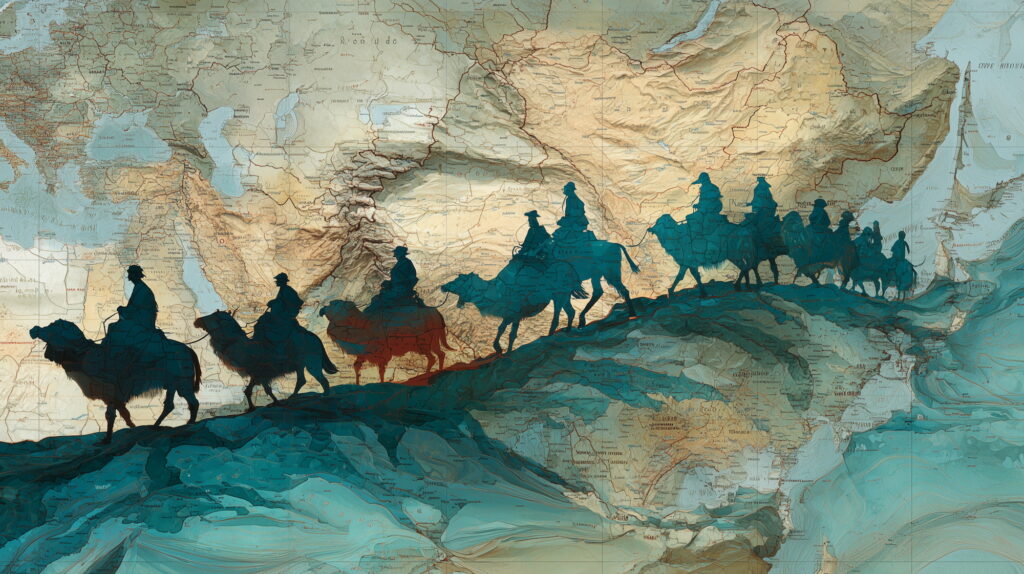
But framing Chinggis solely as a conqueror misses the full picture. He was also a reformer, a strategist, and a visionary. Under his rule, the Mongol Empire implemented merit-based leadership, advanced communication systems like the Yam courier network, and drafted laws that protected trade, religion, and women’s rights to a degree unusual for the 13th century.
Dispelling the Myths: What the West Gets Wrong
Western accounts of Chinggis Khaan often come from his enemies. The Chinese dynasties, Persian chroniclers, and European envoys. Many of these sources emphasized the terror of his campaigns while ignoring the sophistication of his governance.
Here are a few myths worth unpacking:
Myth 1: Chinggis Khaan Was a Mindless Destroyer
In reality, Chinggis was a brilliant military strategist. His tactics are still studied in military academies today. He built an army that thrived on discipline, mobility, and communication, often defeating forces several times its size. His approach to conquest was calculated: surrender and be spared, resist and face retribution. Harsh, yes, but certainly not mindless.
Myth 2: The Mongol Empire Was Purely Violent
The empire actually fostered an unprecedented era of peace and cultural exchange known as the Pax Mongolica. Trade routes flourished under Mongol protection, connecting China to Europe and allowing ideas, inventions, and even cuisine to travel freely. Paper, gunpowder, and printing all reached the West through Mongol-controlled networks.
Myth 3: He Hated Civilization
Ironically, Chinggis admired urban societies. He employed scholars, artisans, and engineers from across Asia to build bridges, fortifications, and irrigation systems. His laws encouraged literacy, commerce, and religious tolerance — centuries before Europe embraced those ideals.
Myth 4: Chinggis Khaan’s Legacy Is One of Fear
To Mongolians, his legacy is one of unity and resilience. He’s the embodiment of what’s possible when diverse tribes set aside rivalry for a shared purpose. His image is everywhere, not as propaganda, but as pride. A reminder of how far the Mongolian spirit can reach.
Fun Facts About Chinggis Khaan
- He never allowed portraits of himself. Most depictions we see today are artistic interpretations; no one truly knows what he looked like.
- His laws banned the kidnapping of women, theft of livestock, and hunting during breeding seasons; an early nod to conservation and social order.
- He created one of the first international postal systems, with mounted couriers able to deliver messages thousands of kilometers in record time.
- He valued merit over birthright. Even commoners could rise to high ranks if they proved loyal and capable.
- His burial site remains a mystery. Legend says his funeral procession killed everyone they met along the route to keep the location secret.
Where to Learn More About Chinggis Khaan in Mongolia
If you’re visiting Mongolia and want to trace Chinggis Khaan’s story, there are several sites that bring his legend to life, from monumental tributes to the very landscapes that shaped him.
1. The Chinggis Khaan Statue Complex (Tsonjin Boldog)
Located about 55 km east of Ulaanbaatar, this 40-meter-tall stainless steel statue of Chinggis Khaan on horseback is impossible to miss. It’s the largest equestrian statue in the world and stands atop a visitor complex that includes a museum, panoramic viewpoint, and exhibits on the Mongol Empire’s rise. You can even climb up through the horse’s neck to the viewing platform in its head — a must-do for travelers.
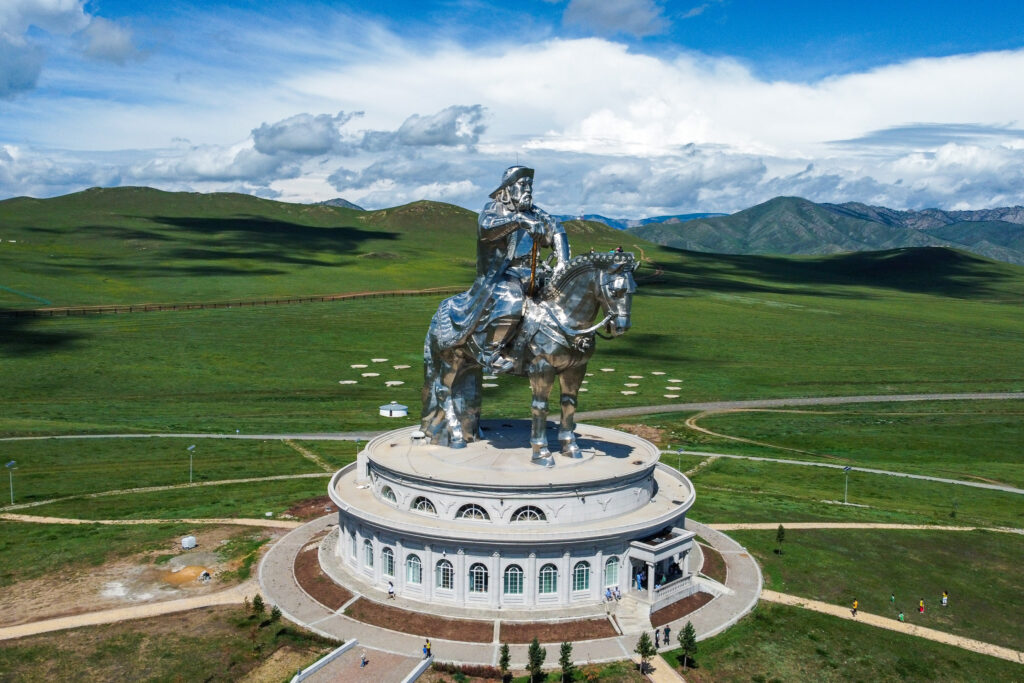
For self-drive travelers, it’s an easy half-day trip from the capital, nearly next door to Gorkhi Terelj National Park, and the drive offers a glimpse into the rolling steppe that once stretched across Chinggis’s empire.
2. The National Museum of Mongolia (Ulaanbaatar)
Located in central Ulaanbaatar, this museum houses some of the most important artifacts from the Mongol Empire, including weaponry, royal seals, and ancient maps. The exhibits here are excellent for understanding how Chinggis unified the Mongols and laid the foundation for centuries of history.
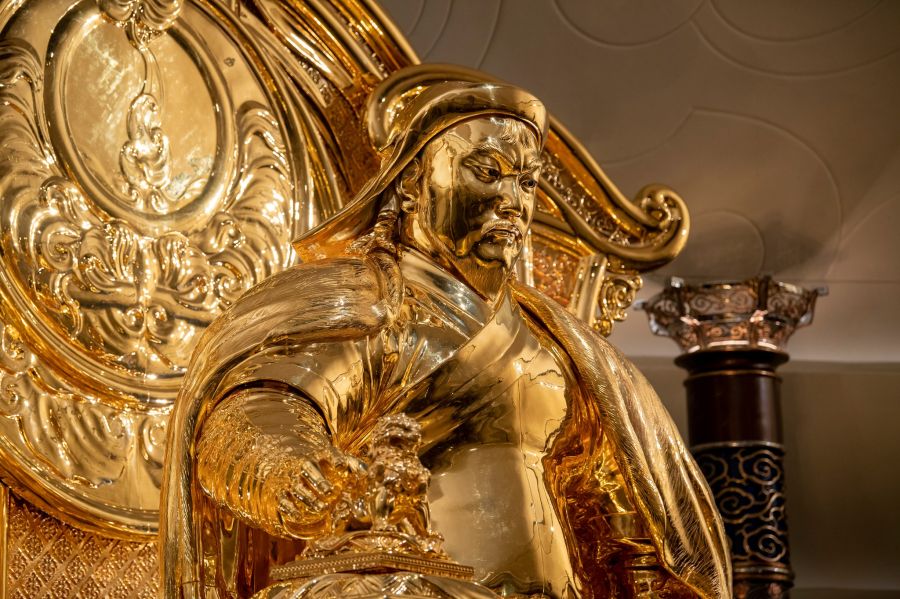
3. Erdene Zuu Monastery and Kharkhorin (Karakorum)
About 370 km southwest of Ulaanbaatar, Kharkhorin (known historically as Karakorum) was the capital of the Mongol Empire under Chinggis’s son, Ögedei. Today, the site is a UNESCO World Heritage area. Within its ancient walls stands Erdene Zuu Monastery, Mongolia’s first Buddhist monastery, built from the remnants of the old city.
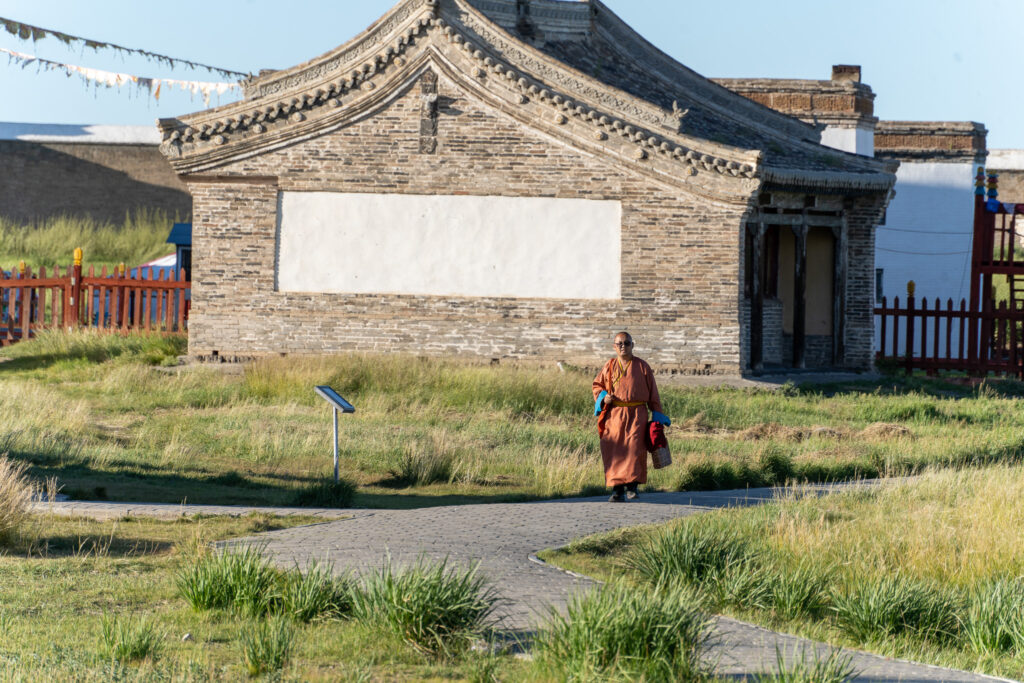
Visiting here offers a fascinating blend of imperial and spiritual history, a reminder of how Chinggis’s empire evolved after his time.
4. Burkhan Khaldun Mountain (Khentii Province)
This sacred mountain in northeastern Mongolia is believed to be near Chinggis Khaan’s birthplace and possibly his burial site. It’s a UNESCO-listed area and a pilgrimage site for Mongolians. Hiking here gives travelers a powerful sense of connection to the landscapes that forged the empire’s founder.
For those on a Mongolia self-drive tour, Burkhan Khaldun is a rewarding detour that is both remote and beautiful.
Suggested Reading on Chinggis Khaan
To understand the man beyond the myths, here are some great books and resources that bridge history and storytelling that you can read before your trip.
- “Genghis Khan and the Making of the Modern World” by Jack Weatherford – A highly readable and sympathetic account that reframes Chinggis as a visionary leader rather than a barbarian.
- “The Secret History of the Mongols” – The oldest surviving Mongolian text, likely written soon after Chinggis’s death. It’s part history, part legend, and essential reading for anyone serious about Mongolian culture.
- “On the Trail of Genghis Khan” by Tim Cope – A modern travel memoir tracing Chinggis’s route on horseback from Mongolia to Hungary. Perfect for those inspired by adventure.
- National Museum Exhibitions and Local Guides – In Ulaanbaatar and Kharkhorin, many museums and guides offer local interpretations that contrast Western narratives, grounding Chinggis’s story in Mongolian pride and context.
Chinggis Khaan in Modern Mongolia
In modern Mongolia, Chinggis Khaan is more than just a historical symbol; he’s part of daily life. His name appears on Mongolia’s currency, the national airline, and even vodka. His image greets travelers arriving at the Chinggis Khaan International Airport in Ulaanbaatar.
To outsiders, this might seem like hero worship. But to Mongolians, it’s about remembering resilience. Chinggis unified a people who had been fragmented for centuries and gave them a shared story — one that still binds the nation today.
If you spend any time with nomadic families in the countryside, you’ll hear stories of Chinggis spoken with warmth and respect. He’s not a relic of the past but a figure woven into the national identity. He’s certainly a symbol of independence, courage, and the unbreakable spirit of the steppe.
Seeing Chinggis Khaan’s Mongolia on a Self-Drive Tour
For those who want to see where this history unfolded, a self-drive adventure through central and eastern Mongolia is one of the most rewarding travel experiences. Start in Ulaanbaatar, pick up a 4×4 from Avis Mongolia, and trace Chinggis’s legacy across the landscape — from the Chinggis Khaan Statue Complex to the Orkhon Valley, Erdene Zuu Monastery, and Burkhan Khaldun.
The open road offers a sense of freedom and a connection to the same vast horizons Chinggis once rode across. Along the way, you’ll pass nomadic herders, ancient monuments, and endless stretches of steppe that whisper the empire’s history.
Self-driving in Mongolia isn’t just about covering miles; it’s about immersion. You’re not following a guidebook; you’re retracing the footsteps of a legend.
Remembering Chinggis Khaan as Mongolia Does
To travel in Mongolia is to encounter Chinggis Khaan at every turn — not as a conqueror, but as a creator. His story isn’t about empire for empire’s sake; it’s about unity, resilience, and vision.
When you stand beneath his towering statue east of Ulaanbaatar, or walk through the ruins of Kharkhorin, you begin to understand why Mongolians revere him. His legacy isn’t confined to history books; it lives in the land itself.
For travelers, learning the truth behind Chinggis Khaan’s legend offers a deeper appreciation of Mongolia, of its people, its pride, and its place in world history. And on a self-drive journey through these storied landscapes, you’re not just exploring a destination, you’re given the opportunity to ride in the shadow of a man who changed the world.
 English
  German
  Arabic
  Spanish
  Italian
  Korean
  French
  Dutch
Dutch  Polish
  Russian
  Chinese