EN

Mo’s Mongolia Winter Wildlife Watching Tour to South Gobi – Snow leopards, wild camel, ibex and bearded vultures

Follow in the footsteps of an award-winning photographer

Travel on a Mongolia wildlife watching tour to the Great Gobi. Snow leopards, wild camels, pallas cat, ibex & vultures. Wildlife watching photography.

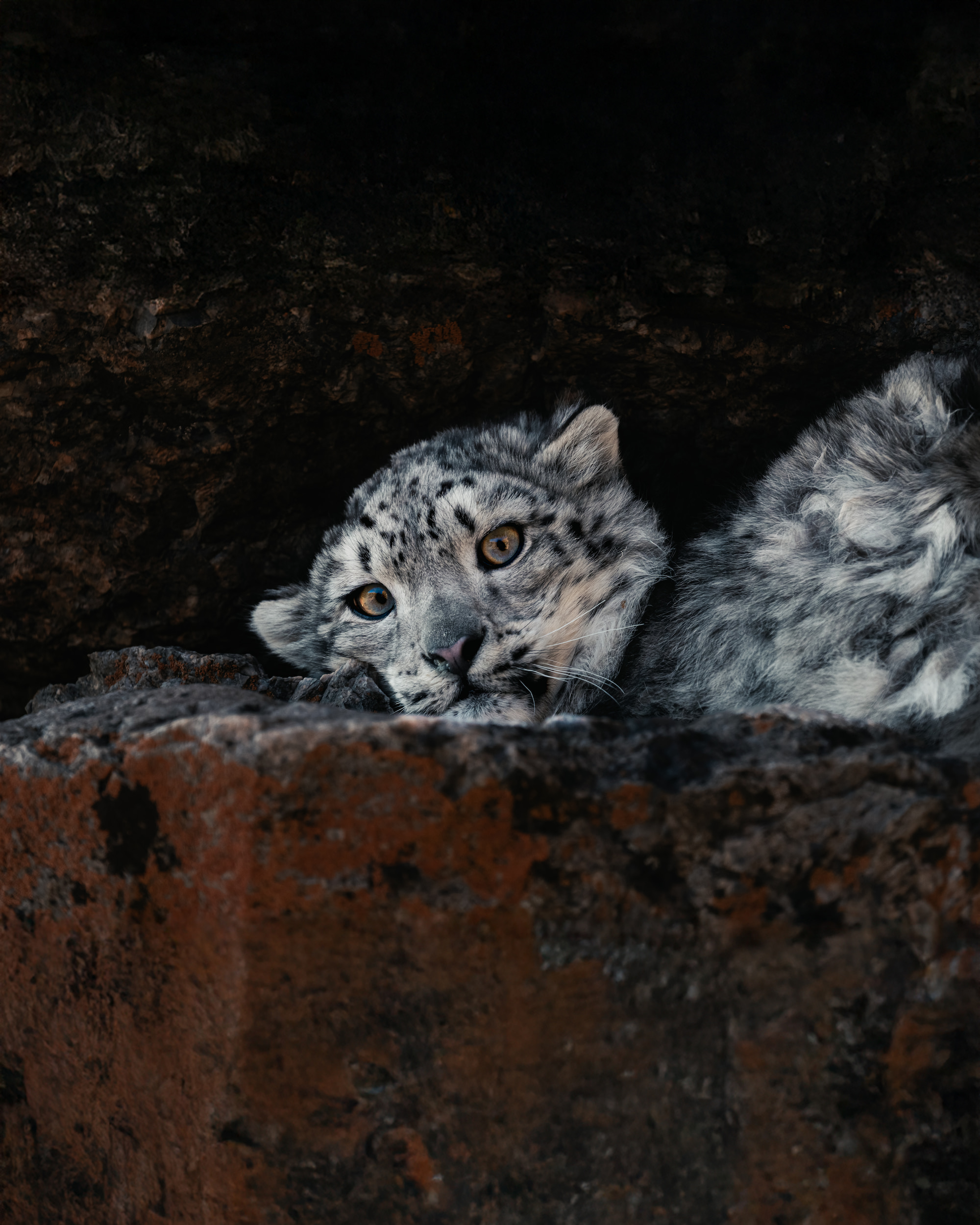
Snow leopard in Gobi during Mongolia wildlife photography tour
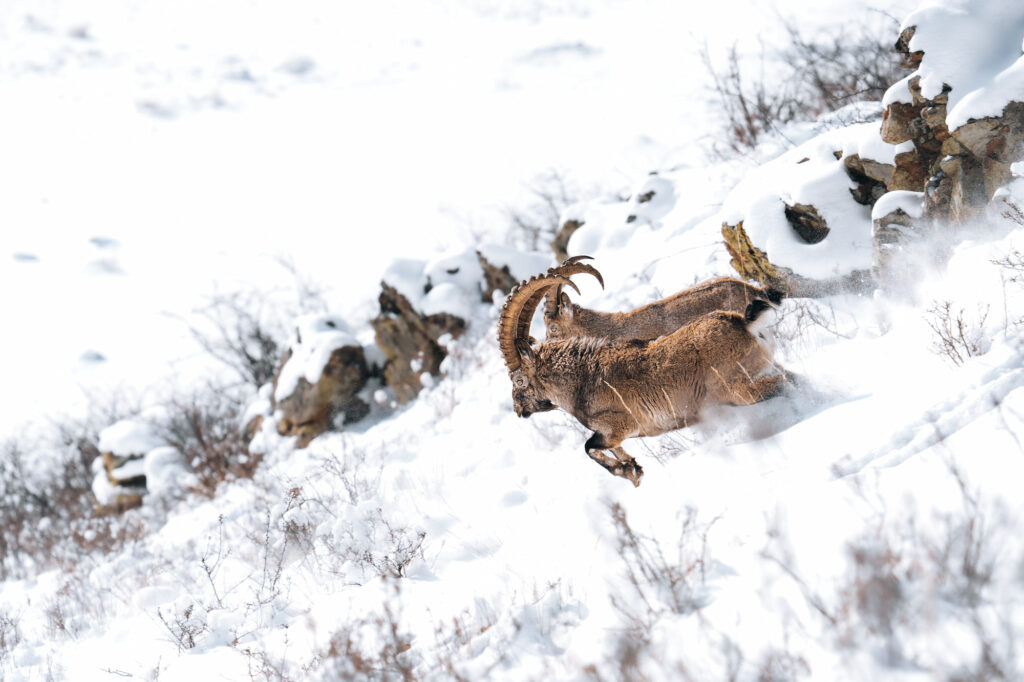
Gobi ibex running in snow. Another highlight on the Gobi wildlife observation tour
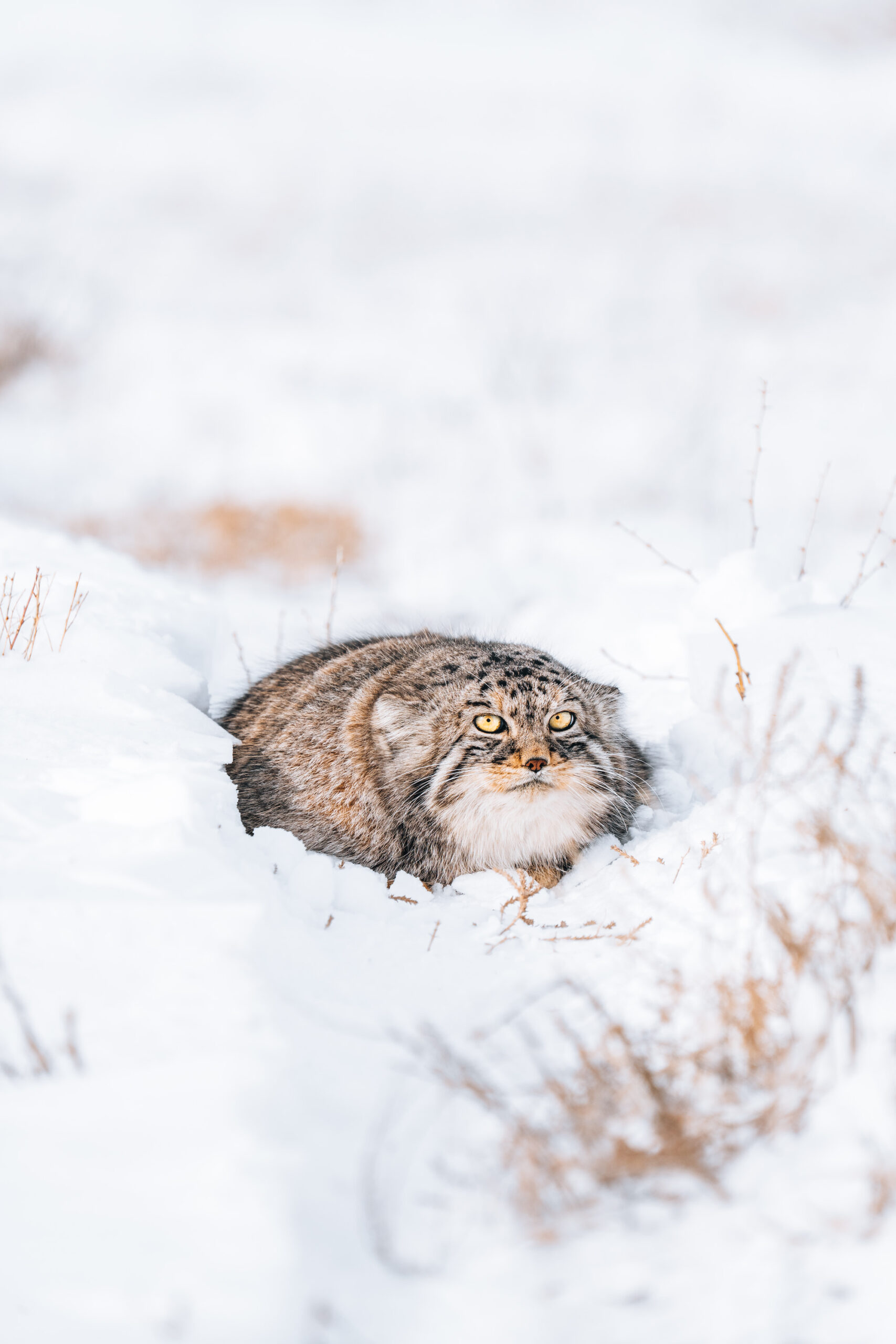
Pallas Cat in Mongolia during wildlife observation tour
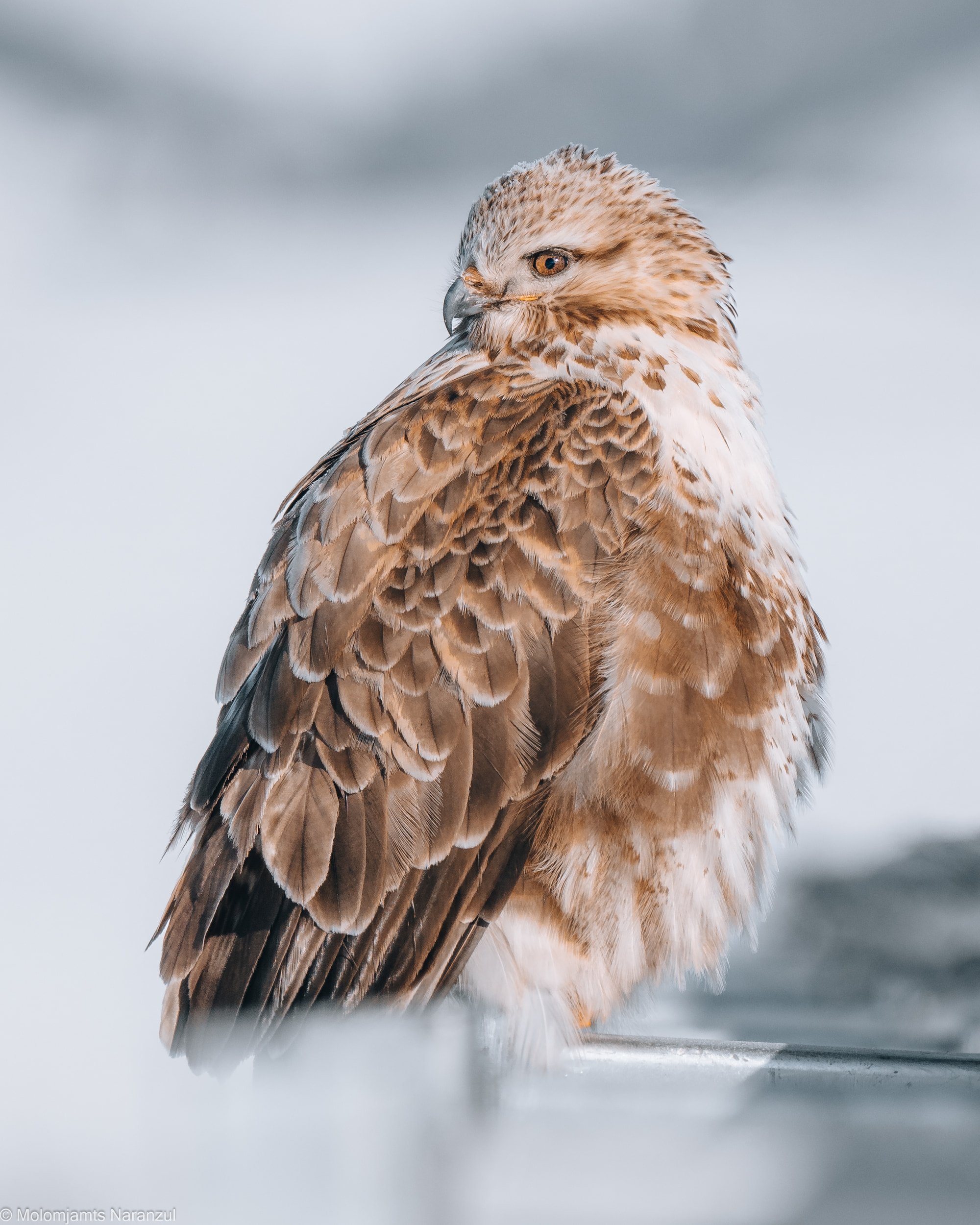
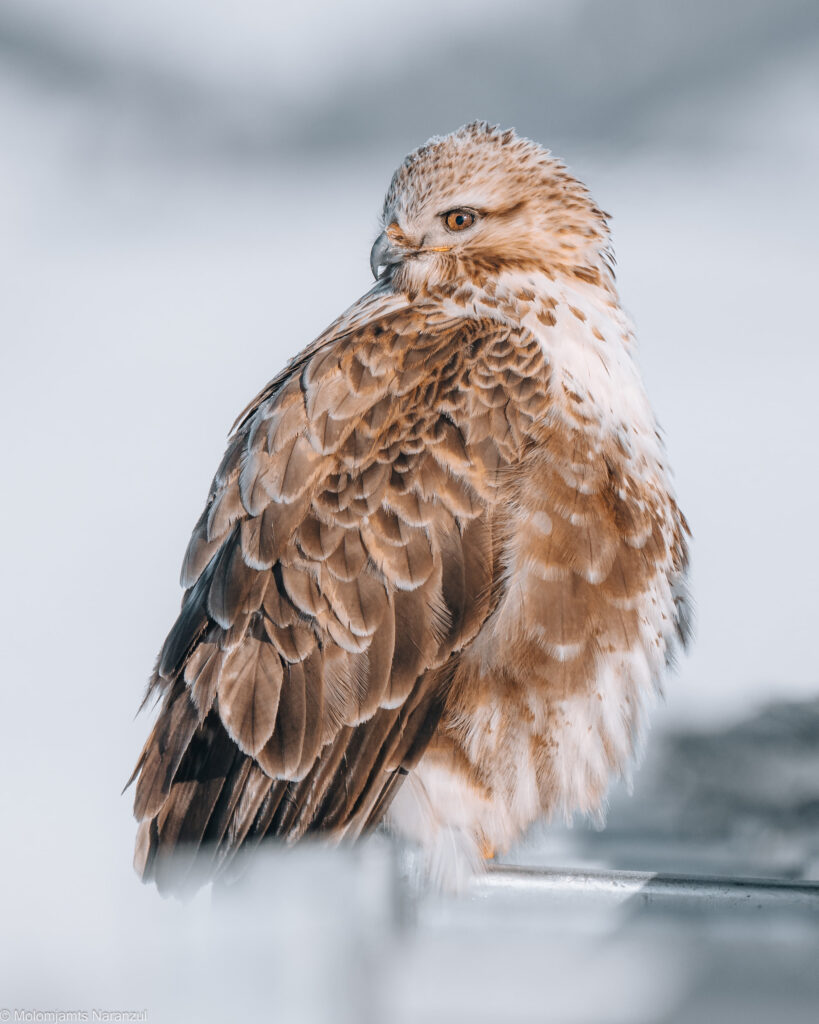
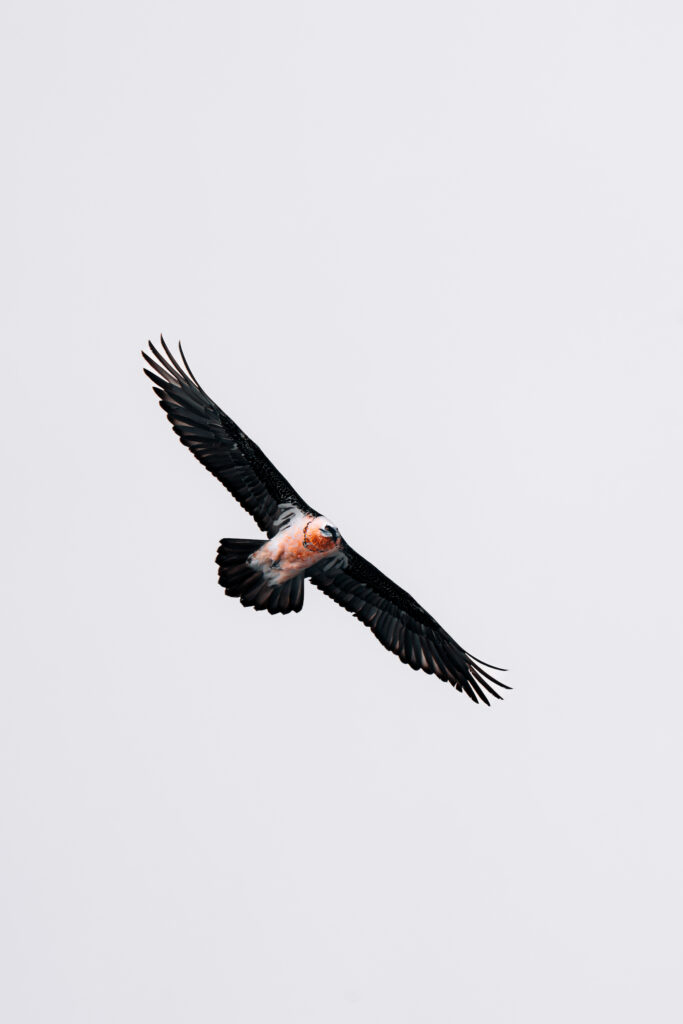
Rare bearded vulture spotted during bird watching in Mongolia Gobi desert on a birdwatching tour
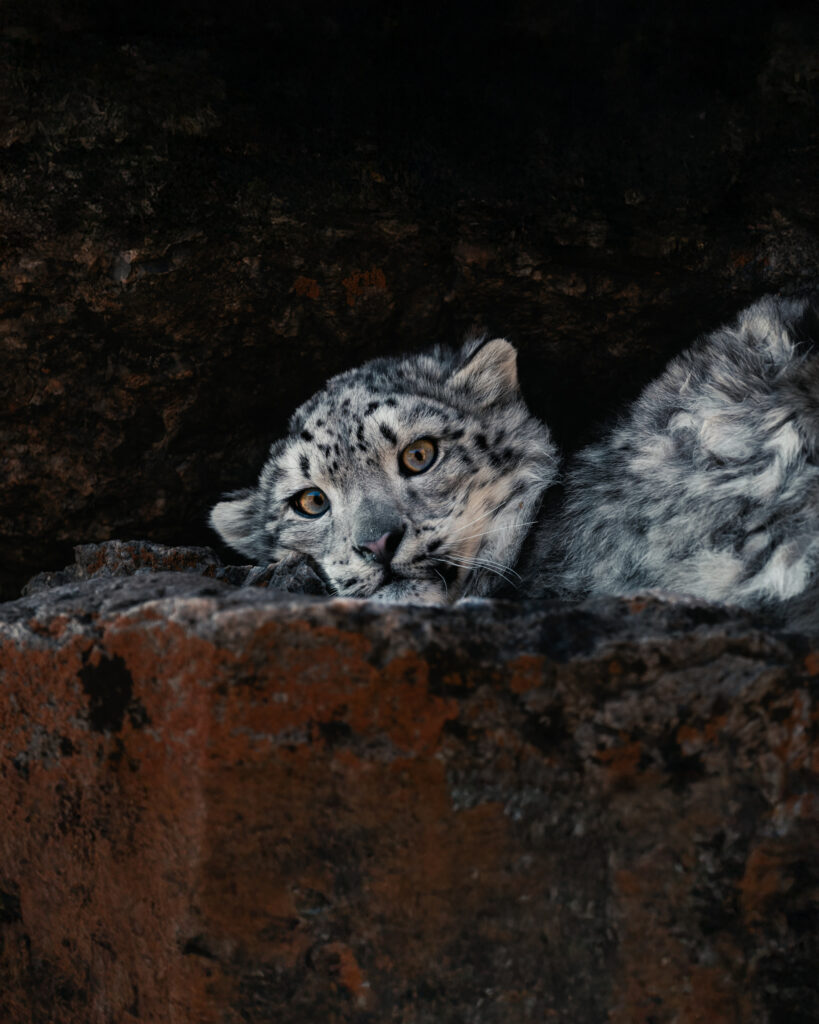
Snow leopard in Mongolia

$3,500Starting from

7-22days

difficulty

A Gobi focused Mongolia wildlife photography tour into the Great Gobi A Strictly Protected Area, designed and led by Mongolian wildlife photographer Mo.

This expedition-style Mongolia wildlife tour travels deep into the South Gobi and the legendary Great Gobi A Strictly Protected Area, one of the most remote, intact, and biologically important wilderness regions in Central Asia. Created by Mo — a Mongolian wildlife photographer and explorer with first-hand field experience — the route is carefully designed around ethical wildlife observation, winter tracking, and extended time in key habitats rather than rushed sightseeing.
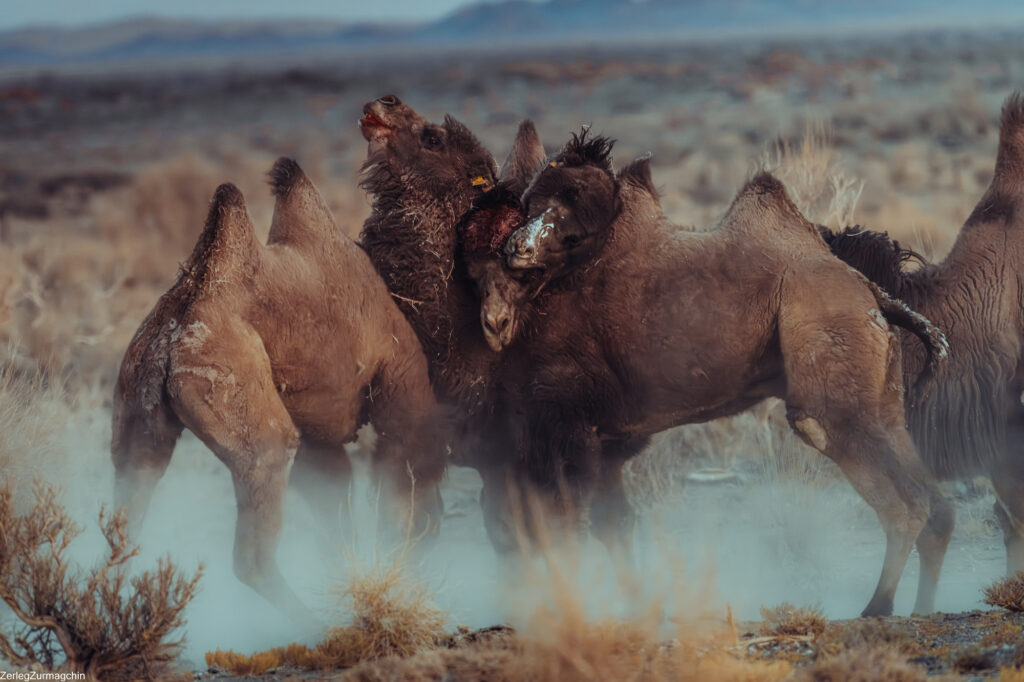
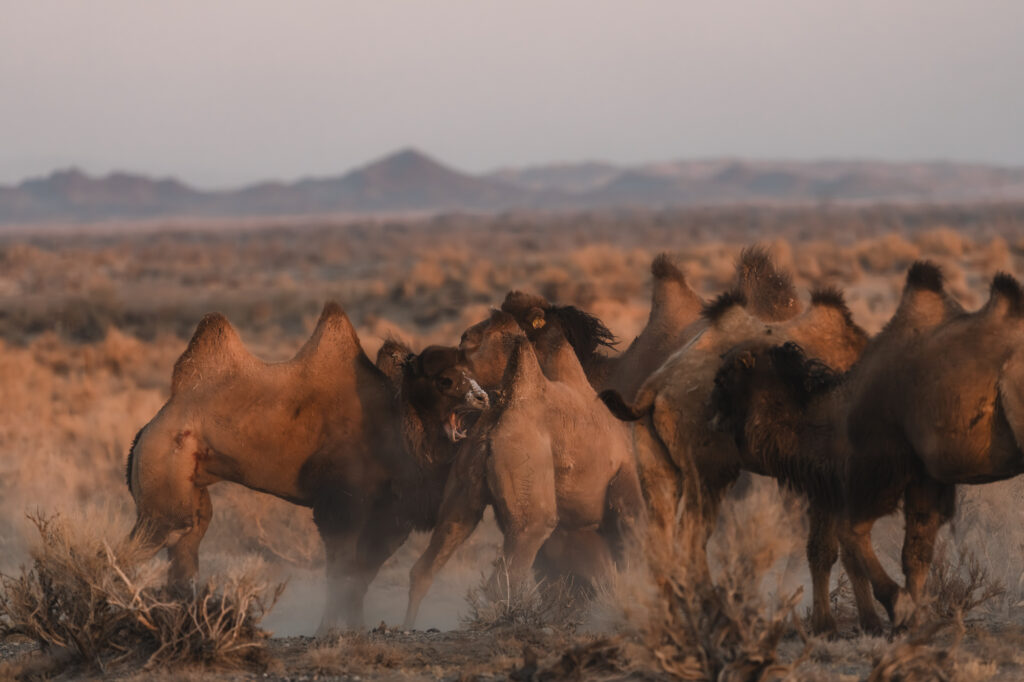
Wildlife watching in Mongolia wild camels in the Gobi

The focus is on species uniquely adapted to the harsh Gobi environment, including the snow leopard, wild Bactrian camel, Gobi ibex, bearded vulture, Cinereous vulture, ground jay, and the critically endangered Gobi bear (Maazalai). The journey prioritizes patience, silence, and understanding animal behavior in one of the world’s most extreme ecosystems.

Winter (November to April) offers the highest chances of snow leopard activity, with fresh tracks visible in snow and sand and increased daylight movement of wildlife. While this route can technically be operated year-round, it is first and foremost a serious winter wildlife observation tour designed for photographers, filmmakers, researchers, and committed nature travelers.

Why This Mongolia Wildlife Tour Is Special

This journey stands apart because it is designed by a Mongolian wildlife photographer, not a sightseeing operator. Every location has been chosen for its ecological importance, seasonal wildlife behavior, and photographic potential.
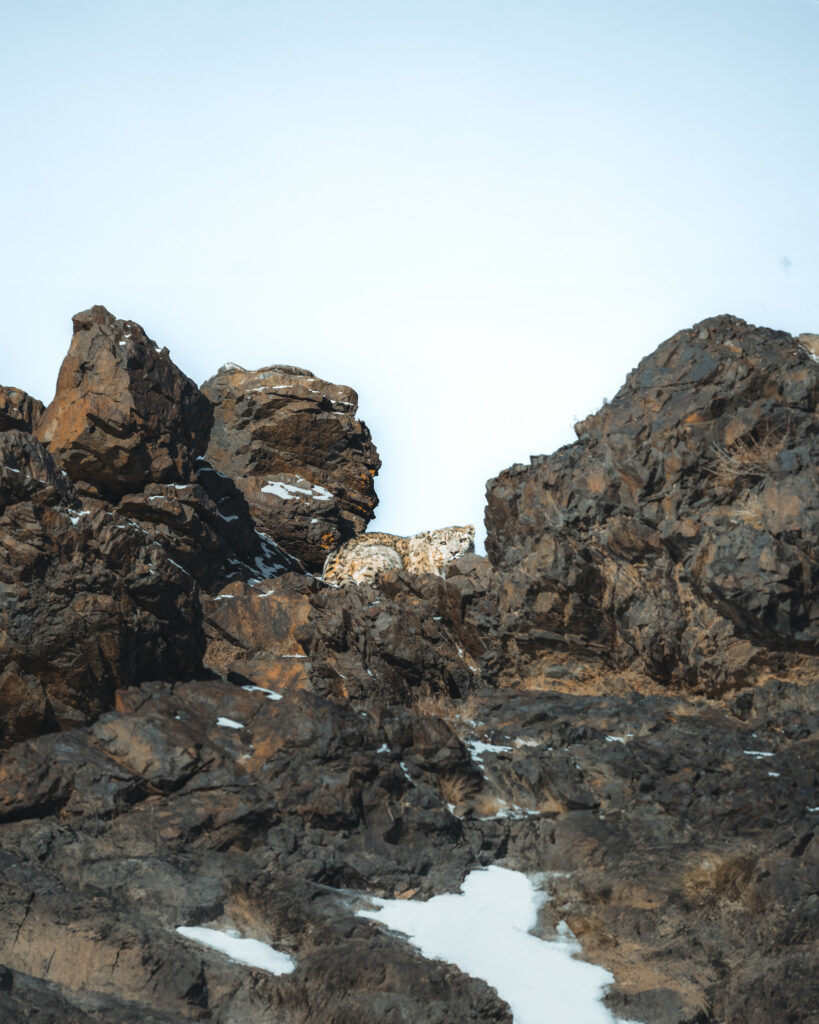
Snow leopard in Gobi during Mongolia wildlife photography tour

Extended time is spent inside the Great Gobi A Protected Area, one of the last refuges of the wild camel and Gobi bear, allowing for meaningful observation rather than brief encounters. The route includes focused exploration of snow leopard habitat in the Baga Bogd Mountains and surrounding ranges, where winter conditions offer the best chance to read tracks and understand predator movement.

Travel is low-impact and ethical — there is no baiting, no disturbance, and no staged encounters. Remote camping, off-road travel, and long days in the field take the group far beyond standard Gobi routes, into landscapes rarely visited even within Mongolia.

This is not a conventional Mongolia tour. It is a true wilderness expedition into one of Asia’s last untouched regions.

Gobi Wildlife Highlights

This Mongolia wildlife photography tour focuses on species that are extremely rare, elusive, or seasonally active in winter. Key targets include the snow leopard, with winter being the peak tracking season in South Gobi mountain systems, and the wild Bactrian camel, one of the rarest large mammals on Earth.

The route also passes through the fragile range of the Gobi bear (Maazalai)critically endangered and found nowhere else on the planet. Gobi ibex and argali sheep are often seen along ridgelines and rocky slopes, while the skies are dominated by bearded vultures (Lammergeiers) and the massive Cinereous vulture, one of the world’s largest flying birds.
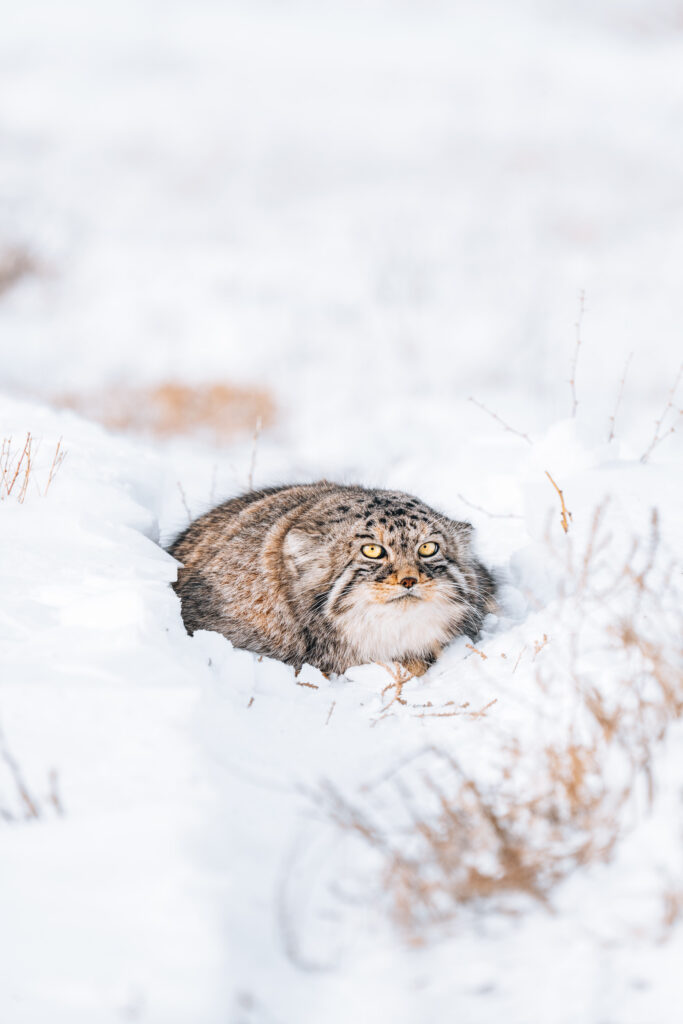
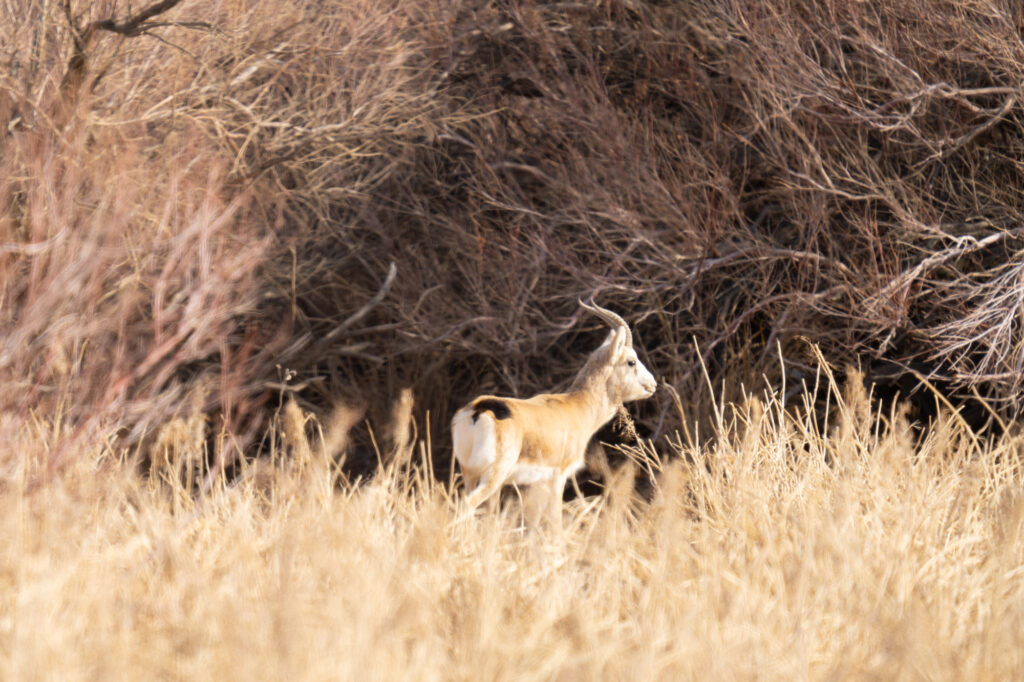
Pallas Cat in Mongolia during wildlife observation tour

Endemic species such as the ground jay, along with golden eagles, foxes, wolves, and occasionally Pallas’s cat, add to the diversity of wildlife encounters.

Wildlife sightings are never guaranteed, but the route design, season, and slow pacing are optimized to maximize opportunity.

Best Time to Travel for Wildlife Observation in Gobi

The optimal season for this tour is November to April, when snow leopard movement is most likely, animal tracks are clearly visible, and tourist pressure is at its lowest. Winter also brings dramatic light, stark landscapes, and powerful photographic contrast, making it the strongest season for wildlife photography.

While the route can be operated outside winter, cold-season conditions offer the greatest wildlife focus and photographic rewards.

Wildlife Photography Focus

This is a true Mongolia wildlife photography tour, not a general sightseeing trip. Days are structured around long observation periods, careful positioning, and sunrise and sunset light rather than fixed driving schedules.

The tour supports wildlife storytelling in extreme environments, combining predators, scavenger dynamics, desert-adapted mammals, fossil landscapes, and vast Gobi scenery. Both photographers and filmmakers are supported in remote conditions, with flexibility built into the schedule to respond to wildlife activity and light.

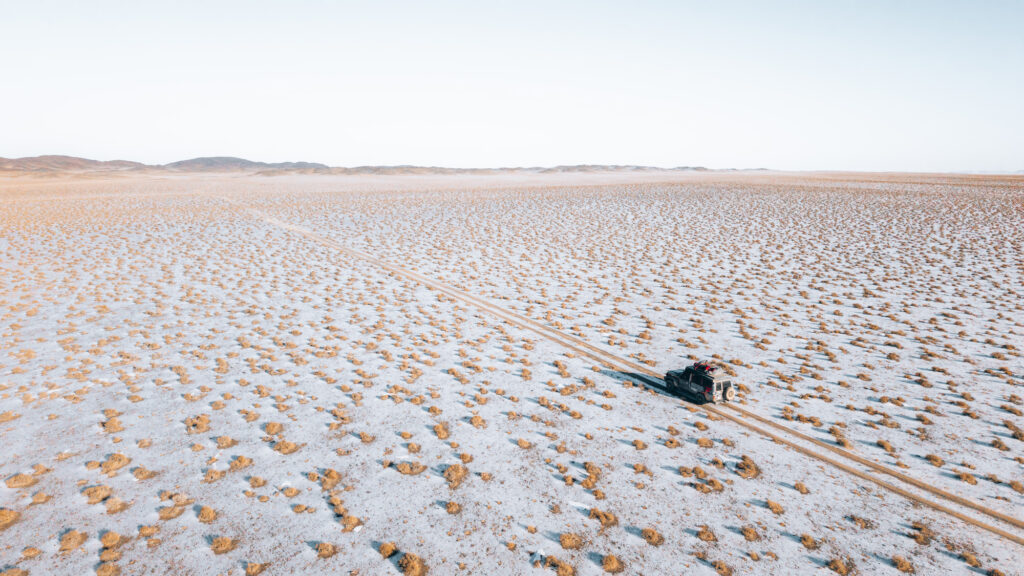
The Explorer.Company special customized TOYOTA Landcruiser 4×4 for this tour

The Explorer.Company 2025 TOYOTA Land Cruiser 78 Troopy is the ultimate expedition vehicle for your Mongolia tour during the colder months. Built for rugged, long-distance self-drive adventures, it features an automatic transmission, dual diesel tanks, and soft seating for four. Stay warm and comfortable with a heated Alu-Cab rooftop tent, a dedicated cooking tent, and a 270° awning for shelter in any weather. UV-protected tinted windows, a table, chairs, MaxTrax sand and snow boards, air compressor, whinch and mounted hand-wash canister ensure a fully equipped overlanding experience. Perfect for travelers seeking comfort, reliability, and true independence while exploring Mongolia’s wild landscapes during the winter months.
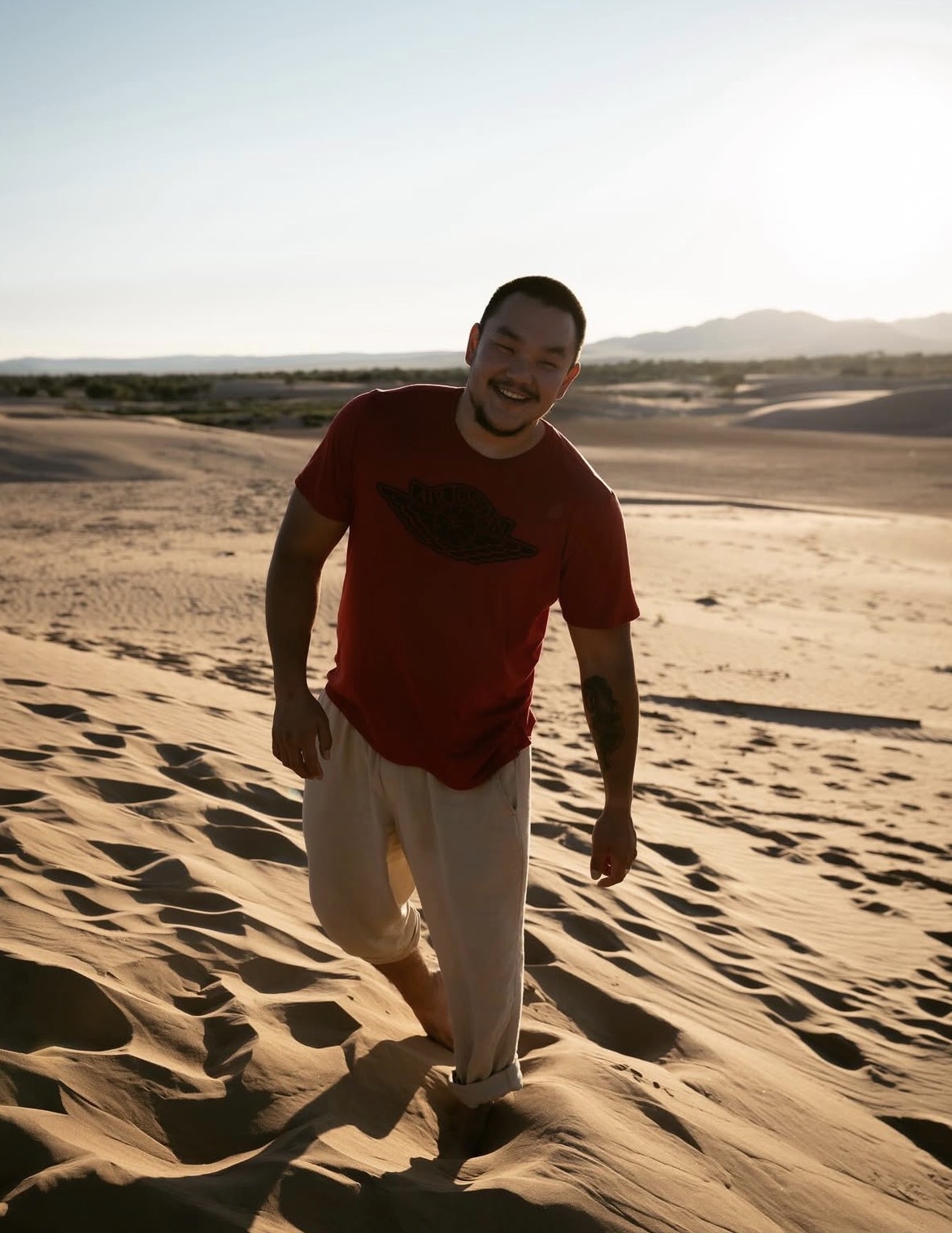
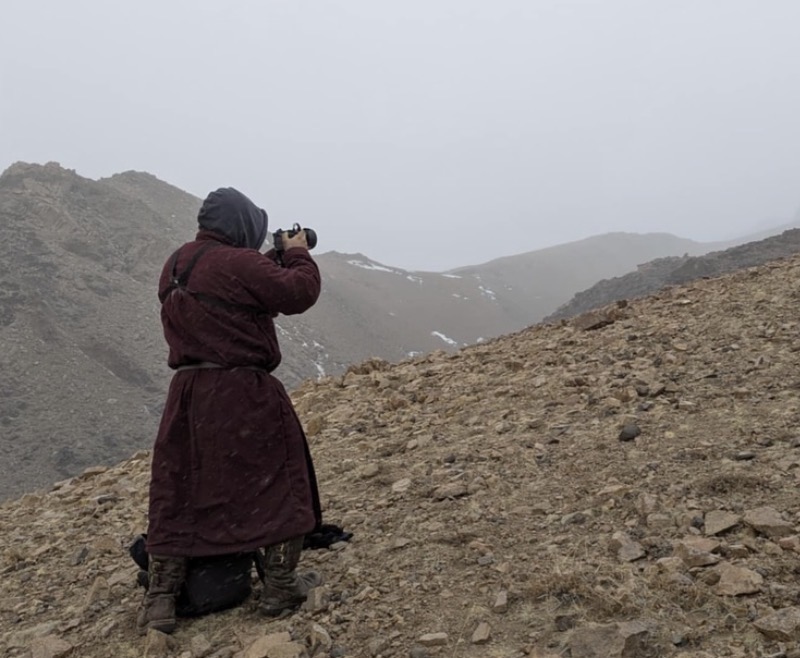
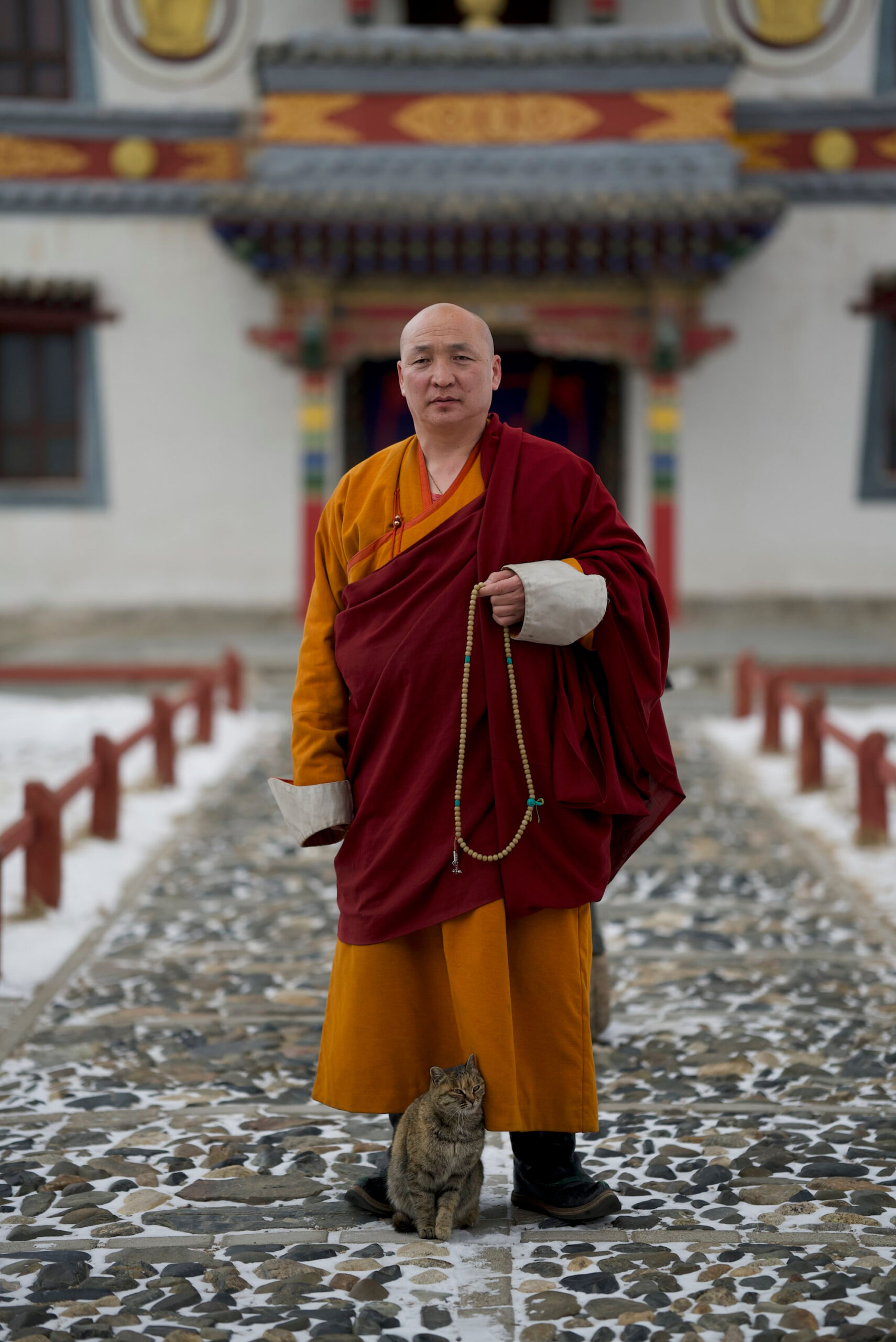
Mo

Meet the explorer

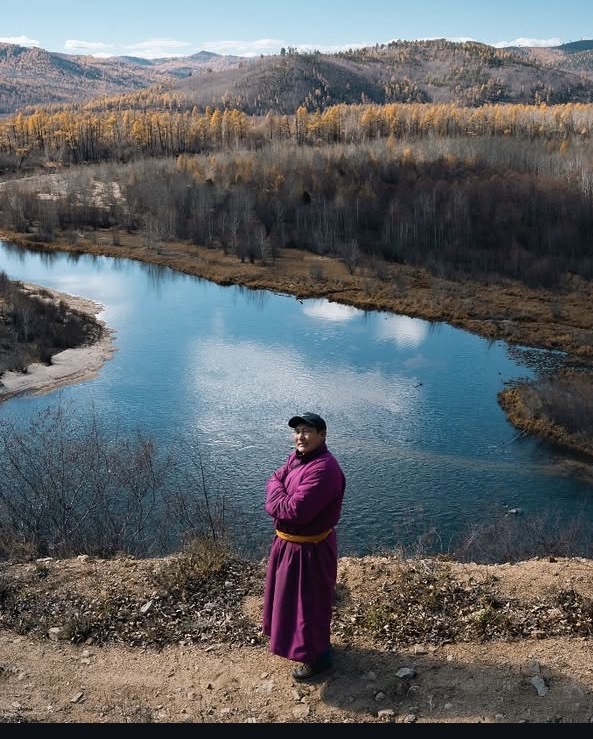
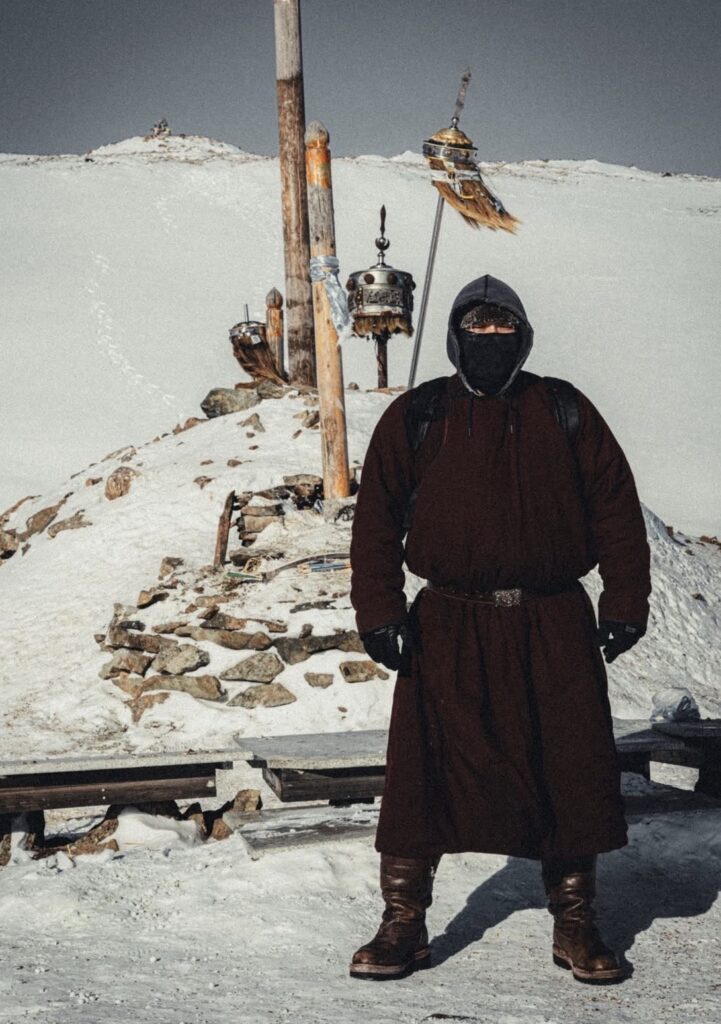
Mo - wildlife photographer in Mongolia and tour guide for the Gobi wildlife observation tour

Wildlife photographer

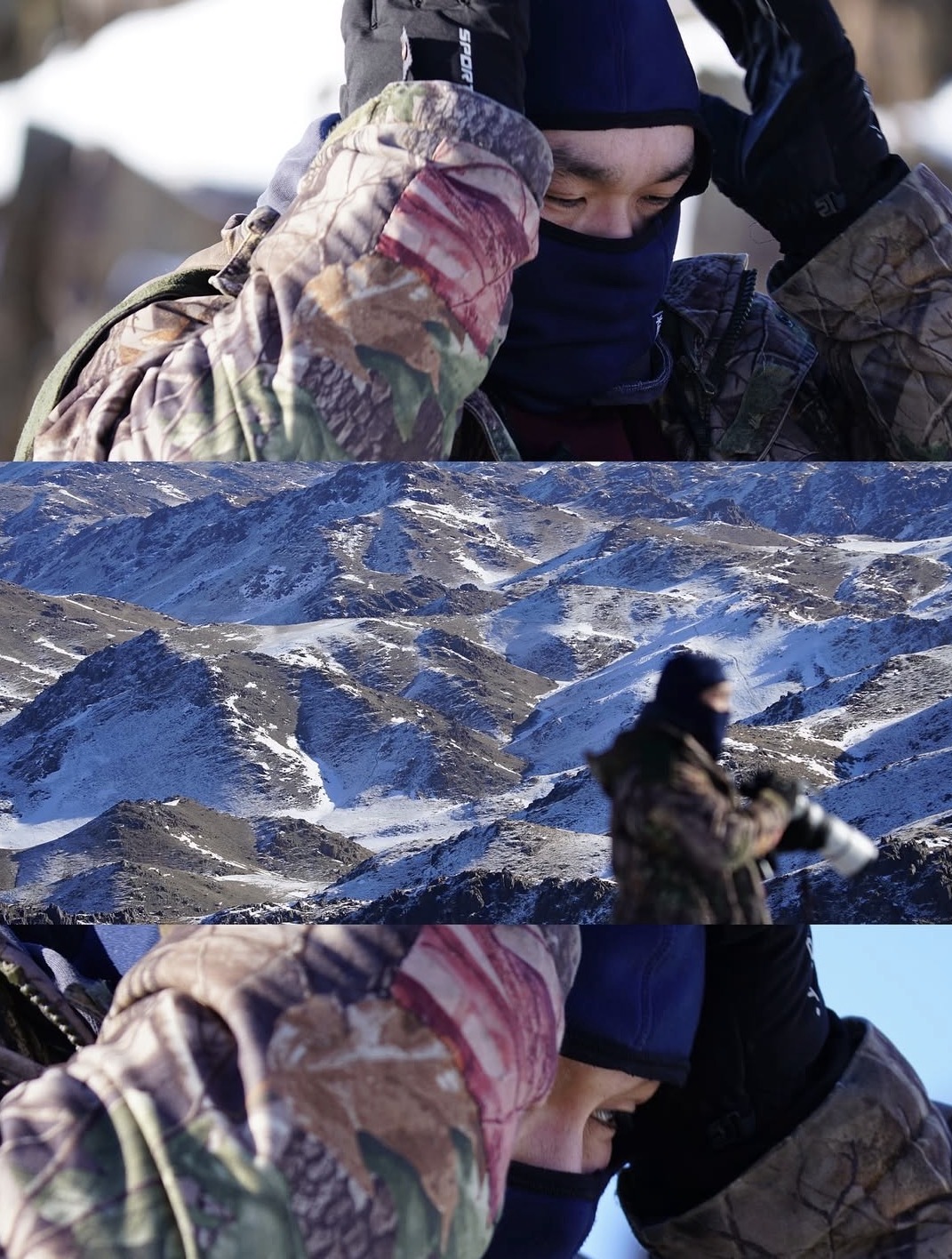
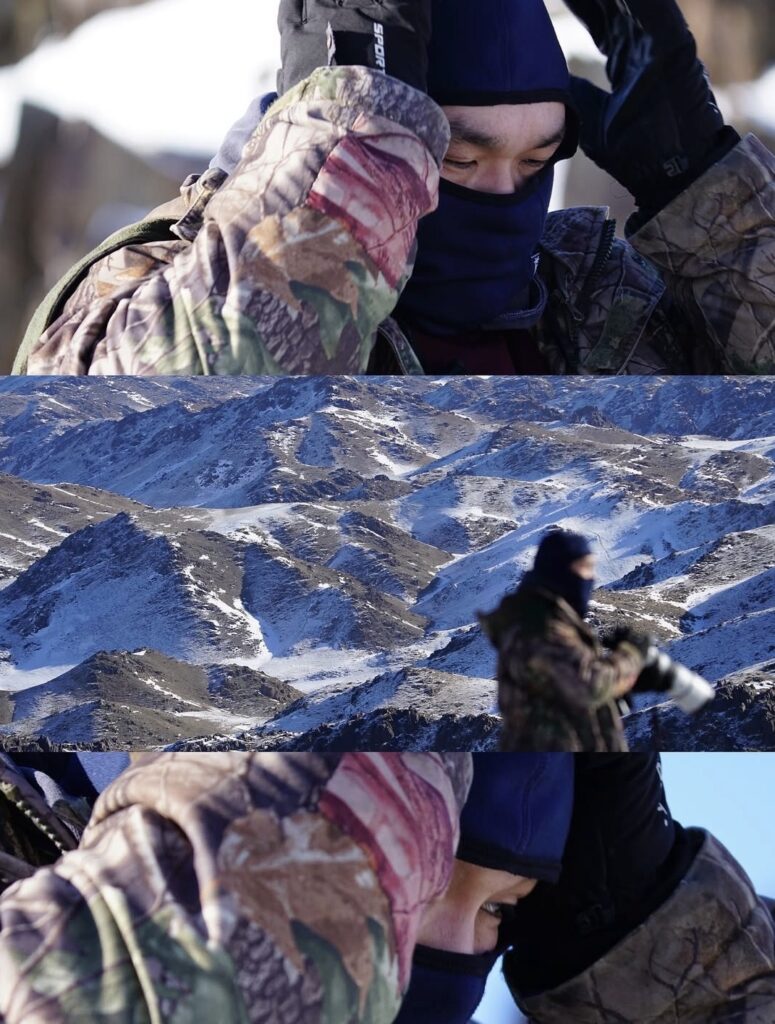
    Wildlife photographer Mo capturing snow leopards in the Gobi
    Pallas Cat in Mongolia during wildlife observation tour
    Mo observing wildlife in Mongolia
    Mo on wildlife photography tour in Mongolia in winter
    Gobi ibex running in snow. Another highlight on the Gobi wildlife observation tour
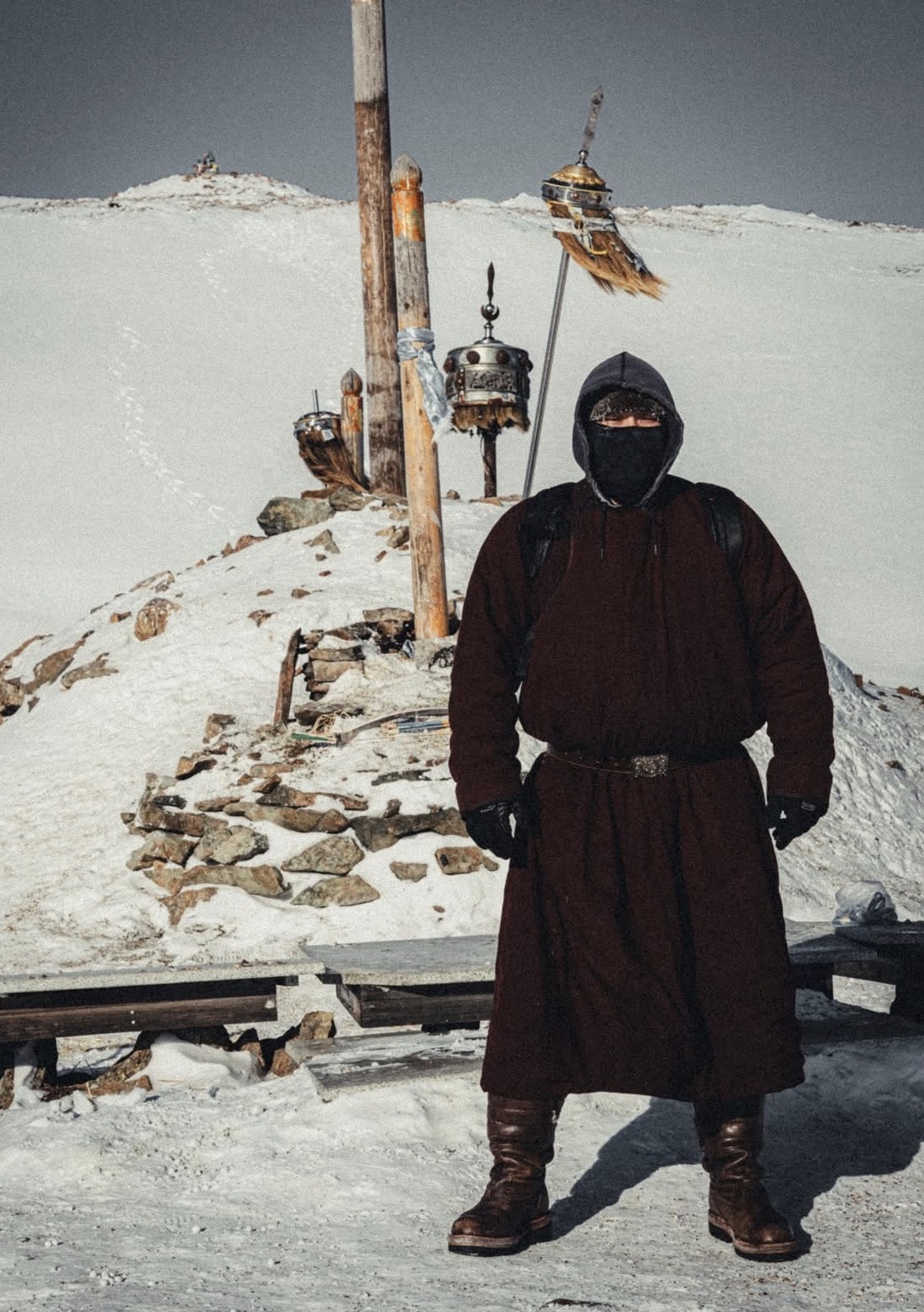
    Mo on Mongolia winter trip
    Rare bird watching in Mongolia
    Snow leopard in Mongolia
    Wildlife photographer Mo capturing snow leopards in the Gobi
    Pallas Cat in Mongolia during wildlife observation tour
    Mo observing wildlife in Mongolia
    Mo on wildlife photography tour in Mongolia in winter
    Gobi ibex running in snow. Another highlight on the Gobi wildlife observation tour
    Mo on Mongolia winter trip
    Rare bird watching in Mongolia
    Snow leopard in Mongolia

Molomjamts has photographed many of Mongolia’s rare and iconic wildlife species, including the elusive Snow Leopard, Pallas’s Cat, the critically endangered Wild Bactrian Camel, Bearded Vulture, Siberian Ibex, Argali, Goitered Gazelle, and Mongolia’s legendary Golden Eagle. His field experience tracking these species allows him to guide travelers and photographers to some of the best wildlife locations in the country.

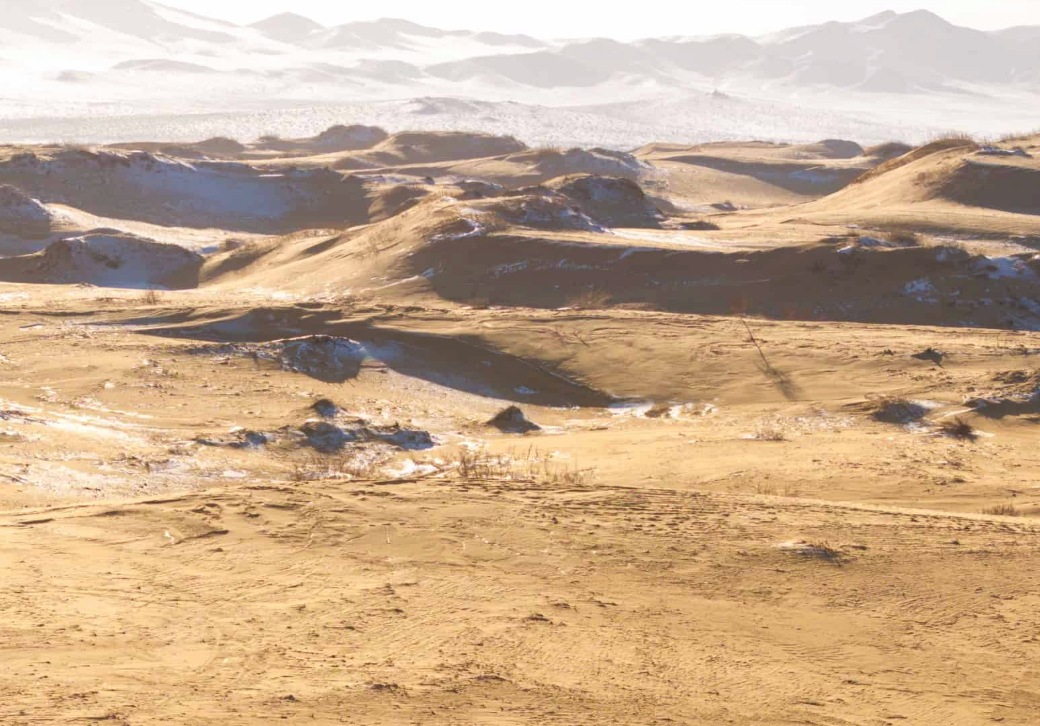
Molomjats' favorite region is the Gobi Desert. Millions of years ago, much of this region was covered by an ancient ocean, which helped shape its dramatic cliffs, valleys, and unique desert landscapes. Today, the Gobi remains one of Mongolia’s most fascinating ecosystems and is home to many of the country’s rarest wildlife species.

His guiding skills include wildlife tracking, working closely with local communities, leading winter expeditions, and navigating Mongolia’s remote terrain through off-road travel. These skills allow him to safely guide guests into some of the country’s most untouched environments.

In 2025, Molomjamts participated in the Mongolian Landscape Photography of the Year awards organized by the Mongolian Landscape Photographers’ Society. One of his photographs was selected among the Top 10 and displayed in a public gallery, reflecting both his passion for photography and his deep connection to Mongolia’s natural environment.

Choose your perfect trip

Tours made for you

We’ve curated a range of itineraries to share Mo's expertise in Mongolian culture and travel with everyone. Choose your perfect trip below. For a fully customized tour, contact us using the form below.

  • Touchdown in Ulaanbaatar – Gateway to Mongolia’s Wilderness

    Day 1
    • Arrival, city exploration, dinner
    • 5-Star Hotel

    Your Mongolian adventure tour begins with a warm welcome in Ulaanbaatar. After picking you up from the airport, we’ll take you to a premium hotel in the city center. Get acquainted with Mongolia’s capital as our team helps you gather supplies and get familiar with your 4×4 TOYOTA Land Cruiser rental car. End your first day with a delicious dinner, featuring either traditional Mongolian dishes or international options, before heading out into the wild tomorrow.

  • Ulaanbaatar to Bayankhongor: Gateway to the Gobi Wilderness

    Day 2
    • Wild horses Przewalski, red deer, fox and gazelle wildlife watching
    • Hotel

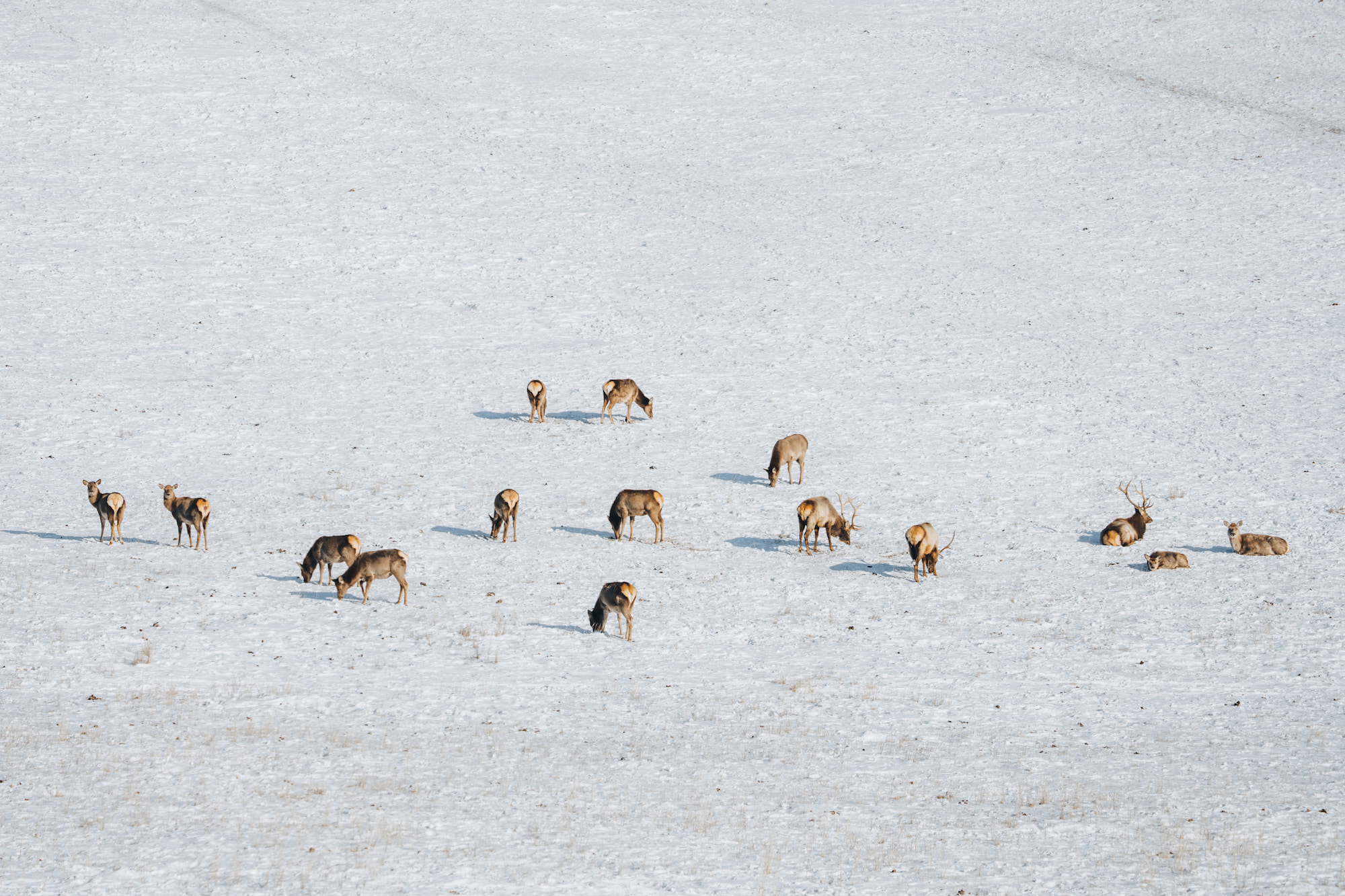
    Your wildlife photography Mongolia tour begins with an early departure from Ulaanbaatar, heading west toward the open landscapes of central Mongolia. The first wildlife stop is Khustai National Park, one of Mongolia’s most important conservation success stories and home to the reintroduced Przewalski’s horse, as well as red deer, Mongolian gazelle, fox, and wolf.

    Continuing west, the landscape changes at Elsen Tasarkhai, often called the “Mini Gobi,” where sand dunes meet grassland and rocky hills. This transition zone offers excellent photographic opportunities and introduces the ecological contrasts that define Mongolia. By evening, you reach Bayankhongor, resting before entering the deep Gobi regions.

  • Gobi-Altai Mountains: First Gobi Wildlife Observation

    Day 3
    • Offroad tracks, mountain exploration, tracking
    • Wild Camp – Tsogt Soum, Gobi-Altai

    The route climbs into the Gobi-Altai Mountains, where sharp ridgelines rise from the desert floor. This area provides ideal winter habitat for Gobi ibex and argali sheep, frequently seen silhouetted along rocky slopes.

    The day is dedicated to wildlife observation in winter conditions, scanning for predator movement and learning to read tracks in snow and stone. With patience, there is also a chance of encountering fox, wolf, or the elusive Pallas’s cat. Camp is set in the mountains under clear desert skies.

  • Eej Mountain & Entry into the Great Gobi A Protected Area

    Day 4
    • Spiritual landscapes, wild camel habitat
    • Wild Camp – Bayan Tooroi, Great Gobi A

    Exploration begins at Eej Mountain, a spiritually significant landmark with wide desert views. Beyond its cultural importance, the surrounding slopes offer excellent vantage points for observing mountain wildlife.

    From here, the expedition enters the Great Gobi A Strictly Protected Area, one of the most remote ecosystems in Central Asia. This region is home to the wild Bactrian camel, one of the rarest large mammals on Earth. Time is spent tracking, scanning open plains, and experiencing the isolation that defines this protected wilderness.

  • Ekh River: Oasis in the Great Gobi A

    Day 5
    • Wildlife tracking, rare species range
    • Wild Camp – Great Gobi A

    The Ekh River forms a narrow oasis cutting through the desert and attracting wildlife from far distances. Animal tracks converge along the riverbanks, offering insight into desert survival strategies.

    This area lies within the range of the critically endangered Gobi bear (Maazalai). Even without a sighting, understanding that one of the world’s rarest bears survives here highlights the conservation importance of the Great Gobi A Protected Area.

  • Ekh River: Oasis in the Great Gobi A

    Day 6
    • Wildlife tracking, rare species range
    • Wild Camp – Great Gobi A

    The Ekh River forms a narrow oasis cutting through the desert and attracting wildlife from far distances. Animal tracks converge along the riverbanks, offering insight into desert survival strategies.

    This area lies within the range of the critically endangered Gobi bear (Maazalai). Even without a sighting, understanding that one of the world’s rarest bears survives here highlights the conservation importance of the Great Gobi A Protected Area.

  • Khermen Tsav: The Gobi’s Grand Canyon

    Day 7
    • Desert oases, fossil landscapes
    • Wild Camp – Khermen Tsav

    Travel continues through rare vegetated areas such as 100 Mod, where animals gather for shade and water. Nearby Tsagaan Tsav reveals pale rock walls and layered geological formations, with occasional dinosaur fossils visible to the trained eye.

    By evening, you arrive at Khermen Tsav, a dramatic canyon system often compared to a desert Grand Canyon. Towering red cliffs, deep ravines, and sculpted stone corridors dominate the landscape.

  • Khermen Tsav: Deep Exploration & Landscape Photography

    Day 8
    • Canyon exploration, observation
    • Wild Camp – Khermen Tsav

    A full day allows deeper exploration of Khermen Tsav. Hidden side canyons and elevated viewpoints provide sweeping views across the fractured desert. The slower pace supports careful wildlife observation, geological study, and landscape photography in changing light.

  • Zulganai Gol & Tsagaan Tsav: Desert Oases of the South Gobi

    Day 9
    • Wildlife tracking, fossil formations
    • Wild Camp – Gurvan Tes, South Gobi

    The route reaches Zulganai Gol, another vital oasis supporting life in the South Gobi. Vegetation contrasts sharply with surrounding desert, making it ideal for studying animal movement and tracks.

    Later, exploration continues around Tsagaan Tsav, where layered cliffs and sculpted formations provide both scientific interest and dramatic photographic subjects.

  • Nemegt Basin: Ancient Rivers & Fossil Valleys

    Day 10
    • Geological exploration
    • Wild Camp – Nemegt Region

    The Nemegt Basin is one of Mongolia’s most famous fossil regions. Deep valleys, eroded cliffs, and colorful sediment layers reveal traces of ancient rivers and prehistoric ecosystems. Beyond its scientific importance, the area offers surreal scenery and a strong sense of geological time.

  • Khongor Sand Dunes: Icon of the Gobi Desert

    Day 11
    • Dunes, desert contrasts
    • Tourist Camp – South Gobi

    Arrival at the legendary Khongor Sand Dunes, also known as the Singing Dunes, marks a dramatic change in scenery. The nearby Khongorin Gol creates a green corridor at the base of the dunes, attracting wildlife and nomadic families. The contrast between sand, water, and sky makes this one of Mongolia’s most iconic landscapes.

  • Baga Bogd Mountains: Snow Leopard Habitat

    Day 12
    • Red rock formations, predator tracking
    • Wild Camp – Uvurkhangai

    The day begins at Uush Shakhlaga, a vivid red landscape with sculpted rock formations. In the afternoon, the expedition moves toward the Baga Bogd Mountain Range, a known snow leopard habitat in Mongolia.

    Winter conditions allow for tracking and understanding how this elusive predator survives in one of the harshest environments on Earth.

  • Drive to Kharkhorin & Erdene Zuu Monastery

    Day 13
    • Cultural exploration, historic Silk Road capital
    • Premium Hotel – Ikh Khorum, Kharkhorin

    After days spent deep in the wilderness, your Mongolia wildlife photography tour transitions briefly from remote desert landscapes to Mongolia’s cultural heartland. The day’s drive leads north toward Kharkhorin, the ancient capital of the Mongol Empire and a key site along the historic Silk Road.

    Upon arrival, visit Erdene Zuu Monastery, Mongolia’s oldest Buddhist monastery and one of the country’s most important cultural landmarks. Built using stones from the ruins of the ancient capital, the monastery’s white stupas and temple courtyards offer a striking contrast to the raw landscapes of the Gobi.

    This cultural interlude provides valuable context to Mongolia’s nomadic heritage, belief systems, and history before the journey continues back into nature-focused exploration.

    The evening is spent in Ikh Khorum, a comfortable premium hotel in Kharkhorin, offering warm showers, solid meals, and well-earned rest after extended days of expedition travel.

  • Return to Ulaanbaatar & Farewell Dinner

    Day 14
    • Overland journey, city comfort, final celebration
    • 5-Star Hotel – Ulaanbaatar City Center

    The final day of your Mongolia wildlife photography tour is spent driving back to Ulaanbaatar, completing the full journey from the remote landscapes of the Great Gobi A Protected Area to Mongolia’s vibrant capital.

    Upon arrival, check in to a 5-star hotel in the city center, where comfort and modern amenities provide a welcome contrast after weeks of expedition travel. Time is available to rest, refresh, or take a short walk through the city before the evening.

    The journey concludes with a final farewell dinner at a modern Ulaanbaatar restaurant, blending contemporary Mongolian cuisine with international influences. It is a moment to reflect on wildlife encounters, winter landscapes, and the rare experience of exploring one of Asia’s last true wilderness regions.

    Overnight in Ulaanbaatar, marking the end of an unforgettable Mongolia wildlife tour.

  • Airport Transfer & Departure from Mongolia

    Day 15
    • Private transfer, end of the expedition

    After breakfast at your hotel, a private airport transfer is arranged to Ulaanbaatar International Airport, timed according to your departure flight.

    This marks the official end of your Mongolia wildlife photography tour. You leave Mongolia with a deeper understanding of the Great Gobi A Protected Area, rare desert wildlife, and winter ecosystems — and with photographic and personal memories from one of the world’s last great wilderness regions.

    Safe travels, and farewell from Mongolia.

    • Touchdown in Ulaanbaatar – Gateway to Mongolia’s Wilderness

      Day 1
      • Arrival, city exploration, dinner
      • 5-Star Hotel

      Your Mongolia adventure begins with a warm welcome upon arrival in Ulaanbaatar. After an airport pickup, you’ll be transferred to a premium hotel in the city center. The rest of the day is dedicated to getting prepared—meeting your expedition team, organizing supplies, and familiarizing yourself with your Mongolia 4×4 rental Toyota Land Cruiser. In the evening, enjoy a relaxed dinner with a choice of traditional Mongolian cuisine or international dishes before your journey into the wild begins the following day.

    • Into the Wild: From Capital Streets to Untamed Steppe

      Day 2
      • Wild horses Przewalski, red deer, marmots and raptor wildlife watching, Elsen Tasarkhai sand dunes and steppe landscapes, first Gobi transition photography
      • Comfortable hotel in Arvaikheer

      Your journey begins in Ulaanbaatar, where you meet your expedition team and set out in fully equipped 4×4 vehicles.

      The first stop is Khustai National Park, home of the rare Przewalski’s horse (Takhi). This is your first opportunity to photograph truly wild horses in open steppe landscapes—often alongside red deer, marmots, and birds of prey.

      Continuing south, the scenery shifts dramatically at Elsen Tasarkhai, where sand dunes blend into green steppe and granite outcrops—a perfect introduction to Mongolia’s contrasting landscapes.

      By evening, you arrive in Arvaikheer and settle into a comfortable hotel before heading deeper into the wilderness.

    • The Edge of Civilization: Crossing into the Gobi Frontier

      Day 3
      • Gobi transition landscapes, gazelle herds, corsac fox, steppe eagle and saker falcon sightings, off-road driving into remote desert terrain
      • Private wilderness camp

      The paved road gradually gives way to remote off-road tracks as you enter the Gobi-Altai region.

      The landscape becomes harsher and more cinematic—gravel plains, dry riverbeds, and vast horizons. Along the way, keep your camera ready for sightings of gazelles, corsac foxes, steppe eagles, and saker falcons.

      By sunset, you will set up the first private wilderness camp near Tsogt—far from any infrastructure, surrounded by silence and endless sky.

    • Stone Kingdoms: Exploring the Hidden Mountains of Eej

      Day 4
      • Eej Mountain landscapes, ibex and argali habitat, wolf and eagle territory, dramatic ridgelines and mountain photography
      • Remote wilderness camp in Great Gobi A

      A full exploration day in one of the most remote mountain systems of the Great Gobi A.

      Jagged ridgelines, layered rock formations, and deep valleys create dramatic compositions—especially in the soft morning and evening light.

      This region is home to ibex, argali sheep, wolves, golden eagles, and—rarely—snow leopards and Pallas’s cats. The focus today is patience, positioning, and reading the landscape.

    • Where the Rare Survive: The Realm of the Wild Camel

      Day 5
      • Wild Bactrian camel tracking, khulan (wild ass), gazelle and desert fox sightings, vast open desert photography
      • Private desert camp

      Today you enter one of the most iconic wildlife zones in Mongolia.

      Bayan Tooroi is one of the last refuges of the critically endangered wild Bactrian camel. With luck and distance, you may observe and photograph these rare animals in their natural desert habitat.

      Other wildlife includes khulan (wild ass), gazelles, desert foxes, and raptors. The vast emptiness here defines the true scale of the Gobi.

    • Into the Silence: Following Hidden Paths to the Ekh River

      Day 6
      • Remote Gobi crossings, desert wildlife corridors, gazelle, fox and possible wolf sightings, approach to Ekh River ecosystem
      • Scenic wilderness camp

      A true expedition day, driving through remote desert corridors toward the Ekh River.

      Subtle shifts in vegetation signal water—an important indicator in the Gobi ecosystem. Wildlife activity increases as you approach this lifeline.

      Camp is set near the river, offering beautiful contrast between green vegetation and surrounding desert terrain.

    • Life in the Desert: The Rhythm of an Oasis

      Day 7
      • Oasis wildlife photography, khulan, gazelle, fox, wolf and birdlife observation, river landscapes contrasting desert
      • Private river camp

      A full day dedicated to the Ekh River area.

      This rare water source attracts wildlife from across the region, creating excellent photography opportunities—especially during golden hours.

      Expect sightings of khulan, gazelles, foxes, wolves, and a variety of bird species. The setting is raw, quiet, and deeply immersive.

    • The Red Cathedral: Arrival at Khermen Tsav

      Day 8
      • Khermen Tsav canyon landscapes, red cliffs and erosion formations, desert fox, birds of prey and owl sightings
      • Wilderness camp near canyon edge

      The journey continues toward one of the most visually striking locations of the expedition.

      Khermen Tsav is a vast canyon system of red and orange cliffs, sculpted by erosion. The scale is immense and perfect for wide-angle photography and abstract compositions.

      Wildlife here may include desert foxes, owls, birds of prey, and occasionally lynx or Pallas’s cat.

    • Light and Silence: A Full Day Inside the Canyon

      Day 9
      • Canyon sunrise and sunset photography, abstract desert textures, minimal landscape compositions, light-shadow contrasts
      • Second night at Khermen Tsav camp

      A full day to explore the canyon in depth.

      Sunrise and sunset transform the cliffs into glowing layers of color, while midday reveals textures and geological patterns.

      This is one of the most photogenic landscapes in Mongolia—minimalist, powerful, and rarely visited.

    • Islands of Life: Discovering the Hidden Oases

      Day 10
      • Desert oases Zulganai, 100 mod and Tsagaan Tsav, concentrated wildlife activity, camels, khulan, gazelle and birdlife
      • Remote oasis camp

      Today focuses on rare desert oases—green pockets within an otherwise harsh environment.

      These areas concentrate wildlife, offering strong chances to photograph camels, khulan, gazelles, foxes, and diverse birdlife.

      The contrast between life and desert emptiness creates compelling visual storytelling.

    • The Ancient World: Nemegt’s Fossil Valleys

      Day 11
      • Nemegt Mountains, fossil valleys, ibex and argali sightings, golden eagle and lammergeier observation
      • Wilderness camp in Nemegt region

      Arrival at the legendary Nemegt Mountains, known for dramatic terrain and fossil-rich valleys.

      Deep canyons, layered cliffs, and dry riverbeds define the landscape. Wildlife sightings may include ibex, argali sheep, golden eagles, and lammergeiers.

      This is a powerful location for both wildlife and landscape photography.

    • The Singing Dunes: Khongor at Golden Hour

      Day 12
      • Khongor sand dunes, camel photography, dune ridgelines and wind patterns, sunrise and sunset desert landscapes
      • Comfortable tourist camp (ger camp)

      The expedition reaches one of Mongolia’s most iconic landmarks.

      The Khongor Sand Dunes rise like waves from the desert floor. Wind patterns create ever-changing textures, ideal for sunrise and sunset photography.

      You’ll photograph Bactrian camels, dune ridgelines, and vast desert horizons. Overnight in a comfortable tourist camp.

    • Into Predator Territory: Arrival at Baga Bogd

      Day 13
      • Baga Bogd mountain landscapes, snow leopard habitat, ibex, argali, wolf and lynx presence, rugged alpine desert terrain
      • Wild camp

      The journey turns north toward the rugged Baga Bogd Mountains—a key habitat for snow leopards.

      Rocky slopes, cliffs, and narrow valleys dominate the landscape. Wildlife includes ibex, argali, wolves, lynx, and signs of snow leopard presence.

      Your remote snow leopard base camp is established here.

    • Reading the Mountains: First Tracks in Snow Leopard Territory

      Day 14
      • Snow leopard tracking, ibex and argali movement observation, mountain ridge scanning, wildlife behavior photography
      • Snow leopard expedition camp

      Three full days dedicated to one of the most elusive animals on Earth.

      Tracking, observation, and patience define this phase of the expedition. While sightings are never guaranteed, the extended stay significantly increases your chances.

      Even without a direct encounter, this region offers exceptional photography of high-altitude desert mountains and wildlife behavior.

      This is the emotional and experiential peak of the journey.

    • Patience and Presence: The Art of Waiting

      Day 15
      • Advanced tracking techniques, predator-prey dynamics, landscape observation, high-altitude desert photography
      • Continued stay in remote mountain camp

      Snow leopard photography is not about chasing—it’s about waiting.

      Today is about stillness. Finding vantage points. Watching light move across the mountains. Letting the landscape reveal its secrets.

      Even without a sighting, the experience becomes deeper—more focused, more intentional. This is where the expedition becomes personal.

    • The Possibility of the Invisible

      Day 16
      • Extended snow leopard search, refined wildlife photography, rare sightings opportunity, final mountain sessions
      • Final night in snow leopard camp

      By now, your perception has shifted.

      You notice details you would have missed before—subtle movement, distant silhouettes, patterns in the terrain. Whether or not the snow leopard appears, you are fully immersed in its world.

      And sometimes, just for a moment, the invisible becomes visible.

    • Return to the Steppe: Leaving the Remote World Behind

      Day 17
      • Return journey through desert to steppe transition, scenic landscapes, reflection on expedition
      • Comfortable hotel in Arvaikheer

      Leaving the remote mountains behind, the landscape gradually opens into steppe again.

      Return to Arvaikheer for a comfortable hotel stay—your first return to civilization after deep wilderness immersion.

    • Full Circle: Back to Ulaanbaatar

      Day 18
      • Drive back to Ulaanbaatar, final landscapes, end of expedition

      Final drive back to Ulaanbaatar.

      The expedition concludes with a deep sense of scale, silence, and connection to one of Asia’s last truly wild ecosystems.

        Change your trip duration

        Talk to us today 

        starting planning your dream

        Your dream vacation to Mongolia is only a few clicks away. Complete the form below with your preferences and one of Mongolia tour experts will be in contact with you.

        Available Tour Dates

        Month
        Tour
        April 2026
        May 2026
        June 2026
        July 2026
        August 2026
        September 2026
        What kind of tour do your prefer?
        Where do you want to travel?
        What kind of accommodation would you like?
        en_USEnglish