


There’s something deeply humbling about waking up to the sound of wind sweeping across the Altai Mountains. The sky burns pink, a lone horse stands outside the ger, and a golden eagle stirs on its perch, feathers glinting in the first light. Out here, in western Mongolia, time slows down, or maybe it simply returns to its original rhythm.
Spend a few days with the Kazakh eagle hunters, and it’s an experience that will reshape your understanding of what it means to live deliberately. Mongolia travel promises adventure. Vast steppe drives, 4×4 trails through the Gobi, and nights under an explosion of stars, but it also offers something far rarer: perspective.
Here’s what life with Mongolia’s eagle hunters can teach you, if you’re lucky enough to sit inside their ger and share a bowl of salted tea.
1. Connection Is an Important Daily Practice
In Mongolia’s far west, near Bayan-Ölgii, families live in tight connection with the land and one another. The Kazakh eagle hunters, or berkutchi, rely on that connection for survival. Every morning, before breakfast, they check the horses, scan the mountains for weather shifts, and tend to the eagle with quiet reverence.
In the city, connection is something we try to squeeze into our schedule. Here, it’s a constant — between human and animal, between earth and sky. Mongolia’s nomadic culture teaches that connection isn’t built through convenience; it’s maintained through attention.
2. You May Not Be as Resilient as You Think You Are
Life in the steppe of Western Mongolia is not easy. The cold is bone-deep, the distances endless. Yet, there’s a quiet resilience that defines Mongolia’s eagle hunters. You may have to ride 20km just to check the rest of the herd. Life is off-grid and mostly self-sufficient in this region of Mongolia. Winter is bone-chilling.
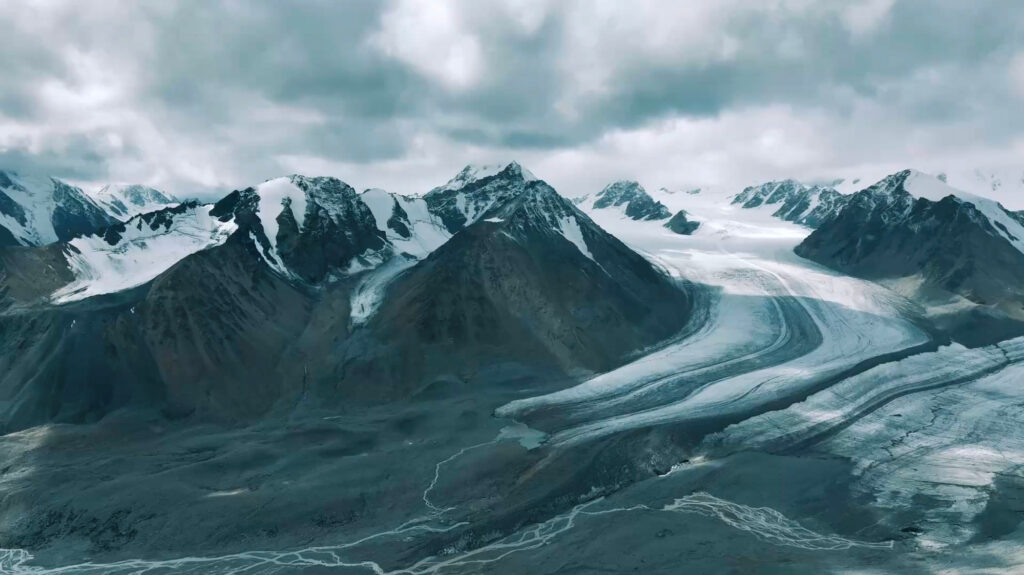
The Kazakh eagle hunters embody strength perfectly. Their hunting is not a sport; it’s symbiosis. They brave harsh conditions not for thrill, but for necessity. And they do it with an unwavering calm that modern life rarely allows.
It’s the kind of strength that sustains life in one of the world’s most unforgiving landscapes.
Witnessing this kind of raw resilience and perseverance helps you to take stock of your own life and acknowledge the privileges you have, which both gives you a greater appreciation for your own lifestyle and profound respect for those who pursue this rugged lifestyle.
3. True Hospitality in the World is Rare. Here it’s Standard.
Mongolians are famously generous, but among the Kazakh eagle hunters, hospitality feels sacred. I learned quickly that refusing a cup of tea or a plate of boortsog (fried dough) is nearly impossible, and missing a meal together is unthinkable.
When I arrived, windblown and dusty, while self-driving across Western Mongolia, the family ushered me into their ger, sat me by the stove, and began ladling out steaming soup before I could even take off my boots. No one asked for payment or thanks; the act of welcoming a traveler is simply part of life here.
In a world where travel is often transactional, this level of openness feels revolutionary. It’s one of the many reasons Mongolia travel leaves such a mark, because kindness isn’t performative; it’s embedded in daily existence.
4. Time is Simply a Construct
The longer I spent with the eagle hunters, the more I felt my sense of time shift. Days were not divided by clocks but by the movement of animals, the arc of the sun, and the needs of the land.
In modern life, we measure time by productivity– hours worked, deadlines met. Out here, time stretches and folds. The hunters’ year revolves around migration: moving to greener pastures in spring, preparing for eagle hunting in winter. Everything has its season.
There is no rush, no anxiety. Mongolia’s nomads remind us that patience isn’t inaction; it’s wisdom.
Rather than viewing time in the traditional linear way of thinking, it functions here on a more cyclical, seasonal basis.
5. Freedom Comes From Adaptability
Driving across western Mongolia, a landscape that alternates between jagged peaks, open plains, and river valleys, you begin to understand how this culture is built to value freedom. The ability to pack up an entire home and move within hours is more than impressive; it’s a way of life.
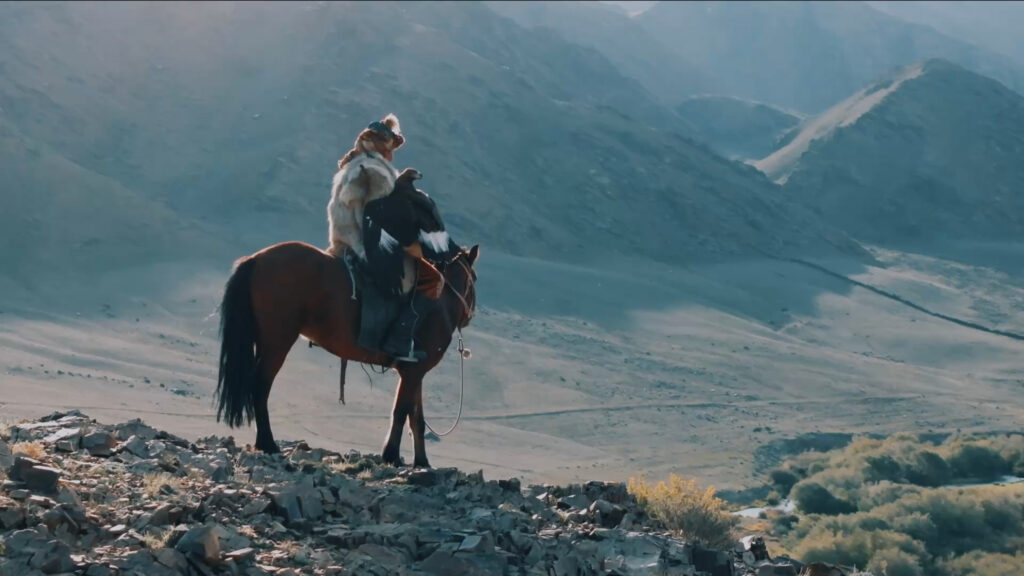
Every item in the ger has a purpose. Every decision, from what to carry to where to camp, reflects a deep adaptability. This is freedom, not the kind sold in travel brochures but the kind earned.
As a traveler, self-driving through Mongolia in a 4×4 feels like the closest you can get to that freedom. Renting a car from Avis and following the remote roads out toward Bayan-Ölgii gives you the autonomy to explore at your own pace — to pull over for wild herds of horses, to linger at alpine lakes, to chase the horizon just because it’s there.
It’s in this slow pace of life where you’re truly free to do what you want.
6. Tradition Can Evolve Without Breaking
The Kazakh eagle hunters are a bridge between worlds — keepers of an ancient tradition living in a rapidly modernizing Mongolia. Their children go to school, use smartphones, and scroll through social media. Yet every winter, they still don traditional furs, ride out across the snow, and release their golden eagles into the sky.
That juxtaposition is powerful. Watching a teenage girl, her fur-trimmed hood pulled tight, train an eagle with her father at dawn felt like a glimpse into the future of this culture — one that honors the past without being trapped by it.
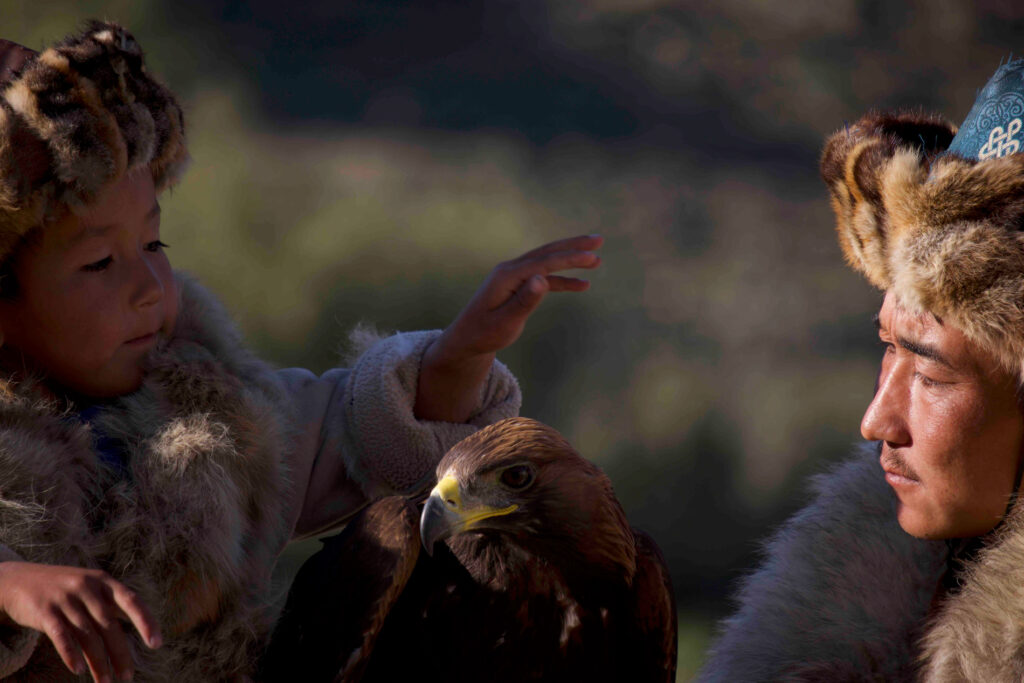
The eagle hunters of Mongolia have adapted in many ways to the changing times. This is apparent in the number of women now involved in Eagle Hunting. Proving that it’s possible to preserve tradition while also adapting to the changing times.
As travelers, we often look at traditions like eagle hunting as relics. But here, they’re living, breathing parts of daily life. Joining a Mongolia eagle hunter tour offers not just spectacle, but understanding, a way to witness a culture that continues to evolve with dignity and grace.
7. Wealth Is Measured in More Than Money
Out here, there’s no rush for accumulation. Wealth isn’t measured in possessions, but in health, relationships, and livestock. Families might own hundreds of animals but share them freely with neighbors during hard seasons.
It’s a stark contrast to the way most of us live, where security is often equated with ownership. In the Mongolian steppe, security comes from interdependence.
Everything they have, they use. Everything they don’t need, they give freely. If there is one single lesson to be taken away from Mongolia’s Eagle Hunters, it is this one.
How to Visit the Kazakh Eagle Hunters
Most travelers hoping to meet Mongolia’s eagle hunters head west to Bayan-Ölgii Province, where the Kazakh minority maintains this centuries-old practice. The best time to visit is during autumn, when the Golden Eagle Festival and Sagsai Festival showcase the skills of the hunters and their eagles.
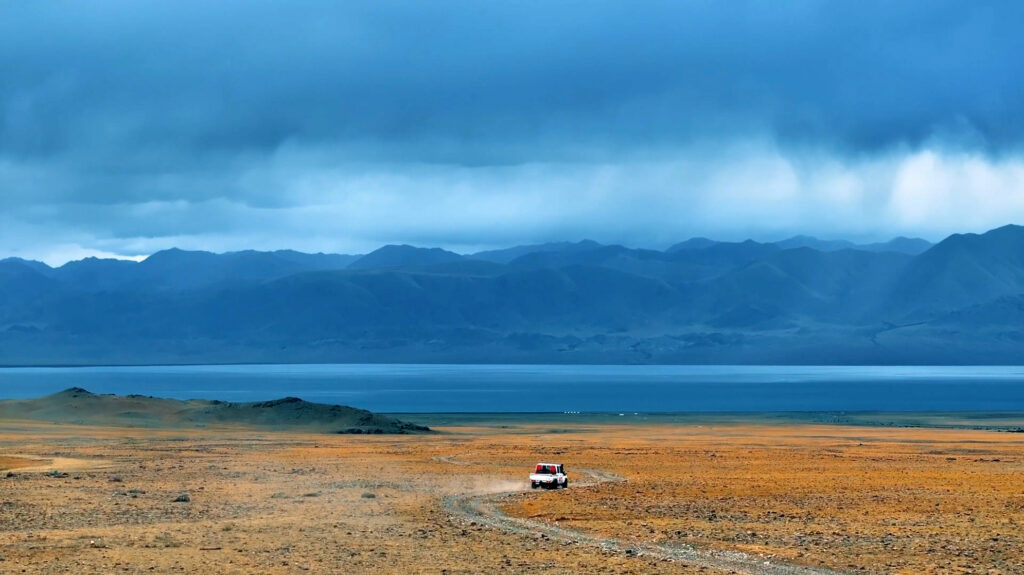
For a deeper experience, you can also stay with a nomadic family, often arranged through local guides or Explorer.Company for a Mongolia private tour. If you prefer independence, consider a self-drive Western Mongolia itinerary with AVIS car rental Mongolia, whose 4×4 rentals and self-drive tours include routes through the eagle hunting region. This gives you the freedom to stop, explore, and truly connect with the landscape at your own pace, something that’s essential to appreciating this way of life.
Learn From the Mongolian Steppe
Mongolia’s eagle hunters are dictated by weather and instinct, not by screens or schedules. Their values — connection, patience, resilience — feel like antidotes to the pace of modern life. Paying a visit to this region of Western Mongolia not only ticks your adventure travel box but also offers a rare opportunity to get off-grid, learn more about yourself, and experience a different way of life.
When you sit in a ger warmed by yak dung, sipping salty tea, and listening to stories passed down for generations, you realize the point of travel isn’t just to see new places. It’s to experience them.
If there’s one lesson Mongolia teaches best, it’s this: true freedom doesn’t come from having more — it comes from needing less.
 English
  German
  Arabic
  Spanish
  Italian
  Korean
  French
  Dutch
Dutch  Polish
  Russian
  Chinese