


The Wildest, Most Jaw-Dropping Places on Earth
(And How to Actually Get There)
Let’s be honest. Most bucket lists look the same. Machu Picchu. Santorini. The Amalfi Coast. Beautiful? Absolutely. Overrun with tourists photographing their breakfast? Also yes. If you’re the kind of traveller who’d rather share a landscape with a snow leopard than a selfie stick, Mongolia travels belong at the very top of your list.
Mongolia is vast, raw, and almost entirely unspoiled. It’s a country of 3.3 million people spread across a territory the size of Western Europe – which means you can ride for days without seeing another soul. Where else can you sleep in a nomad’s ger, watch a golden eagle hunt across a mountain valley, and stand on the actual spot where the world’s greatest empire began?
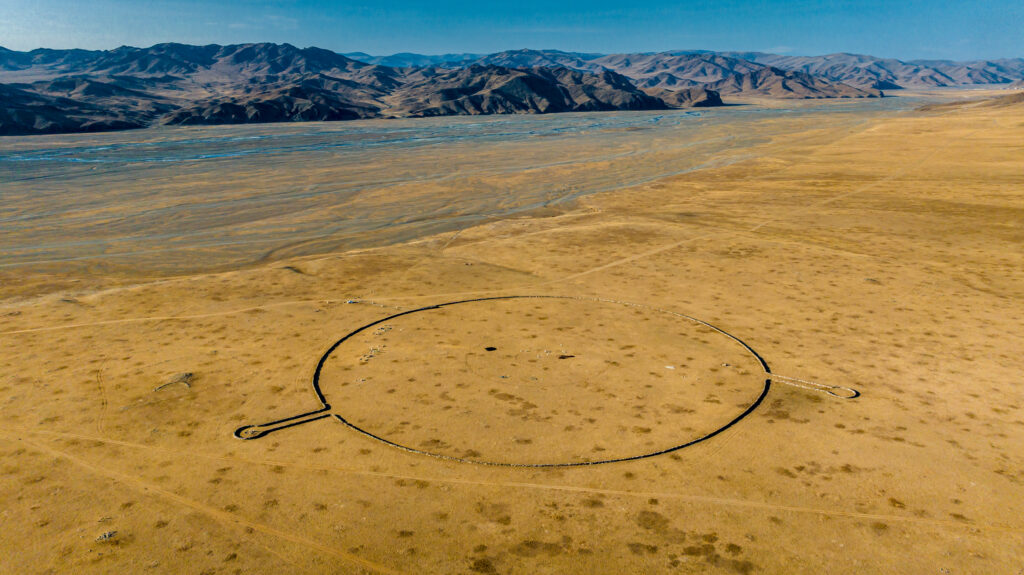
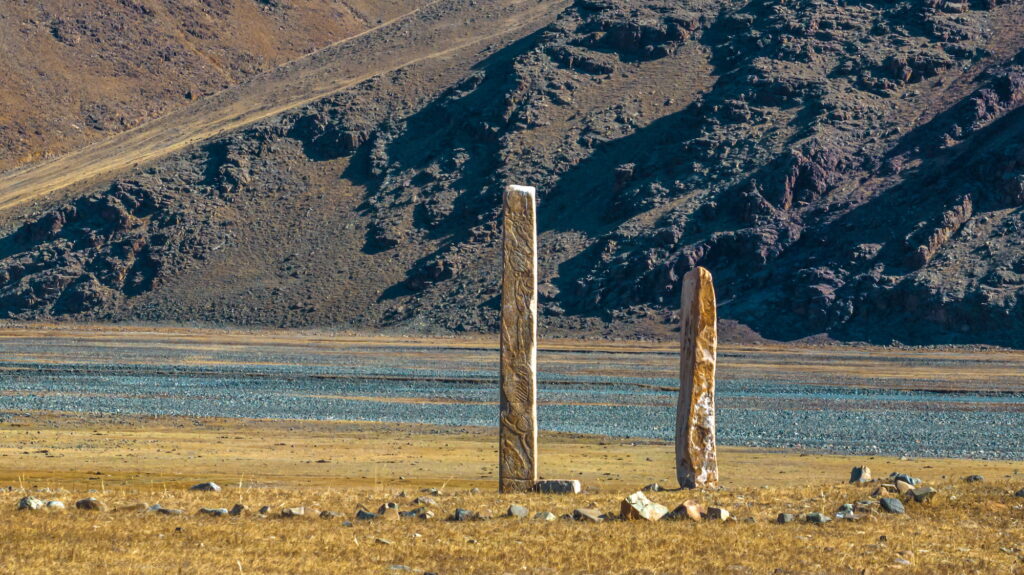
And the UNESCO sites? They’re extraordinary. Four inscriptions that cover everything from prehistoric rock art to sacred imperial mountains – each one remote, dramatic, and utterly unlike anything else on the planet. Here’s what you need to know. –
1. Uvs Nuur Basin – Snow Leopards, Salt Lakes & Total Silence
UNESCO inscription: 2003 | Location: Far north-west Mongolia | Vibe: Otherworldly wilderness
Picture a shimmering salt lake the size of a small country, ringed by tundra, taiga forest, and sweeping steppe. That’s Uvs Nuur – one of Central Asia’s largest lakes, and the centrepiece of a basin so ecologically rich that UNESCO declared it a World Heritage Site shared between Mongolia and Russia.
What makes Uvs Nuur special isn’t just the scenery (though it’s staggering). It’s the sheer biodiversity. Snow leopards prowl the mountain slopes. Argali wild sheep – the largest wild sheep in the world – pick their way across ridgelines. Asiatic ibex balance on impossible outcrops. Over 170 species of birds migrate through. Scientists use the basin as a benchmark for tracking global climate change, because it’s one of the few places left that humans haven’t managed to wreck.
“Almost nobody goes here. That’s the point.”
Uvs Nuur sits in the Uvs province, a long drive (or short domestic flight) from Ulaanbaatar. The remoteness is very much part of the appeal. Mongolia travels to this corner of the country feel genuinely exploratory – you’re not following a well-worn tourist trail. You’re going somewhere real.
🦅 Best paired with a wildlife-focused itinerary. Ask your operator about snow leopard tracking seasons (winter months offer the best chance of sightings).
2. Orkhon Valley – The Cradle of Empires (Actual Ones)
UNESCO inscription: 2004 | Location: Central Mongolia | Vibe: History nerd’s paradise
If Mongolia has a spiritual heartland, it’s the Orkhon Valley. For over 2,000 years, this stretch of river valley in central Mongolia was the power centre of the nomadic world. Uyghur khans held court here. The Göktürks carved their runes into nearby stones. And then Genghis Khan came along and built Karakorum – the capital of the largest contiguous empire in human history – right in this valley.
You can still walk the ruins of Karakorum today. The monastic complex of Erdene Zuu, built in 1586 using stones from the old imperial city, stands at the edge of the old capital and remains one of Mongolia’s most remarkable religious sites. Nearby, the volcanic Orkhon waterfall drops dramatically into a gorge carved by ancient lava flows. Nomadic families still move their herds through the valley with the seasons, as they’ve done for centuries.
The Orkhon Valley is Mongolia travels at their most layered – archaeology, living culture, and extraordinary landscape all at once. A few days here will leave you with a completely different understanding of what Central Asian history actually looked like.
🏇 Visit during summer (June–August) when the valley is green and nomadic families are most active. The Naadam festival in July is spectacular if you can time it right.
3. Petroglyphs of the Mongolian Altai – 11,000 Years of Art, Zero Gift Shops
UNESCO inscription: 2011 | Location: Western Mongolia, Bayan-Ulgii province | Vibe: Time travel
Somewhere in the Altai Mountains of western Mongolia, prehistoric humans spent thousands of years carving pictures into rocks. Not random doodles – intricate, expressive scenes of hunts, animals, rituals, and daily life. Horses galloping. Ibex leaping. Mythical creatures. Human figures mid-ceremony. Over 10,000 individual carvings spanning from the Upper Palaeolithic (around 11,000 BC) through the Bronze and Iron Ages.
These petroglyphs aren’t behind glass in a museum. They’re out in the open, in one of the most dramatically beautiful mountain landscapes on Earth. Getting to them takes serious commitment – an overland journey through the Altai, across high passes, through valleys where the wind never really stops.
But here’s the thing: the journey is half the experience. Because western Mongolia is 이글 헌터 country. The Kazakh people of Bayan-Ulgii still practice the ancient tradition of hunting with trained golden eagles – a skill passed down through generations, now recognised by UNESCO as intangible cultural heritage. Meeting an eagle hunter on the way to a prehistoric rock art site, with the Altai peaks as a backdrop, is the kind of thing that makes you realise how thin the line between past and present actually is.
“10,000 carvings. Zero other tourists. Just you, the mountains, and 11,000 years of human history.”
🦅 The Golden Eagle Festival in Ulgii (October) is one of the great spectacles of Central Asian culture. Timing your Mongolia travels around it is absolutely worth it.
4. Burkhan Khaldun Mountain – Where Genghis Khan Was Born (and Probably Buried)
UNESCO inscription: 2015 | Location: Khentii Mountains, north-east Mongolia | Vibe: Sacred, remote, profound
Here’s a question: where is 징기스칸 buried? Nobody knows for certain. He asked to be interred in secret, and his wishes were honoured so thoroughly that historians have been arguing about it for 800 years. But the mountain at the centre of most theories – Burkhan Khaldun, in the Khentii range of north-eastern Mongolia – has been sacred to Mongolians since the 13th century.
This is where Temüjin (Genghis Khan’s birth name) is believed to have been born. It’s where he hid from enemies during his turbulent early life. It’s where he prayed before major campaigns. And it’s where he asked to be buried. The mountain has been a place of pilgrimage and veneration ever since, part of a deeply animist relationship between Mongolian culture and the natural landscape.
Burkhan Khaldun sits within the Khan Khentii Strictly Protected Area – one of the most pristine wilderness zones in all of Asia. Dense taiga forest, crystal rivers, and an almost overwhelming silence await. Access requires permits and proper guidance. The restricted access isn’t a bureaucratic annoyance – it’s the reason the place has survived intact.
🌲 This destination rewards travellers who approach it with patience and respect. An experienced local guide isn’t just helpful here – it’s essential.
Planning Your Mongolia Travels: The Practical Stuff
언제 방문해야 할까요?
The main travel season runs May through October, with June to September being the sweet spot for most Mongolia travels. Summer offers warm days, green steppe, and active nomadic communities. Winter Mongolia (November to March) is extreme but extraordinary – snow leopard sightings, frozen landscapes, reindeer tribe encounters in the north, and almost no other travellers at all.
How to Get There
Ulaanbaatar’s Chinggis Khaan International Airport connects to major Asian hubs including Beijing, Seoul, Istanbul, and Frankfurt. From Europe, the Middle East, and most of Asia, Mongolia is easily reachable via a single connection. It’s much closer than most people expect.
Getting Around
This is where Mongolia travels get real. The country has limited paved roads, and the UNESCO sites are all remote. A reliable 4×4 rental car in Mongolia– ideally a Toyota Land Cruiser – is non-negotiable. Many travellers opt for guided private tours that handle the logistics entirely, including navigation, accommodation, and permits for protected areas.
기대할 수 있는 기능
Mongolia is not a place that hands you a polished tourist experience. Ger camps range from basic to genuinely comfortable. Roads test your patience and your suspension. The weather can shift dramatically in a single day. But that’s exactly why Mongolia travels are so memorable – you’re engaging with a country on its own terms, and it delivers something authentic in return.
Make It Happen: Explorer.Company
The honest truth about Mongolia travels is that they’re significantly better with the right operator behind you. The UNESCO sites are remote. The terrain is demanding. Permits, logistics, and local knowledge matter enormously. This is not a destination where winging it pays off.
Explorer.Company specialises exclusively in bespoke private 몽골 투어 – built entirely around your interests, pace, and sense of adventure. No group tours. No cookie-cutter itineraries. Just a private Toyota Land Cruiser, an expert local guide, and a route designed specifically for you. Trips run from 7 to 22 days and start from USD 3,000. explorer.company
Whether you want to track snow leopards in Uvs Nuur, walk the ruins of Karakorum in the Orkhon Valley, meet eagle hunters in the Altai, or make a pilgrimage to Burkhan Khaldun – or all of the above – they’ll put together an expedition that does it properly.
“Your next great adventure starts where the road ends.”
The Bottom Line
Mongolia travels aren’t for everyone. If you need a beach, a swim-up bar, and a buffet breakfast, look elsewhere. But if you want landscapes that make your chest ache, history that stretches back through empires and millennia, wildlife that reminds you what the world used to look like, and a genuine feeling that you’ve gone somewhere – Mongolia delivers all of it, at a scale and intensity that very few destinations can match.
Four UNESCO World Heritage Sites. Endless steppe. Snow leopards. Eagle hunters. The ghost of Genghis Khan around every mountain pass.
What are you waiting for?
 Korean
  English
  German
  Arabic
  Spanish
  Italian
  French
  Dutch
Dutch  Polish
  Russian
  Chinese