


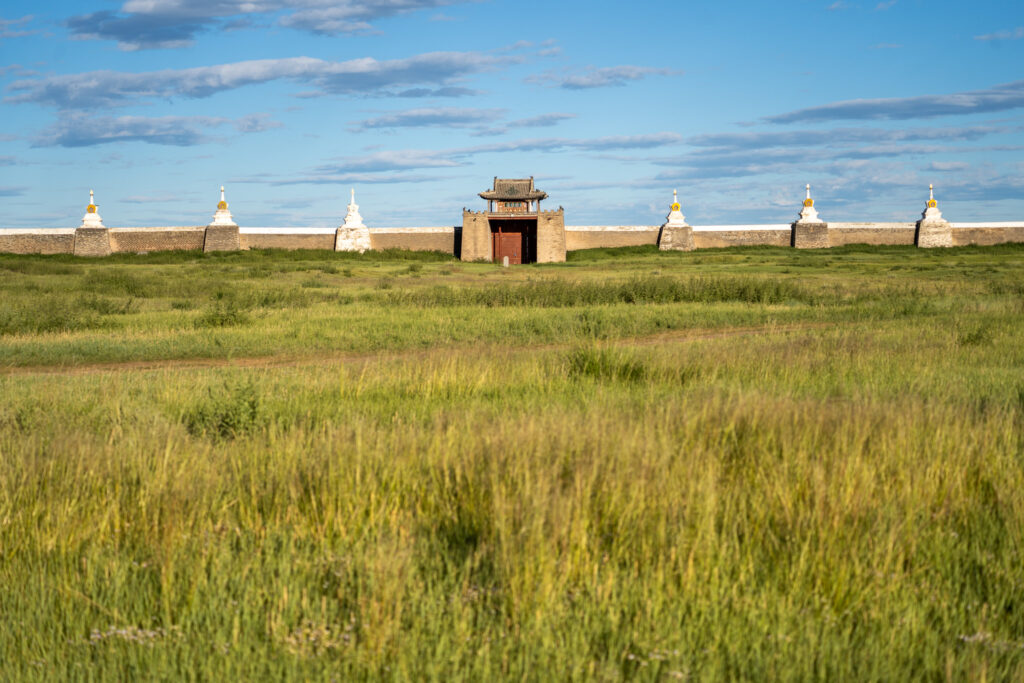
Few places in Mongolia connect the past and present as powerfully as Kharkhorin, once known to the world as Karakorum, which was the ancient capital of Genghis Khan’s vast empire. Though today it’s a quiet steppe town, this was once the beating heart of one of the greatest civilizations on Earth.
Standing among its ruins, you can almost imagine the caravans arriving from Persia, China, and Russia; the sound of craftsmen hammering bronze; and the distant hoofbeats of Mongol messengers racing across continents.
For travelers driving across Mongolia, Kharkhorin is more than just a stop on the way to the Gobi Desert; it’s a living museum of Mongol history, a UNESCO-recognized cultural landscape, and a place where the legacy of Genghis Khan still feels tangible.
Here’s everything you need to know about this incredible destination.
A Short History of Kharkhorin: The Rise and Fall of Mongolia’s Ancient Capital
The story of Kharkhorin begins in the early 13th century, when Genghis Khan unified the Mongol tribes and began forging the largest contiguous empire in history. To consolidate his power, he established a base along the Orkhon River, an area already rich with history and symbolic importance.
After Genghis’s death, his son Ögedei Khan transformed this base into a city, which was the first true capital of the Mongol Empire. By the mid-1200s, Karakorum had become an extraordinary melting pot of cultures. Persian merchants, Chinese artisans, Tibetan monks, and European envoys all passed through its gates.
Contemporary accounts describe palaces, markets, and even a massive silver tree that poured fermented drinks from its branches during royal feasts—a mechanical marvel created by a French artisan at Ögedei’s court.
However, the glory was short-lived. When Kublai Khan shifted the capital to what would become Beijing (then Khanbaliq), Karakorum’s importance waned. The city was later destroyed during conflicts in the 14th century, leaving behind only fragments of its former greatness.
Today, Kharkhorin’s history lives on through these ruins, the artifacts unearthed in archaeological digs, and the nearby Erdene Zuu Monastery, which was built from the stones of the ancient city itself.
Erdene Zuu Monastery – Mongolia’s First Buddhist Monastery
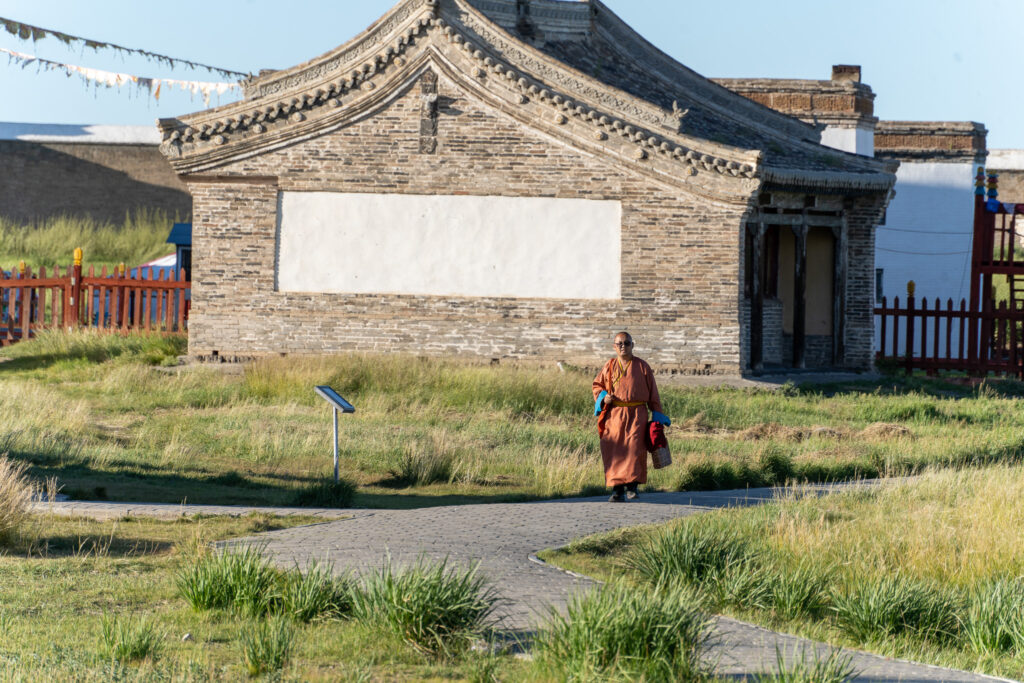
The most iconic site in modern Kharkhorin is the Erdene Zuu Monastery, founded in 1586 by Abtai Sain Khan, a descendant of Genghis Khan. It marked the official introduction of Tibetan Buddhism into Mongolia and was built directly atop the ruins of Karakorum, symbolizing a new spiritual era for the nation.
The monastery’s walled enclosure contains 108 white stupas, a sacred number in Buddhism, and once held over 60 temples. Though many were destroyed during the Stalinist purges of the 1930s, several have since been restored, and a small community of monks continues to live and pray here today.
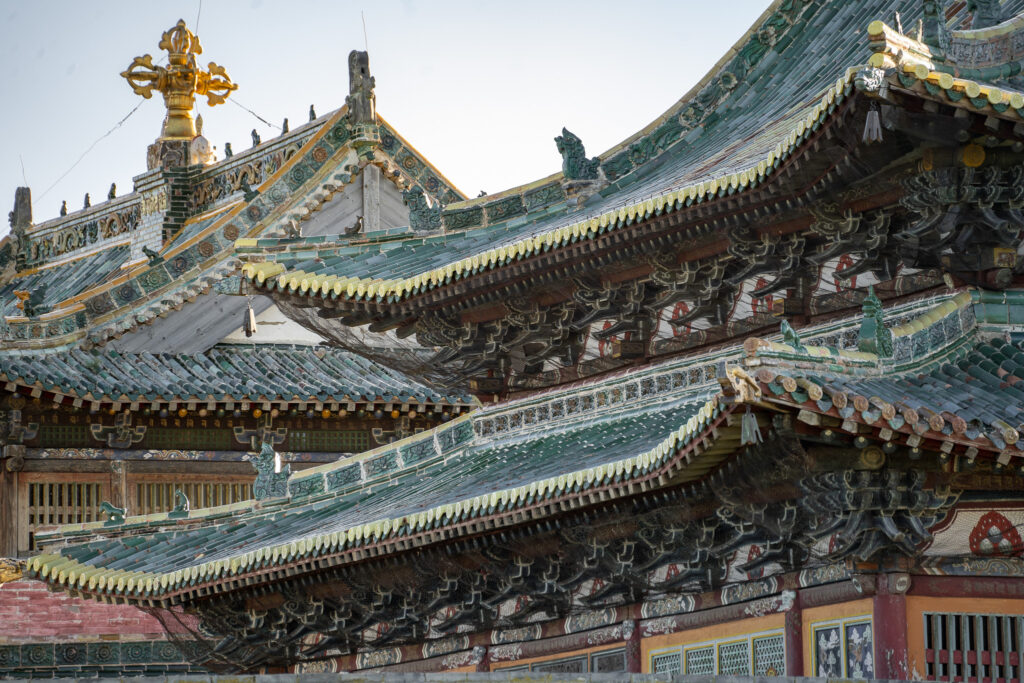
Wander through its courtyards, and you’ll find intricately painted temples, carved wooden pillars, and the faint whisper of chants carried by the steppe wind.
Travel Tip: The best time to visit is early morning or late afternoon, when the light softens across the stupas, and the sound of prayer bells fills the air.
The Karakorum Museum – Tracing the Legacy of an Empire
Just beyond Erdene Zuu stands the Karakorum Museum, a modern, well-curated space that helps visitors visualize what the ancient city once looked like. Exhibits display tools, pottery, coins, and religious artifacts found during archaeological excavations, as well as scale models of the original capital.
You’ll also find bilingual exhibits in Mongolian and English detailing the trade routes that linked Karakorum to Europe and the Silk Road—proof of how connected this remote place once was.
For anyone interested in Genghis Khan’s heritage or ancient Mongolia, this museum provides essential context for understanding the empire’s incredible scope and organization.
The Orkhon Valley – A UNESCO World Heritage Landscape
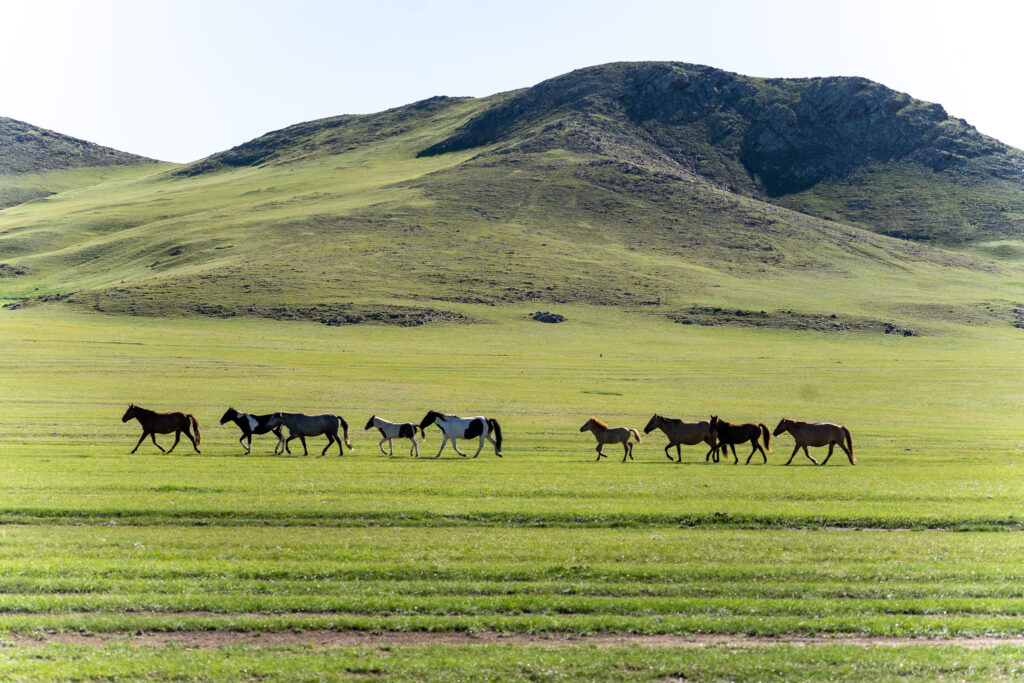
The Orkhon Valley Cultural Landscape, which includes Kharkhorin, is a UNESCO World Heritage Site. It’s recognized not only for its archaeological value but also for representing over 2,000 years of nomadic civilization.
This fertile river valley has served as a political, spiritual, and economic center since ancient times, hosting Turkic, Uighur, and later Mongol empires. Scattered throughout the valley are stone monuments, burial mounds, and rock carvings that reveal Mongolia’s long history as a cradle of steppe culture.
The valley today remains largely pastoral, dotted with gers (yurts) and grazing livestock, offering visitors the chance to experience a living continuation of nomadic life.
Don’t Miss:
- Orkhon Waterfall (Ulaan Tsutgalan): A scenic 24-meter cascade about 120 km from Kharkhorin—perfect for hiking or horseback riding.
- Tuvkhun Monastery: Perched high in the Khangai Mountains, this hermitage, founded by the first Jebtsundamba Khutuktu, offers panoramic views over the valley.
Walking in the Footsteps of Genghis Khan
When you stand on the plains near Kharkhorin, it’s easy to imagine the presence of Genghis Khan himself. The landscape remains virtually unchanged since his time—vast, open, and humbling in its scale.
Archaeologists believe that Karakorum was not a massive urban sprawl like Beijing or Samarkand, but a deliberately planned settlement reflecting Mongol priorities: mobility, practicality, and command. The surrounding region was filled with encampments of soldiers, artisans, and envoys, all organized to serve the empire’s far-reaching ambitions.
Modern travelers can now walk the same ground where emissaries from Persia, Europe, and China once stood before the Great Khan’s court. Each surviving stone feels like a bridge between centuries.
Cultural Note: While Genghis Khan is viewed controversially abroad, in Mongolia, he is revered as a symbol of unity, vision, and resilience. Visiting Kharkhorin offers a respectful way to understand that perspective firsthand.
Kharkhorin Today – A Gateway to Mongolia’s Heartland
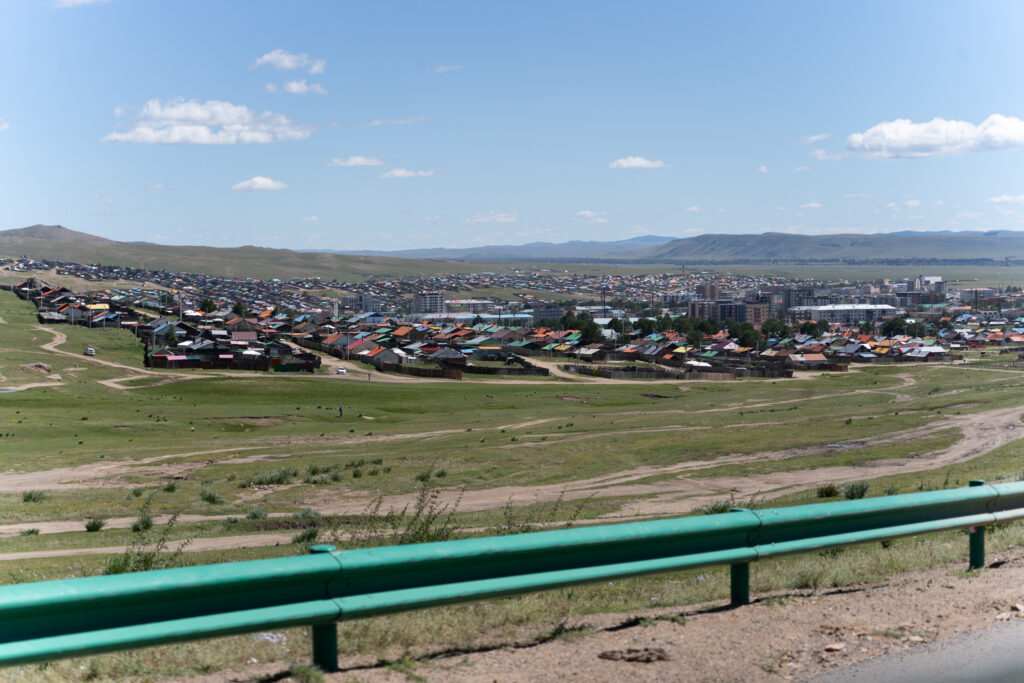
Today’s Kharkhorin is a small but welcoming town where traditional nomadic life meets the slow rhythm of provincial Mongolia. It’s a key stop on the route between Ulaanbaatar and the Gobi Desert and one of the most historically rewarding destinations on any Mongolia road trip.
You’ll find a handful of ger camps, guesthouses, and restaurants catering to travelers, plus fuel stations and small shops for resupply before continuing your journey south or west.
Because of its central location, many self-drivers choose to spend one or two nights here. Just enough to explore the historical sites and enjoy a taste of local hospitality.
Local Experiences Worth Trying:
- Visit the local market to browse handmade felt goods and carved souvenirs.
- Try traditional Mongolian dishes like tsuivan (noodles with mutton and vegetables).
- Join a short horseback ride along the Orkhon River for sunset views of the valley.
How to Visit Kharkhorin on a Self-Drive Mongolia Itinerary
One of the best things about traveling by self-drive in Mongolia is the freedom to explore independently. Driving yourself to Kharkhorin lets you stop at small villages, interact with locals, and enjoy the landscapes at your own pace.
Getting There
- From Ulaanbaatar: The drive to Kharkhorin is about 360 km (6–8 hours) west of the capital. Roads are mostly paved, with some rough sections as you near the valley.
- From the Gobi: Kharkhorin can also be reached as part of a loop on a 14-day Gobi self-drive. This is a scenic way to combine desert, mountains, and culture in one trip.
Avis Mongolia car rental provides the flexibility and reliability needed for such terrain. Their 4x4s are well equipped for gravel roads and steppe tracks, and GPS units are available for navigation.
Driving Tips
- Refuel in larger towns whenever possible.
- Bring cash—remote areas rarely take cards.
- Always carry water and snacks for long stretches.
- Download offline maps before departure; mobile coverage is limited.
Read our full guides on tips for a self-drive adventure in Mongolia.
Where to Stay in Kharkhorin
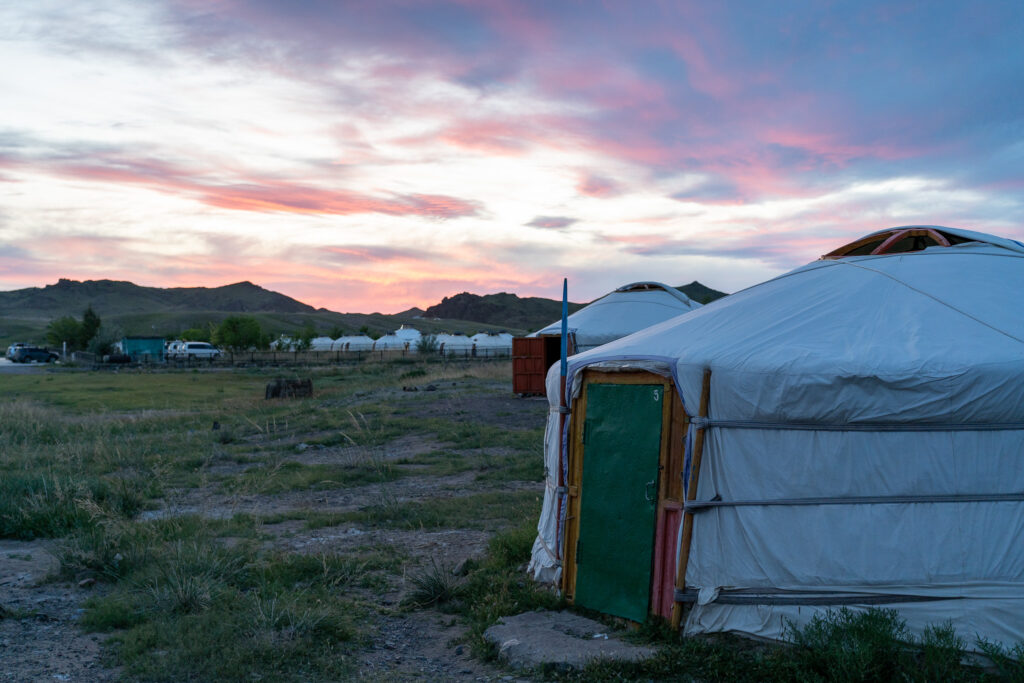
Accommodation ranges from basic guesthouses to comfortable ger camps with private facilities. Many are within walking distance of Erdene Zuu and the Karakorum Museum, making sightseeing convenient.
- Ankhaa’s Guesthouse: A cozy, family-run spot known for home-cooked meals and warm hospitality.
- Munkh Tenger Ger Camp: Offers panoramic views of the Orkhon River and easy access to major sites.
Staying overnight allows you to catch sunrise and sunset over the valley—two of the most beautiful moments of any Mongolian journey.
Why Kharkhorin Belongs on Every Mongolia Road Trip
Kharkhorin isn’t just another historical stop; it’s the spiritual heart of Mongolia’s story. This is where Genghis Khan’s empire took shape, where Buddhism took root, and where modern travelers can still sense the pulse of history beneath the open sky.
As you stand among the ruins and stupas, you’re reminded that empires rise and fall, but the land, and the people who call it home, endure.
Whether you’re following our self-drive Mongolia itinerary or venturing out from the capital for a weekend escape, Kharkhorin offers something few places on earth can: a direct, tangible connection to the age of empires.
Plan Your Visit
- Best Time to Go: May to September for mild weather and accessible roads.
- Recommended Duration: 1–2 days.
- Nearby Stops: Tsetserleg, Tsenkher Hot Springs, Orkhon Waterfall.
- Perfect Pairing: Include Kharkhorin in the Avis Mongolia 14-Day Gobi Self-Drive Tour for the ultimate mix of history, wilderness, and culture.
Experience Living History in Kharkhorin
Visiting Kharkhorin is like tracing Mongolia’s heartbeat through the centuries—from the rise of Genghis Khan’s empire to the enduring rhythms of nomadic life that still shape the Orkhon Valley today.
Few destinations blend history, spirituality, and open-road adventure so seamlessly. Standing before the white walls of Erdene Zuu or watching the sun dip over the steppe, you’re reminded that this land is not just a place to visit. It’s a heritage to feel beneath your wheels.
For those planning a self-drive Mongolia adventure, Kharkhorin isn’t just a waypoint; it’s one of the most profound stops on the journey.
 English
  German
  Arabic
  Spanish
  Italian
  Korean
  French
  Dutch
Dutch  Polish
  Russian
  Chinese