


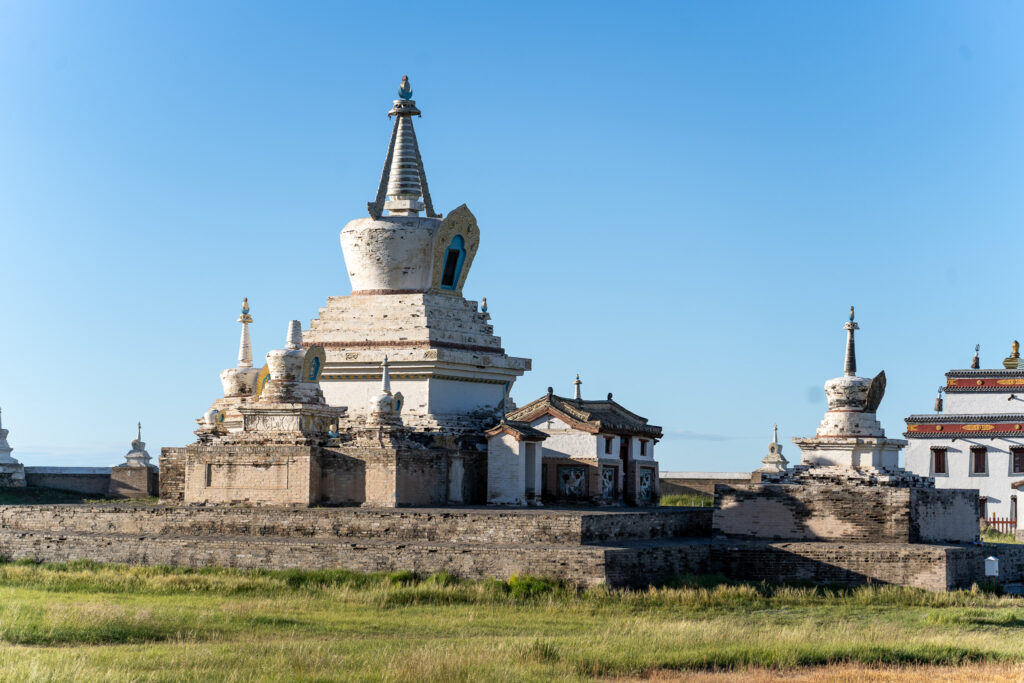
Set against the sweeping steppe of central Mongolia, Erdene Zuu Monastery stands as both a spiritual sanctuary and a living monument to the country’s layered history. With its brilliant white walls, centuries-old stupas, and weathered temples echoing the chants of monks past and present, it’s one of the most striking and meaningful stops on any journey through Mongolia.
For travelers exploring by road—especially those following the Mongolia Ring Road or embarking on a self-drive adventure through the Orkhon Valley—Erdene Zuu offers a rare window into Mongolia’s Buddhist heritage and its enduring resilience.
A Sacred Beginning: The Birth of Erdene Zuu
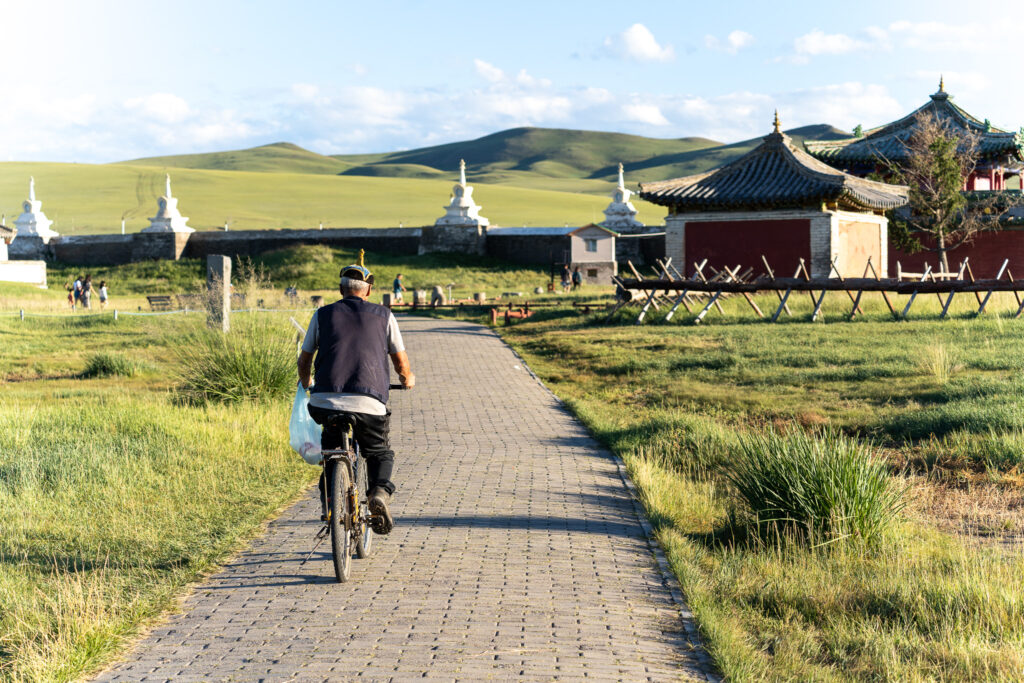
Erdene Zuu, meaning “Hundred Treasures,” was built in 1586 by Abtai Sain Khan, the grandson of Altan Khan, who introduced Tibetan Buddhism to Mongolia. Constructed on the ruins of Karakorum, the 13th-century capital of the Mongol Empire, the monastery symbolized Mongolia’s transformation from empire to enlightenment. Stones from the fallen city were repurposed into its walls—physically and spiritually linking the two greatest eras of Mongolian history.
At its height, Erdene Zuu housed over 100 temples and more than 1,000 monks, serving as the country’s most influential religious center. It became a beacon of Buddhist scholarship, art, and philosophy, fusing Tibetan, Chinese, and Mongolian styles into a uniquely local expression of faith.
The architecture and symbolism in Erdene Zu reflect this synthesis. Visitors approaching the complex are immediately struck by its 108 white stupas that encircle the perimeter, each representing a sacred number in Buddhism and a prayer for peace. Inside, vibrant temples like the Laviran Temple and Golden Stupa Temple display elaborate murals, statues of Buddhas, and intricate woodwork that narrate centuries of Mongolian artistry.
The blend of Tibetan Buddhist iconography and nomadic motifs creates a visual story of unity between spiritual devotion and identity. The faded pigments and weathered carvings echo the endurance of Mongolia’s spiritual roots—still alive despite centuries of conquest, repression, and revival.
A Fortress of Faith and Survival: Erdene Zu’s Destruction
Like many monasteries across Mongolia, Erdene Zuu faced devastation during the Stalinist purges of the 1930s, when communism sought to erase organized religion. Most temples were destroyed, monks were executed or exiled, and religious practice was banned. Yet Erdene Zuu survived—partly due to its immense historical significance and its conversion into a state museum.
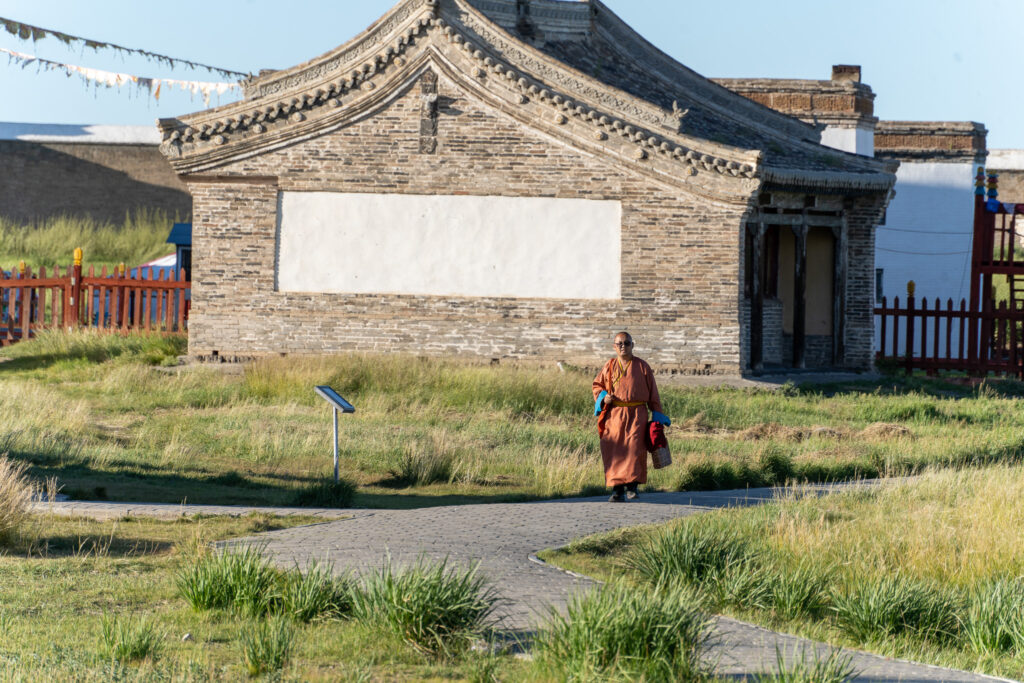
When Mongolia embraced democracy in the 1990s, the monastery reopened for worship. Today, it serves both as a working monastery and a powerful symbol of Buddhist revival and resilience. You’ll often see young monks chanting alongside elderly lamas who survived the repression years—an inspiring bridge between past and present.
Walking the Grounds: What to See at Erdene Zuu Today
Stepping through the monastery’s gates, visitors are greeted by the gleam of 108 white stupas that form a perfect square around the compound. Each corner is anchored by a watchtower that feels both defensive and divine.
Inside, several temples remain intact, each dedicated to a different Buddha or spiritual figure. The Laviran Temple features murals depicting the life of Buddha, while the Golden Stupa Temple holds sacred relics. The main assembly hall, with its carved wooden columns and ornate rooflines, serves as the spiritual heart of the complex.
As you wander, the hum of monks’ chants and the rhythmic spin of prayer wheels fill the air. For photographers, the contrast of brilliant white walls, deep blue skies, and crimson-robed monks offers endless inspiration.
Beyond the walls, the Orkhon River Valley—a UNESCO World Heritage Site—spreads out in every direction, dotted with nomadic camps and grazing horses. It’s easy to see why this landscape was chosen as Mongolia’s spiritual center.
Erdene Zuu and the Revival of Mongolian Buddhism
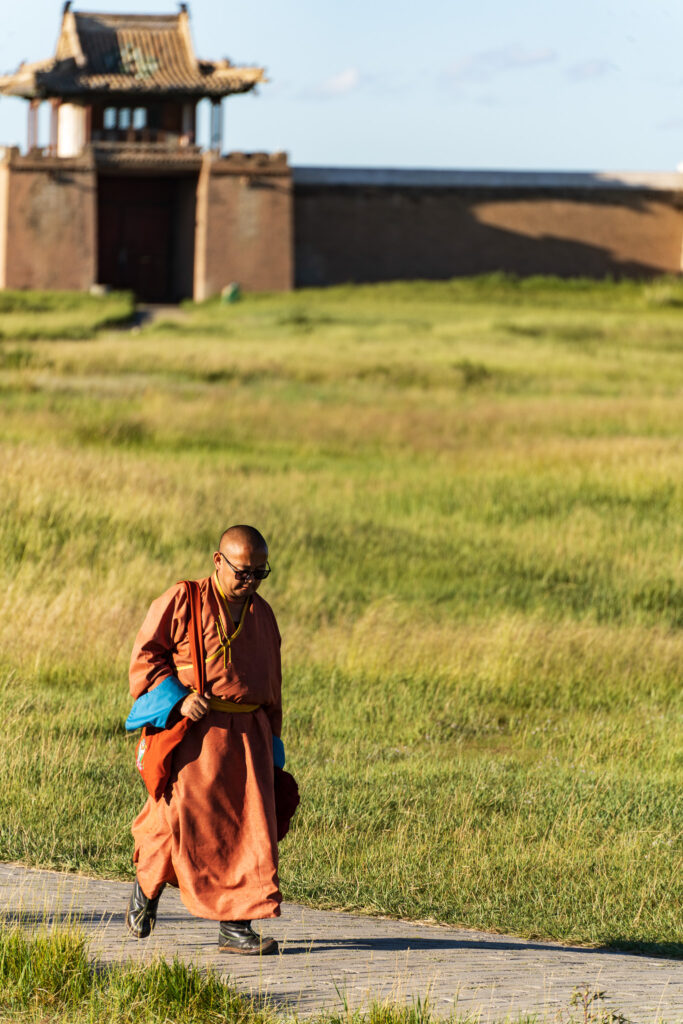
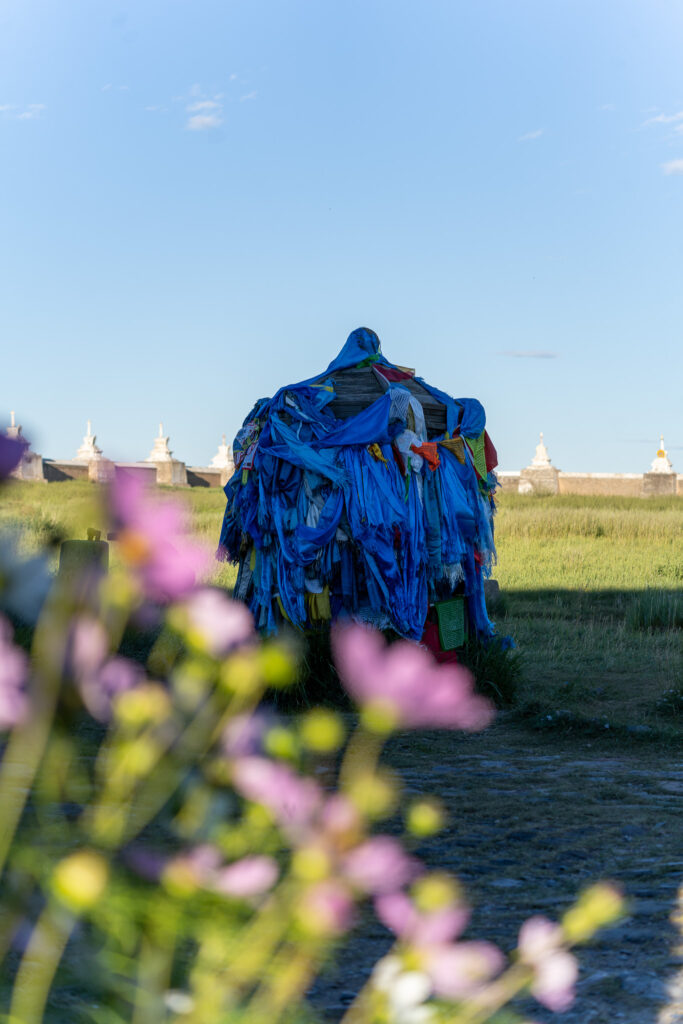
After decades of suppression, Buddhism in Mongolia is thriving once again. Monasteries like Erdene Zuu have become centers of both religious and cultural renewal. Young monks are being trained here, continuing a lineage that was nearly lost. The monastery also plays a key role in preserving Mongolian Buddhist art—from thangka paintings to hand-carved statues.
Visitors today can witness daily rituals, attend morning prayers, or join meditation sessions during festivals. One of the most significant local celebrations is the Naadam of Kharkhorin, blending traditional sports with Buddhist ceremonies—a vibrant reflection of how faith and culture coexist.
Adding Erdene Zuu To Your Self-Drive Route
For those embarking on a self-drive adventure in Mongolia, Kharkhorin (Karakorum) and Erdene Zuu are unmissable stops. Located about 360 km southwest of Ulaanbaatar, the drive takes six to eight hours through open steppe, rolling hills, and small towns that capture everyday Mongolian life.
Having your own 4×4 rental vehicle lets you explore beyond the monastery, visiting nearby landmarks like Orkhon Waterfall (Ulaan Tsutgalan), Tövkhön Monastery perched high in the mountains, and the Karakorum Museum, which tells the story of the Mongol Empire’s rise and fall.
Many Mongolia self-drive tours include Kharkhorin as part of a Mongolia Ring Road self-drive route, linking it with the Gobi Desert to the south and the lakes of Arkhangai to the north. This route balances adventure and history, offering the freedom to linger at sacred sites and follow the rhythm of the steppe.
Best Time to Visit for Photography
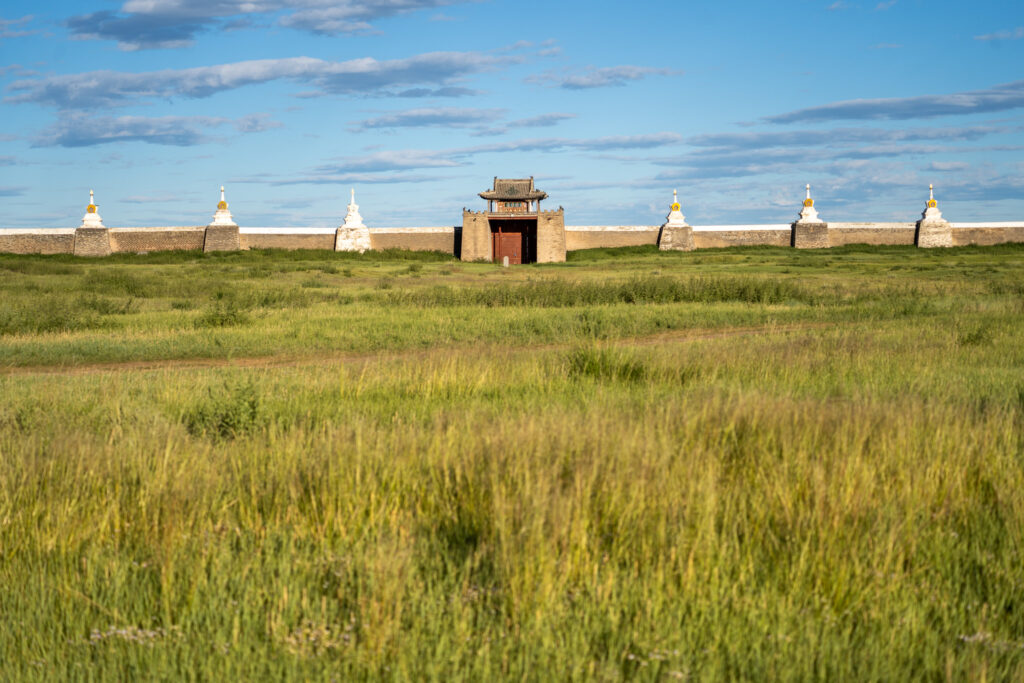
Erdene Zuu rewards those who look closely. Early morning light casts long shadows across the stupas; by evening, the monastery glows gold under the endless blue sky. The fluttering prayer flags, weathered murals, and faces of devoted monks tell stories that words cannot. Early morning and late evening are the best times of day for photographers looking to capture this golden glow.
If you visit during Tsagaan Sar (Lunar New Year) or the summer prayer festivals, the monastery comes alive with pilgrims, incense, and chanting. For photographers, these are moments of deep connection—where Mongolia’s spiritual rhythm becomes visible through the lens.
Preserving Mongolia’s Spiritual Heritage
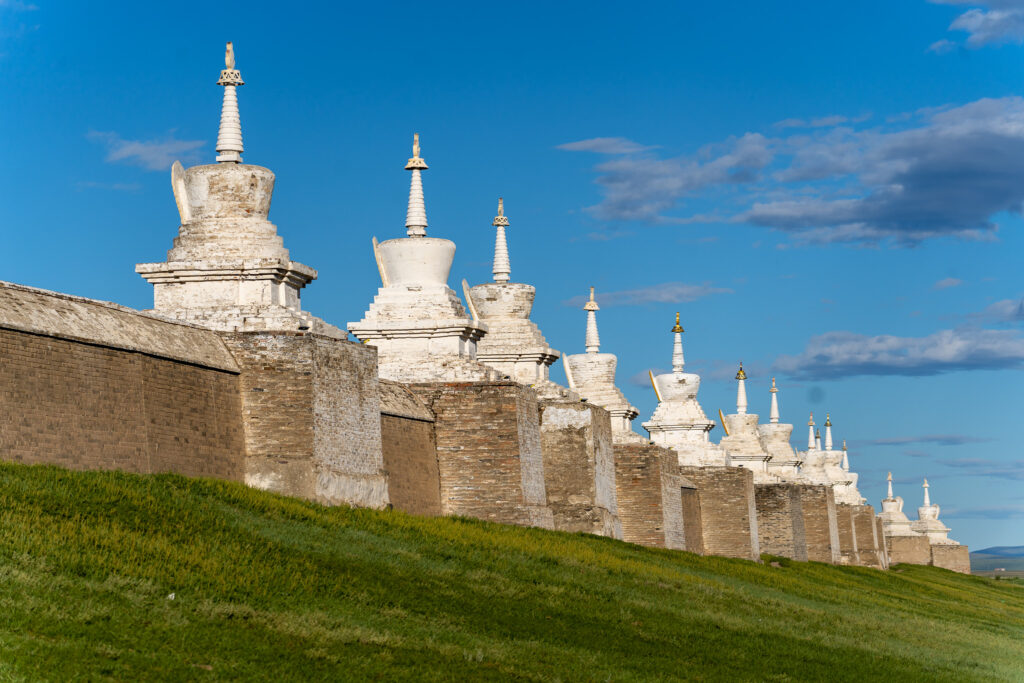
Erdene Zuu is not just a historical monument—it’s a living sanctuary. Restoration efforts by the Mongolian government and local communities continue to protect this site. Visitors are encouraged to travel respectfully: dress modestly, avoid flash photography inside temples, and observe rituals quietly.
Part of your entry fee supports the preservation of the monastery, ensuring that future generations can experience its serenity and strength.
Planning Your Visit To Erdene Zu
Location: Kharkhorin, Övörkhangai Province
Distance from Ulaanbaatar: ~360 km southwest
Best time to visit: May–September (accessible roads and active monastic life)
Entrance fee: ~10,000 MNT (includes museum access)
Travel tip: Stay in a local ger camp or guesthouse nearby for sunrise or sunset photography.
If you’re traveling independently, Avis Mongolia offers reliable 4×4 rentals and self-drive Mongolia tours that include Erdene Zuu and Kharkhorin as key stops. The route is straightforward with mostly paved roads, but having your own vehicle gives you the flexibility to explore nearby valleys and monasteries—something organized tours rarely allow time for.
Erdene Zu is a Mongolian Landmark That Cannot Be Missed
Visiting Erdene Zuu Monastery is not just about exploring ruins; it’s about encountering Mongolia’s still living faith. Within its walls, centuries of history, devotion, and resilience converge. For anyone planning a Mongolia self-drive road trip, this is a must-see waypoint: a bridge between past and present, empire and enlightenment.
Here, amid the vast silence of the steppe, Mongolia’s Buddhist heritage continues to thrive—peaceful, enduring, and profoundly human.
 English
  German
  Arabic
  Spanish
  Italian
  Korean
  French
  Dutch
Dutch  Polish
  Russian
  Chinese