


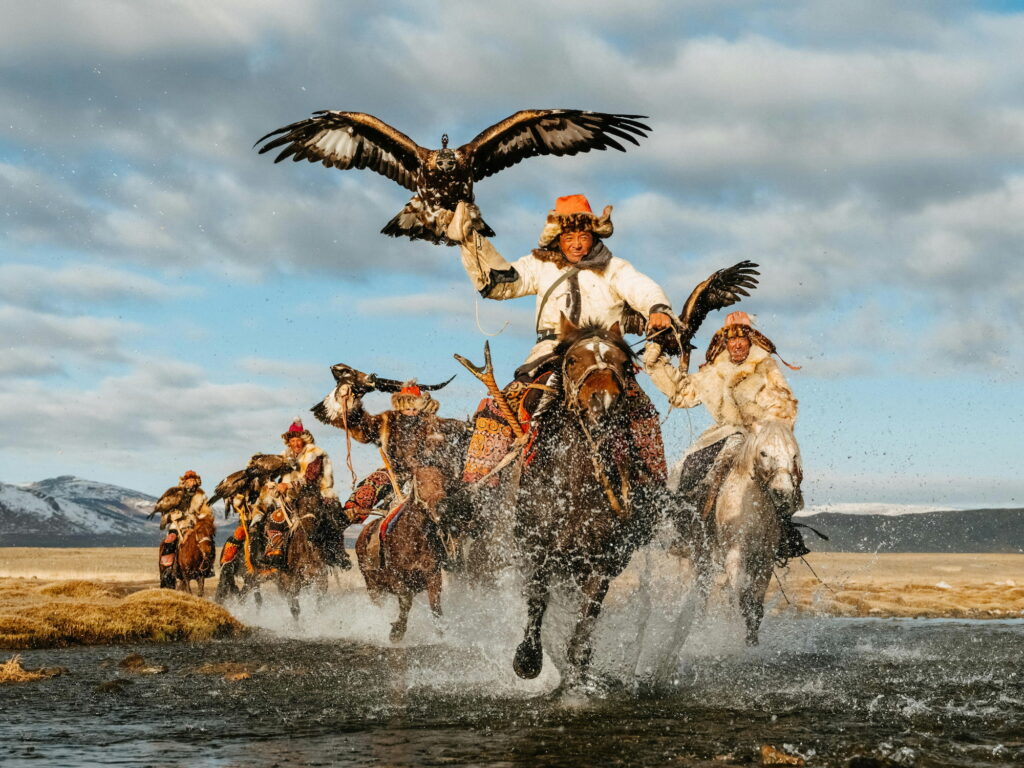
The Kazakh eagle hunters and their magnificent Golden Eagles are a major allure for tourists considering a trip to Mongolia. Across the windswept mountains of western Mongolia, where the steppe rolls into the snow-streaked peaks of the Altai, these famed hunters hone their craft and continue this enduring tradition. Each Autumn, when the air grows sharp and the first frost whitens the grass, these hunters gather from the farthest reaches of Bayan-Ölgii province for one of Mongolia’s most extraordinary events — the Eagle Hunting Festival.
Ready for Eagle Hunting Festivals Mongolia?
The scene is cinematic: proud hunters draped in fox-fur coats, their eagles poised on leather-gloved arms, scanning the horizon for prey. Horses stamp in the cold, families in brightly embroidered deels cheer from the sidelines, and the crisp mountain air fills with the haunting echo of Kazakh music. For travelers, witnessing an eagle hunting festival is more than a spectacle; it’s an invitation into a living tradition that’s been passed down for centuries.
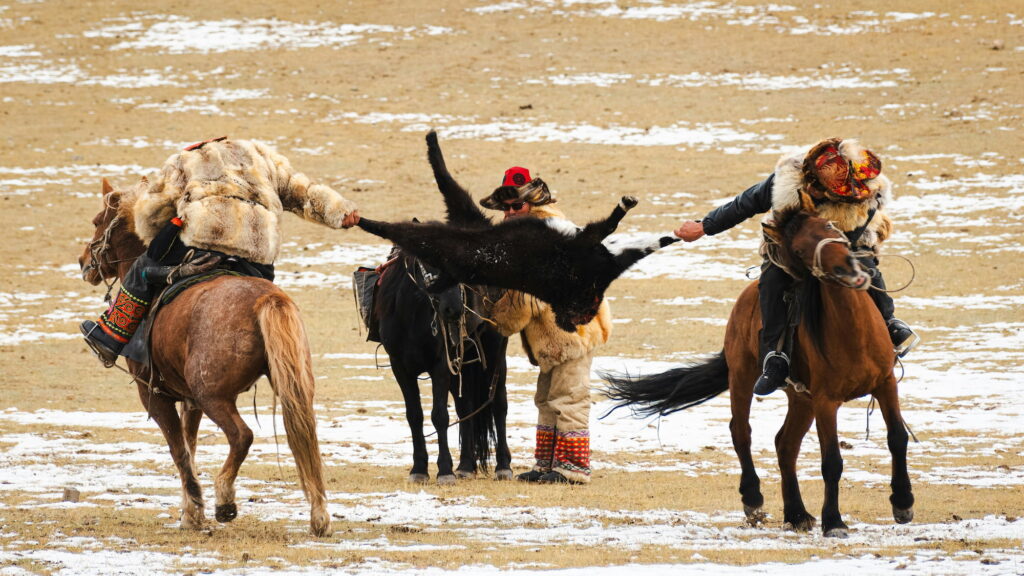
It’s also easily the most impressive way to see the skills of the Eagle Hunters on full display. Here’s everything you need to know to plan the perfect visit to Western Mongolia.
Who Are The Kazakh Eagle Hunters of Western Mongolia?
Mongolia’s eagle hunters are ethnic Kazakhs, a Turkic-speaking minority who have lived for generations in the far west, near the borders of Russia, Kazakhstan, and China. Their craft, known as berkutchi, is an art form of precision, patience, and deep respect for nature. Hunters train golden eagles (called berkut) to hunt foxes, hares, and sometimes wolves in the freezing winter months. Each eagle is caught young, trained over the course of years, and eventually released back into the wild after many years together.
The hunters’ bond with their eagles is built on trust and ritual. They feed them by hand, whisper commands, and ride side by side through snowfields in search of game.
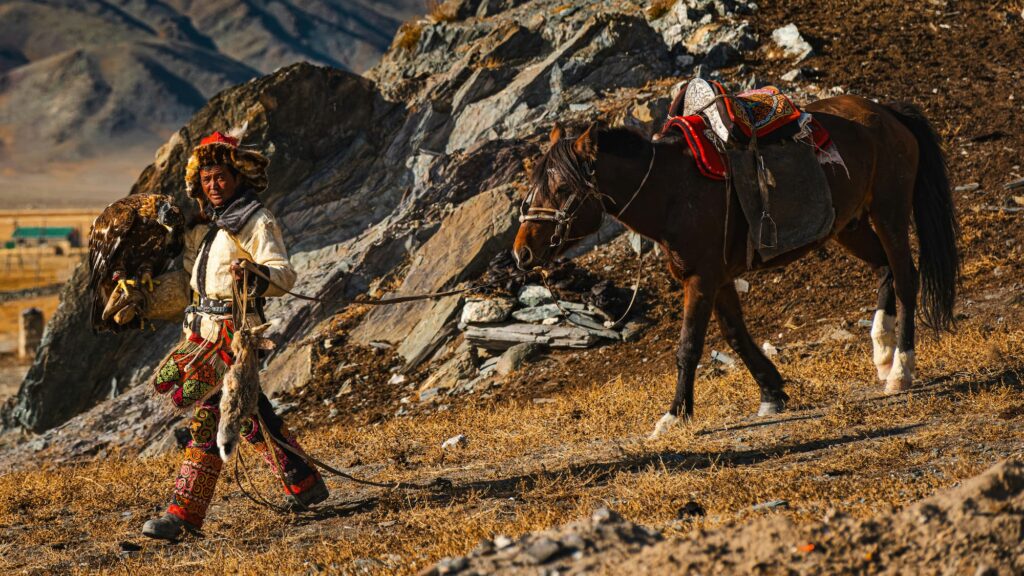
While only about 240 eagle hunters remain in Mongolia, it is still a widely respected practice in the region.
The Golden Eagle Festival in Ölgii
The Golden Eagle Festival in Bayan-Ölgii is the largest and most famous of Mongolia’s eagle hunting gatherings. Held every first weekend of October, it draws around 70 to 100 eagle hunters from across the Altai, as well as local families, tourists, and filmmakers eager to capture its raw beauty and the spectacular “performances”.
For two days, hunters compete in various events that test their skill and their eagles’ loyalty: speed, accuracy, and obedience. The most breathtaking is the calling competition, where a hunter releases his eagle from a distant hilltop, then calls her back. When the bird spots her master and swoops down in a thunder of wings, straight onto his outstretched arm, the crowd erupts.
Other contests celebrate horsemanship, traditional archery, and even the hunters’ attire. But it’s not just about competition, it’s a cultural gathering, a reunion of families, and a chance to keep their traditions alive. The festival takes place just outside Ölgii town, which sits in a valley surrounded by jagged peaks. The event grounds are easily accessible, though reaching Ölgii itself requires a bit of planning, but that’s part of the adventure.
Eagle Festival Details
If you’re considering attending the Golden Eagle festival on your own (by a self-drive tour from AVIS), these are the things you should know.
- Event Dates: First weekend of October.
- Ticket Price: $50-$60 per person.
- Location: Ölgii town
What to Expect at an Eagle Hunting Festival
Festivals typically last two full days. Mornings begin with ceremonial parades as hunters ride in, dressed in ornate fur and traditional Kazakh embroidery. Competitions fill the midday hours, interspersed with local music, throat singing, and games like kokpar (a tug-of-war played on horseback). You’ll find stalls selling handwoven goods, handmade saddles, and eagle-themed souvenirs.
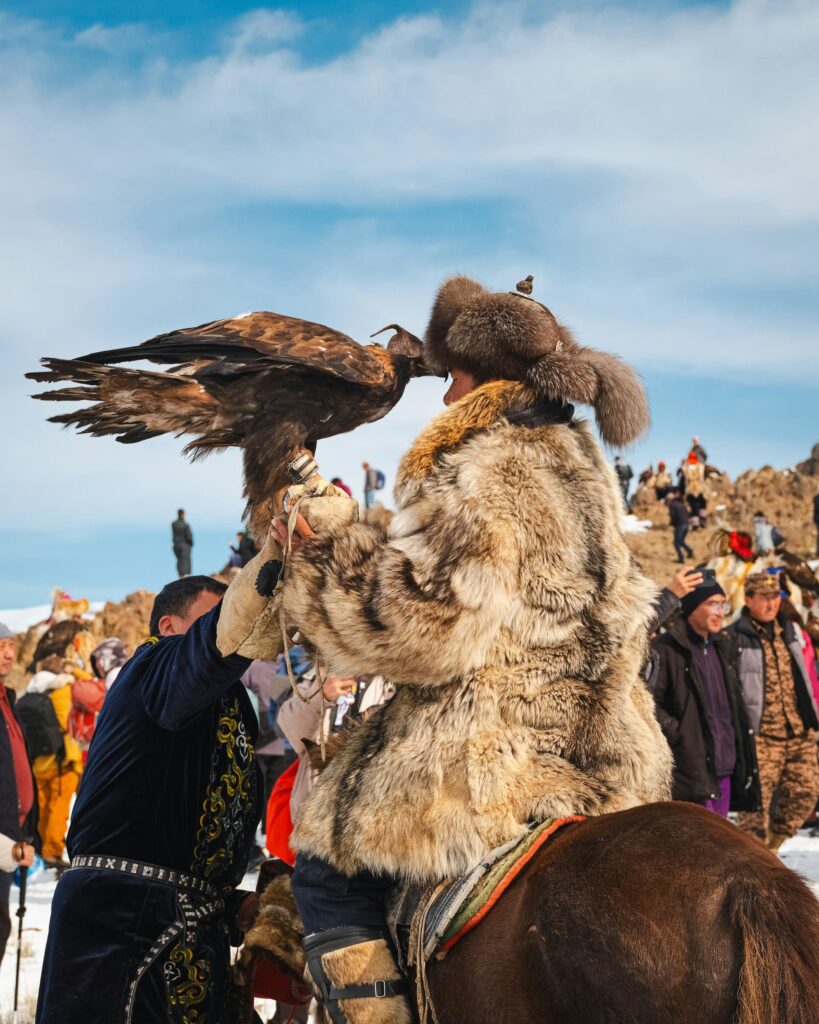
Don’t expect tourist polish — this is a raw, local event. There may be no grandstands, limited facilities, and a lot of dust. But that’s what makes it so compelling. Bring warm layers, cash, and an adventurous spirit. The charm lies in its authenticity.
Photography is welcome, but always ask permission before taking close-up shots. A respectful approach opens doors to genuine interaction, and many hunters are proud to share their stories once you’ve shown curiosity and kindness.
Other Eagle Hunting Festivals in Mongolia
While the main Golden Eagle Festival in October is the biggest, smaller festivals offer a more intimate experience, fewer crowds, and you don’t have to plan your entire trip around an October event.
- Sagsai Golden Eagle Festival (late September):
Held about an hour from Ölgii, this smaller gathering takes place just before the main festival. It’s ideal for travelers who want to photograph or interact with hunters without the large tour groups that flock to the October event. - Ulaanbaatar Eagle Festival (March):
For those visiting outside of autumn, the capital hosts a smaller-scale version each spring. It’s a great introduction to eagle hunting culture, but lacks the mountain backdrop and atmosphere of Bayan-Ölgii. - Winter hunting season (November–February):
After the festivals end, the real hunting begins. Joining a winter eagle hunting experience with a local family, often arranged through guided or self-drive tours, offers an even more authentic glimpse into their daily lives.
When Is the Best Time to See the Eagle Hunters?
Seeing Mongolia’s eagle hunters isn’t a one-season affair — it depends on whether you want the buzz of a festival, the quiet intimacy of daily life, or the drama of a winter hunt.
The Kazakh eagle hunting year moves with the rhythm of the land: festival fanfare in autumn, real hunts in winter, and rest during the long summer months. Here’s how each season unfolds.
September – Early October: Festival Season in the Altai
If your dream is to see Mongolia’s eagle hunters in full traditional dress, their eagles swooping through clear mountain air as crowds cheer, this is the time to come. Late September through early October marks the start of the Eagle Hunting Festival season, and nowhere captures it better than Bayan-Ölgii Province in western Mongolia.
The season kicks off with the Sagsai Golden Eagle Festival, a smaller, community-centered event held in late September in the tiny village of Sagsai, about an hour from Ölgii. It’s perfect for travelers who prefer fewer crowds and closer access to the hunters themselves, ideal for photography and conversation over salty milk tea.
Just a week or two later, the grand Golden Eagle Festival in Ölgii takes center stage. Typically held the first weekend of October, it draws 70 to 100 eagle hunters from across the Altai Mountains, plus local families and curious travelers. Over two days, hunters compete in riding, hunting, and the thrilling calling contests where eagles return to their master’s arm from a distant peak.
This is Mongolia’s most spectacular cultural event; raw, proud, and set against the cinematic backdrop of golden hills and early snow. For most travelers, September to early October is the best time to see the eagle hunters at their most vibrant and ceremonial.
Late October – February: The Winter Hunting Season
Once the crowds leave and the first snow blankets the Altai, the real eagle hunting season begins. This is when the festivals end and the hunters return home to the mountains, not for show, but to live the life they’ve inherited for generations.
From late October through February, hunters ride out into the frozen steppe in search of foxes and hares. The temperature can plunge below -20°C, but that’s exactly when the eagles are at their strongest and most alert. Travelers visiting during this season can witness the partnership between hunter and bird in its truest form, a real-life hunt.
A few local cooperatives and tour operators (including those connected with Avis Mongolia’s self-drive itineraries) offer winter eagle hunting experiences, where visitors can stay with a Kazakh family and accompany them on actual hunts. These aren’t staged performances; they’re real, working outings in the biting cold. If you want authenticity over comfort, this is the most intimate way to experience eagle hunting culture.
March: The Ulaanbaatar Eagle Festival
For those who can’t make it to the far west, the Ulaanbaatar Eagle Festival is held every March near the capital. It’s a much smaller event, featuring around 20–30 hunters who travel east for a showcase of their skills.
While it lacks the wild, windswept drama of Bayan-Ölgii’s festivals, it offers a convenient glimpse into Kazakh eagle hunting culture for travelers who are short on time or visiting Mongolia in spring. You’ll still see the eagles in action, the hunters’ beautiful attire, and some lighthearted competitions, all without leaving Ulaanbaatar.
Think of this one as a city-based preview rather than the real thing. If the western mountains are the soul of the tradition, this is its postcard — tidy, accessible, and surprisingly captivating.
April – August: The Quiet Off-Season
By spring, the hunting season winds down. The snow melts, the steppe turns green, and the eagles are released back into the wild. During these months, the hunters return to their pastoral roots, tending livestock and preparing for the next season.
While you won’t see active hunts or festivals between April and August, you can still visit the region. Many eagle hunter families welcome travelers to stay in their homes or ger camps. You’ll see how they live, work, and maintain their gear during the off-season, and you’ll still be surrounded by the breathtaking beauty of the Altai Tavan Bogd National Park region.
For self-drive travelers, summer offers the best road conditions, open mountain passes, and the freedom to explore at your own pace. Renting a 4×4 through Avis Mongolia makes it easy to travel deep into the Kazakh regions and visit hunter families directly — even without a festival underway. You’ll trade spectacle for serenity, and sometimes, that’s exactly what makes it unforgettable.
So, When’s the Best Time Overall?
If your goal is to witness Mongolia’s eagle hunters in full regalia, then late September to early October is unbeatable — the festival season in Bayan-Ölgii is cultural immersion at its finest.
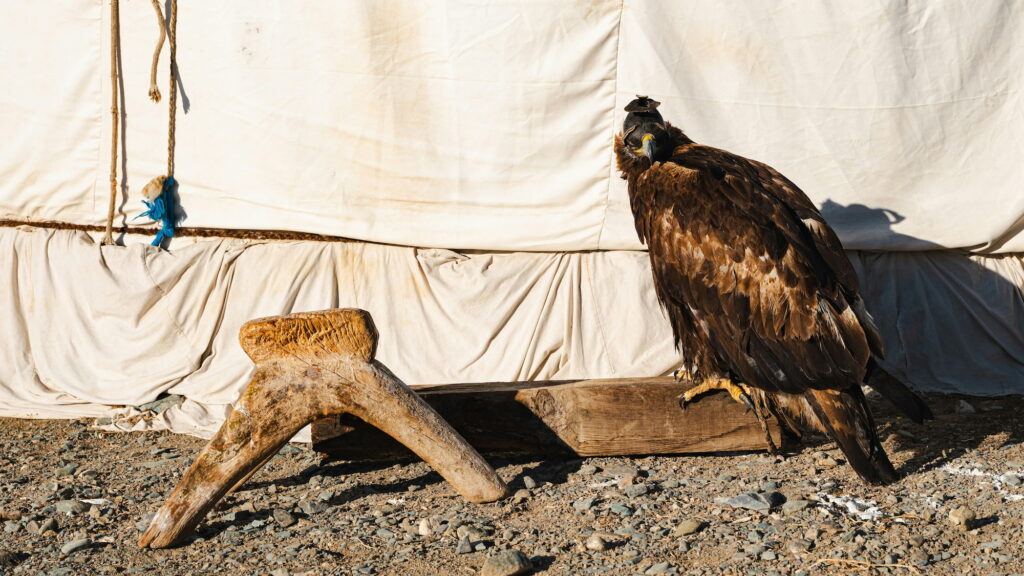
If you want authentic, raw, everyday life, come between November and February, when the eagles are hunting and the Altai turns into a frozen masterpiece.
But truthfully, there’s no wrong season, only different shades of the same extraordinary story. Whether you’re cheering at the Golden Eagle Festival, sharing a cup of tea with a hunter’s family, or watching an eagle soar across the winter sky, you’re experiencing a tradition that has survived not just centuries, but civilizations.
How to See Mongolia’s Eagle Hunters
To reach the eagle hunting region, you’ll need to venture deep into western Mongolia. The town of Ölgii lies about 1,600 kilometers from Ulaanbaatar, accessible by domestic flight (two hours) or by road, a stunning multi-day drive through the Mongolian steppe.
For adventurous travelers, a self-drive Mongolia tour offers the ultimate freedom. Renting a 4×4 vehicle from AVIS car rental in Mongolia allows you to follow your own pace along the Mongolia Ring Road and beyond. You’ll travel through volcanic valleys, desert dunes, and mountain passes, all the way to Bayan-Ölgii. AVIS offers pre-designed self-drive Mongolia itineraries, including routes that pass through Altai Tavan Bogd National Park and the eagle hunting region, so you can combine cultural immersion with remote wilderness exploration.
Along the way, you can camp under endless skies, stay in traditional ger camps, and stop in nomadic settlements that few travelers ever reach. The road itself becomes part of the story.
Staying with an Eagle Hunter Family
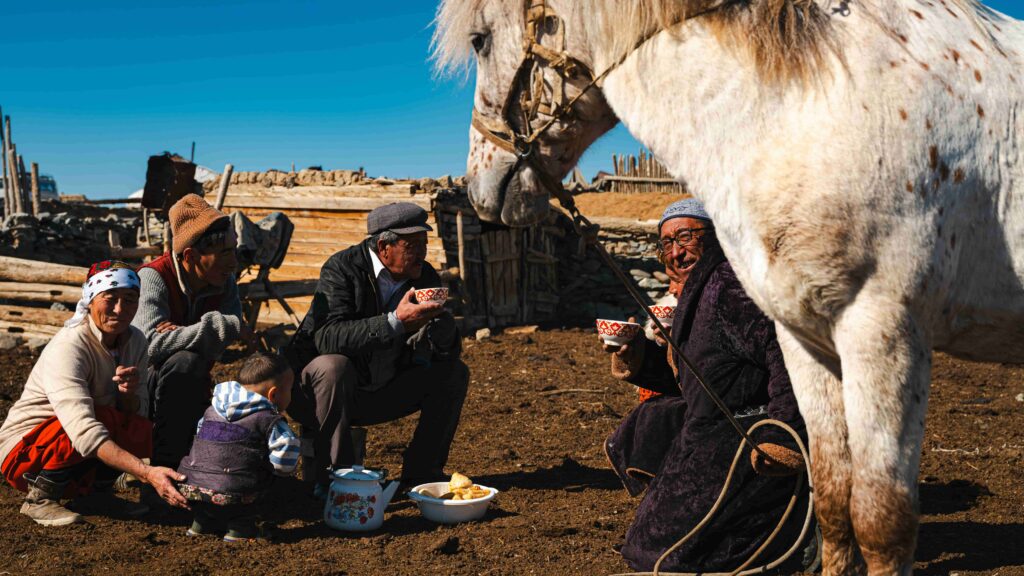
For those who want to go deeper, consider staying with a Kazakh eagle hunting family in the Altai. Many now host travelers through local cooperatives or private arrangements, often included in self-drive or guided tours to Western Mongolia. You’ll share meals of hearty stews and milk tea, watch as the eagle is fed and groomed, and learn about the intricate process of training. Evenings are often spent around the stove, swapping stories beneath the northern stars.
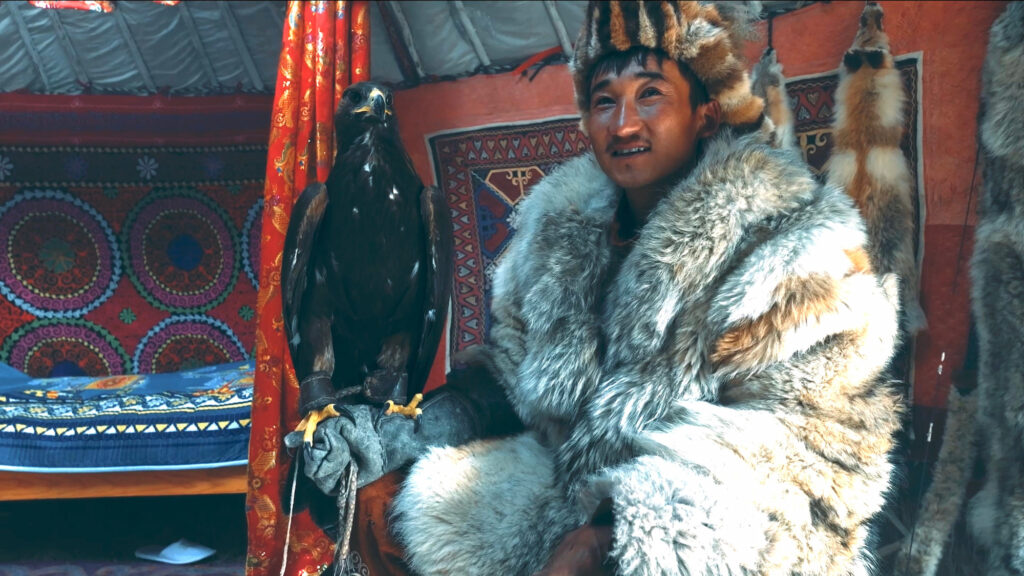
These experiences offer something festivals can’t: quiet, daily intimacy with the tradition. You’ll see the patience, strength, and reverence that underpin every call between hunter and eagle.
This is an activity that is available year-round.
Experience The Soul of the Steppe
Mongolia’s eagle hunters embody the endurance of tradition in a rapidly modernizing world. Watching them ride through the Altai — eagle perched high, wind howling across the tundra — feels like witnessing living history. Few cultures still maintain such harmony with nature, such devotion to a skill that bridges survival and artistry.
For travelers drawn to culture, wilderness, and adventure in equal measure, attending an Eagle Hunting Festival or visiting the Kazakh hunters of Bayan-Ölgii is one of the most profound experiences Mongolia offers. And with the freedom of a 4×4 self-drive Mongolia tour, it’s entirely within reach.
 English
  German
  Arabic
  Spanish
  Italian
  Korean
  French
  Dutch
Dutch  Polish
  Russian
  Chinese